Plastic Card Printer: Find Your Perfect Card Printing Solution
Table of Contents []
- Why Plastic Card ID Is the Name Businesses Trust for Plastic Card Printers
- The Complete Plastic Card Printer Lineup: Every Brand, Every Scale
- Understanding Plastic Card Printer Consumables and Accessories
- Buyer's Guide: Choosing the Right Plastic Card Printer for Your Organization
- In-House Card Printing vs. Outside Vendors: The Real Numbers
- Frequently Asked Questions About Plastic Card Printers
- Applications Across Industries: Where Plastic Card Printers Deliver Real Value
- Get Started with Plastic Card ID: Your Complete Plastic Card Printer Resource
Why Plastic Card ID Is the Name Businesses Trust for Plastic Card Printers
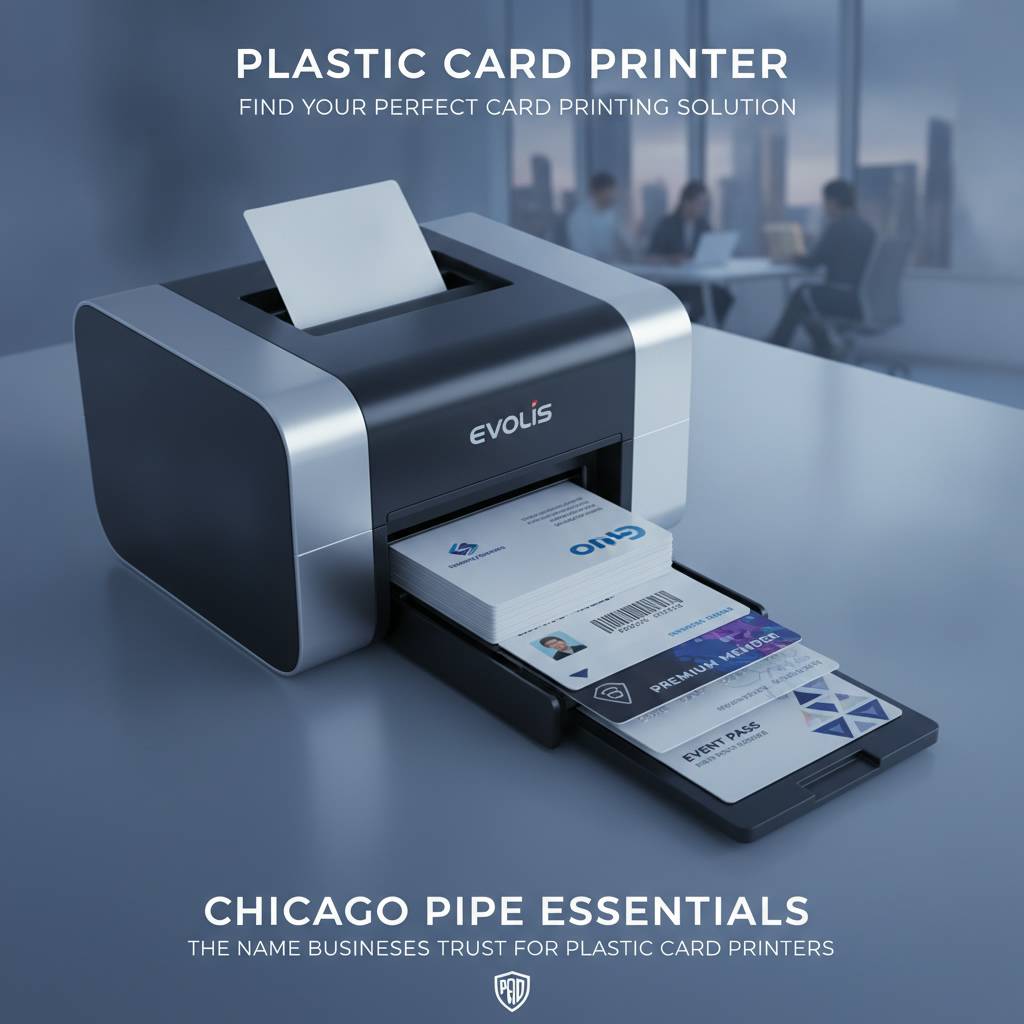 Walk into almost any organization that prints its own ID badges, membership cards, or access credentials, and chances are good the equipment running that program came from a supplier who actually understands the technology. That supplier, more often than not, is Plastic Card ID. With more than 25 years in the industry and over 100,000 customers served across the United States, CPE has built a reputation that goes well beyond simply shipping boxes. They deliver the right plastic card printer for each unique situation - and everything needed to keep it running.
Choosing a card printer is rarely as straightforward as picking the cheapest option. Print volume, card type, encoding requirements, single-sided versus dual-sided output, lamination needs - the variables stack up fast. Plastic Card ID exists precisely to help organizations cut through that complexity and land on equipment that performs reliably, day after day, at the scale they actually need.
A Quarter Century of Card Printing Expertise
Experience is not a marketing slogan here. Over 25 years of supplying plastic card printers means Plastic Card ID has watched the industry evolve through multiple generations of hardware, ribbon chemistry, and encoding technology. That institutional knowledge gets applied every time a customer asks which printer fits their workflow.
Whether an organization is setting up its first card printing station or upgrading aging equipment, the depth of product knowledge at CPE translates directly into smarter purchasing decisions. Fewer wasted dollars on underpowered hardware. Fewer headaches from printers that cannot handle the actual workload.
Serving Every Industry That Needs Professional Cards
The customer base at Plastic Card ID spans an impressive range. Schools printing student IDs, hospitals issuing staff access credentials, hotels encoding key cards, gyms managing membership programs, corporations running visitor badge systems - all of them have the same fundamental need: a reliable plastic card printer that produces professional results consistently.
Event organizers need high-speed on-site credentialing. Retailers want loyalty cards that look premium. Security-conscious enterprises demand cards that encode magnetic stripes or smart chips accurately. Plastic Card ID carries hardware purpose-built for every one of these scenarios.
What Sets This Supplier Apart
The difference between a generic electronics reseller and a dedicated card printing specialist is enormous. CPE does not just stock printers - they carry the complete ecosystem: ribbons, cleaning kits, encoding modules, lamination upgrades, hoppers, and card carriers. A customer can source everything from one place, from initial purchase through ongoing consumables, without juggling multiple vendors.
That continuity matters operationally. When a ribbon runs out on a busy Monday morning, knowing exactly where to reorder - from a supplier who has your printer's specs on file - removes a layer of friction that generic suppliers cannot match. Ready to build your card printing program the right way? Contact Plastic Card ID at 800.835.7919.
| Printer Model | Brand | Recommended Volume | Key Features | Best For |
|---|---|---|---|---|
| Badgy200 | Evolis | Under 1,000 cards/year | Compact, USB, single-sided | Small offices, clubs |
| Zenius | Evolis | 1,000-3,000 cards/month | Single-sided, mag stripe option | Mid-size businesses |
| Primacy2 | Evolis | Up to 6,000 cards/month | Dual-sided, encoding options | Corporate ID programs |
| Agilia | Evolis | High-volume, premium output | Edge-to-edge printing, full color | Enterprise, premium cards |
| Fargo / Zebra Models | Fargo / Zebra | Varies by model | Security-focused, robust | Government, secure ID |
| Matica Event Printer | Matica | High-speed event bursts | On-site badging, rapid throughput | Events, conferences |
The Complete Plastic Card Printer Lineup: Every Brand, Every Scale
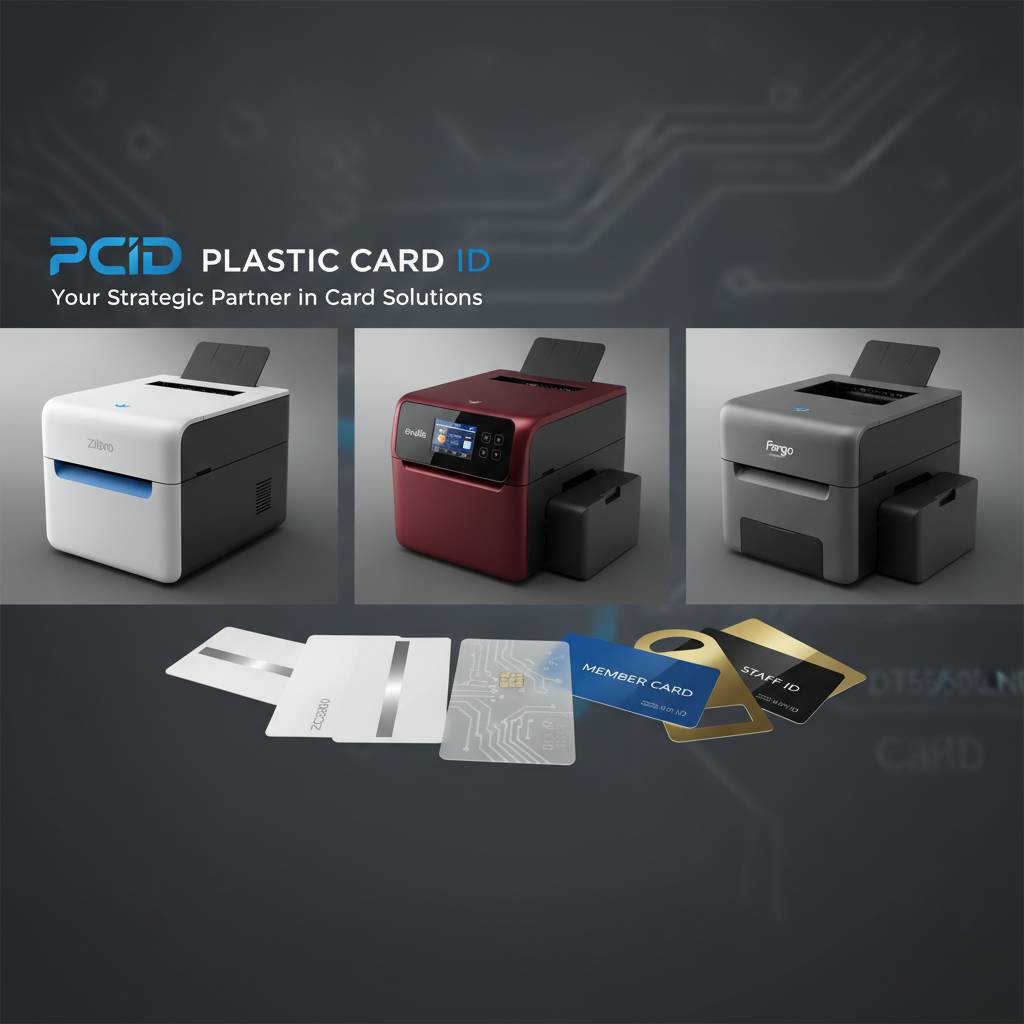 Not every organization prints the same number of cards, under the same conditions, with the same output requirements. That reality is why Plastic Card ID curates a lineup that spans the full spectrum - from entry-level desktop units designed for occasional use to industrial-grade systems engineered for relentless daily throughput. The right plastic card printer makes every card program more efficient and more professional.
Every brand in the CPE lineup earned its place. Evolis, Fargo, Zebra, and Matica are not second-tier names. They are the manufacturers setting the standards that the rest of the industry measures itself against. Carrying all four means customers are never steered toward a compromise - they get the brand architecture that genuinely fits their operation.
Evolis: From Badgy200 to Agilia
Evolis occupies an interesting space in the card printing world - they make hardware that scales gracefully. The Badgy200 is the starting point: a compact, approachable printer for organizations running fewer than 1,000 cards per year. It does not overwhelm a small office with complexity, yet it produces results that look genuinely professional rather than home-printed.
Step up to the Zenius or Primacy2 and the capabilities expand significantly. Dual-sided printing and magnetic stripe encoding open up entirely new card program possibilities. The Primacy2, handling up to 6,000 cards per month, is the workhorse choice for mid-to-large corporate ID programs. Then there is the Agilia - edge-to-edge, premium-quality output for organizations where card appearance is part of the brand statement.
Fargo and Zebra: Built for Security-First Environments
Security-focused card programs have a different set of priorities. Tamper-evident features, precise encoding accuracy, and hardware reliability under heavy load matter more than compactness or price sensitivity. Fargo and Zebra printers are engineered with exactly those priorities in mind, making them the natural choice for government agencies, healthcare institutions, and enterprises with strict access control requirements.
Both brands bring years of deployment in demanding environments. Law enforcement credentialing, hospital staff ID systems, campus access control - these are not contexts where a printer can afford inconsistency. Fargo and Zebra deliver the dependability these programs demand, and Plastic Card ID supplies them with the full support infrastructure those customers need.
Matica: High-Speed Event Badging
The Matica Event Printer solves a specific and often underestimated problem: printing large volumes of badges on-site, fast, at an event where hundreds or thousands of attendees need credentials within minutes of arrival. Standard card printers are not built for this scenario. The Matica is.
On-site event badging has become an expectation, not a luxury. Conferences, trade shows, corporate summits, and large-scale training events all benefit from the ability to print customized badges in real time. The Matica makes that possible without the chaos of pre-printed badge management. Call Plastic Card ID at 800.835.7919 to discuss event badging solutions.
Understanding Plastic Card Printer Consumables and Accessories
A plastic card printer without the right consumables is just a very expensive paperweight. Ribbons, cleaning kits, and encoding upgrades are not afterthoughts - they are the functional backbone of a card printing program. Plastic Card ID supplies all of it, which means customers never find themselves searching for compatible consumables from a third party who may not stock the right specifications.
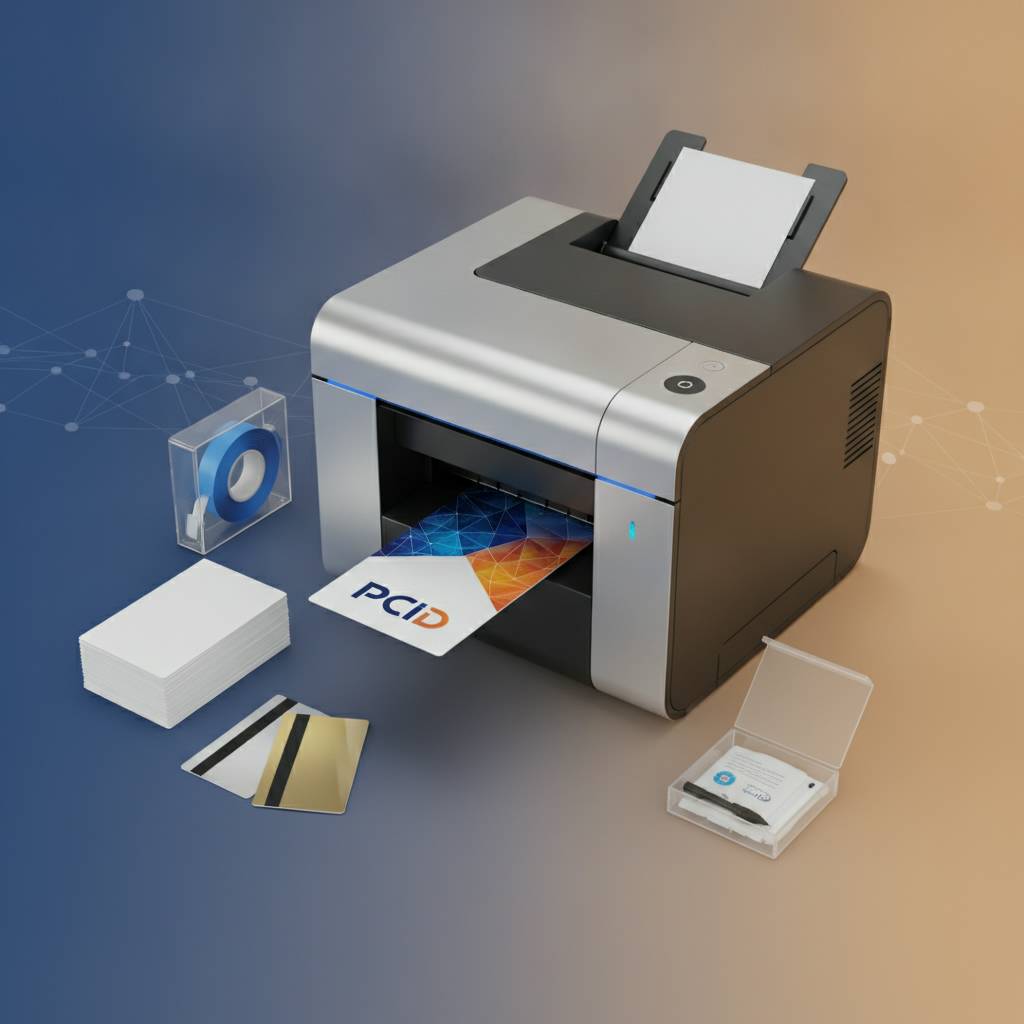
This matters more than most buyers initially realize. Using incorrect or substandard ribbons can degrade print heads prematurely, compromise card quality, and void manufacturer warranties. Sourcing consumables from the same specialist who supplied the printer eliminates those risks entirely.
Ribbons: YMCKO, Monochrome, and Specialty Types
The ribbon determines the output. YMCKO ribbons - Yellow, Magenta, Cyan, Black, and Overlay - produce full-color cards with a protective topcoat that resists fading and surface damage. They are the standard choice for employee ID cards, membership cards, and any application where appearance and durability both matter.
Monochrome ribbons trade color for speed and economy. When an organization is printing black-and-white text-only cards in high volume - visitor passes, temporary credentials, back-of-card data - monochrome ribbons cut cost per card substantially. Specialty ribbons handle specific requirements like security panels or holographic overlays for applications where tamper resistance is essential.
Cleaning Kits and Maintenance Supplies
Print head longevity depends entirely on cleaning discipline. Dust, card debris, and ribbon particles accumulate inside any plastic card printer over time, and without regular cleaning cycles, print quality degrades and hardware life shortens. A consistent cleaning schedule is the single most cost-effective maintenance practice any card program can adopt.
Cleaning kits typically include cleaning cards and swabs calibrated to work safely with the specific printer mechanisms. CPE stocks the cleaning supplies matched to the printer brands they carry, so customers always have access to the right kit rather than guessing at compatibility.
Encoding Upgrades: Magnetic Stripe and Smart Chip
Many plastic card printers support optional encoding modules that transform a printed card into a functional data carrier. Magnetic stripe encoding writes data to the card's mag stripe during the print cycle - essential for access control systems, loyalty programs, and hotel key card applications. Smart chip encoding goes further, writing to embedded microchips for high-security applications.
These capabilities are not universally needed, but when they are needed, they are absolutely critical. Plastic Card ID can help organizations assess whether encoding capability is a current requirement or a smart future-proofing investment - and supply the appropriate module for whichever printer model is already in use.
Buyer's Guide: Choosing the Right Plastic Card Printer for Your Organization
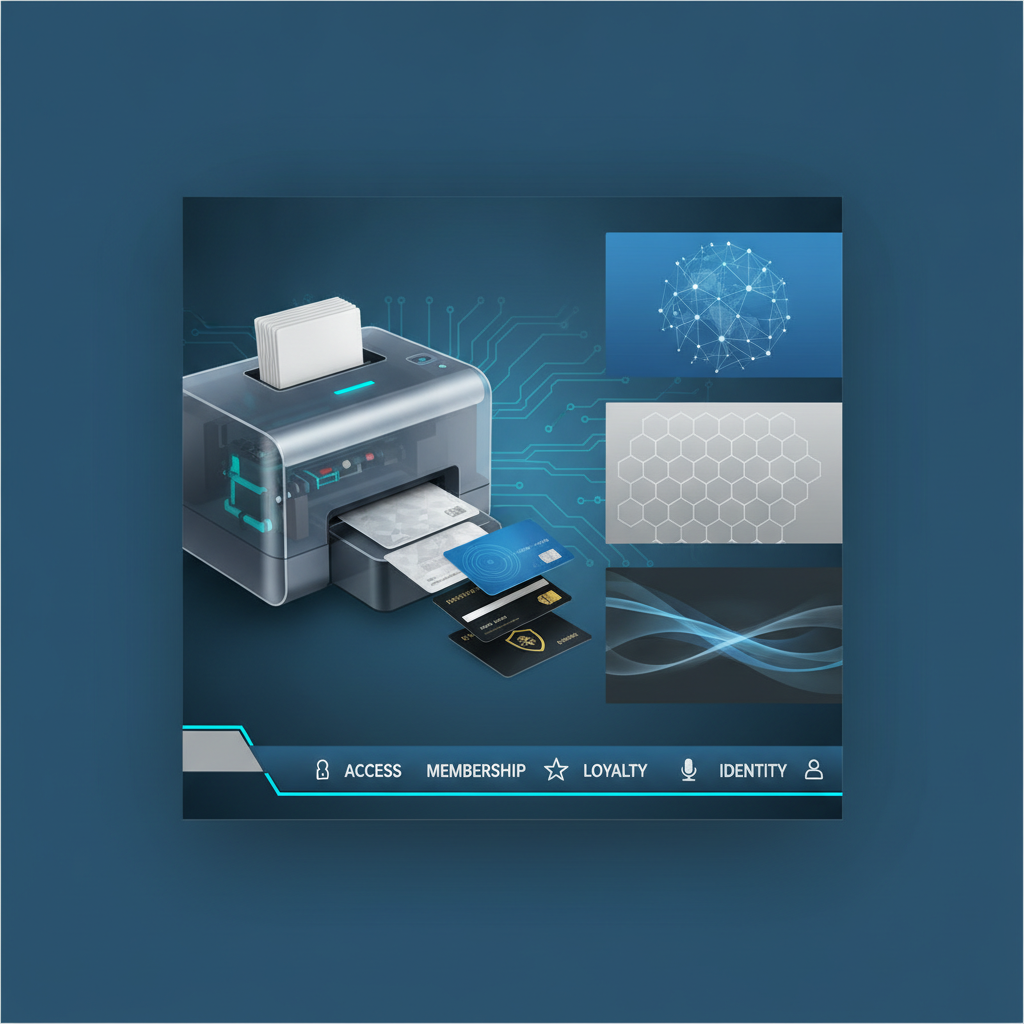 The sheer number of plastic card printer models available can make the selection process feel overwhelming. It does not have to be. Breaking the decision down into a handful of key criteria narrows the field quickly, and Plastic Card ID makes that process even more efficient by stocking only professional-grade hardware worth considering.
Buying the wrong printer costs more than buying the right one. Underpowered hardware creates bottlenecks. Overpowered hardware wastes capital. The goal is matching the printer's capabilities precisely to the organization's actual card program demands - current volume, projected growth, encoding needs, and output quality requirements.
Matching Printer to Print Volume
Volume is the first filter. Organizations printing fewer than 1,000 cards per year are in a different category than those running 3,000 or 6,000 cards per month. Entry-level printers like the Badgy200 are priced and designed for low-frequency use - pushing them beyond their intended throughput accelerates wear and increases maintenance frequency unnecessarily.
Mid-range printers like the Evolis Zenius and Primacy2 are built for sustained daily use at meaningful scale. Industrial and high-throughput models handle the kind of continuous-run demands that would exhaust a desktop unit within months. Honest volume assessment at the outset is worth more than any other single factor in the selection process.
Key Questions to Ask Before Buying
- How many cards does the organization print per month, on average?
- Are cards printed on one side or both sides?
- Does the card need to encode a magnetic stripe or smart chip?
- Is full-color printing required, or will monochrome output suffice?
- Will the printer be used in a single fixed location or moved between sites?
- Is lamination required for card durability or security features?
- What is the budget for the initial hardware investment, and for ongoing consumables?
These seven questions, answered honestly, create a clear picture of what any organization actually needs from a plastic card printer. CPE has helped tens of thousands of customers work through exactly this process. Reach out to Plastic Card ID at 800.835.7919 to walk through your specific requirements with a knowledgeable specialist.
Single-Sided vs. Dual-Sided Printing
Single-sided printers handle the front face of a card - logo, photo, name, title, any visual data that appears on one surface. That covers a wide range of card programs effectively and keeps hardware cost lower. Dual-sided printers add the ability to print the card back in the same pass, which is essential when organizations need to include regulatory text, barcode data, emergency instructions, or contact information on the reverse.
Dual-sided capability is available on mid-range and higher models. Choosing dual-sided from the start avoids the cost and disruption of upgrading later as card program requirements evolve. Organizations with any realistic expectation of needing back-of-card printing should build that capability into the initial purchase decision.
In-House Card Printing vs. Outside Vendors: The Real Numbers
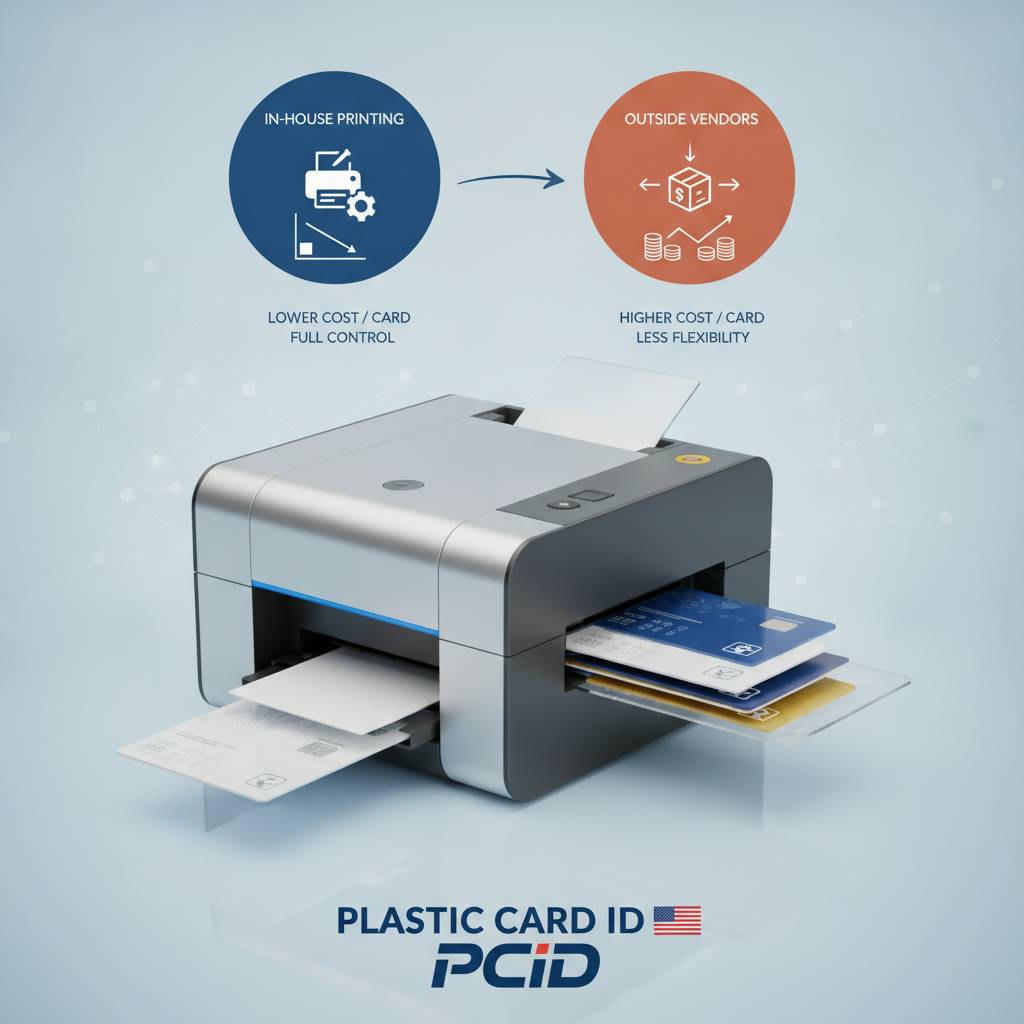 Organizations evaluating a plastic card printer investment sometimes weigh it against the alternative: ordering pre-printed cards from an outside vendor. The comparison is rarely as straightforward as it looks on first inspection, and the advantages of in-house printing compound significantly over time.
Lead times from outside vendors can run days to weeks. Rush orders cost more. Minimum order quantities mean storing excess inventory. Any change to card design - updated logo, new employee name, revised magnetic data - requires a new vendor order cycle. In-house printing eliminates every one of those friction points simultaneously.
Control, Speed, and Personalization
The fundamental value proposition of an in-house plastic card printer is control. Print on demand, personalize every single card, and never order more than you need. A new employee starts Monday - their ID card is ready Monday. A hotel guest arrives at midnight - their key card is encoded at check-in, not shipped from a warehouse three states away.
Personalization goes beyond names and photos. Magnetic stripe data, barcode values, expiration dates, department codes - all of these can vary card to card in a single print run. Outside vendors can technically accommodate this, but the process is slow, expensive, and logistically cumbersome compared to the instant, in-house alternative.
Cost Per Card Over Time
Initial hardware investment is real, but amortized across a card program's lifespan, the per-card cost of in-house printing typically undercuts vendor pricing substantially. Ribbon cost per card at mid-range print volumes generally falls in a range competitive with bulk vendor pricing - and that does not account for the savings from eliminating rush order premiums, shipping costs, and minimum quantity overruns.
Organizations printing 500 or more cards per month typically find their hardware investment pays back within the first year. Higher volume programs often see that payback period compress to six months or less. The math is not complicated once the real cost variables are laid out clearly, which is exactly the kind of analysis CPE helps prospective customers work through.
Security and Data Handling
Sending card data to an outside vendor creates a data handling chain that does not exist with in-house printing. Employee photos, access level assignments, magnetic stripe data - all of that information stays inside the organization when cards are printed on-site. For security-sensitive environments, that is not a minor consideration. It is often a decisive one.
In-house printing keeps sensitive credential data exactly where it belongs: under the organization's direct control. No third-party vendor needs access to HR records, access control assignments, or cardholder photos. The card program runs entirely within the organization's own security perimeter.
Frequently Asked Questions About Plastic Card Printers
Questions about plastic card printers tend to cluster around a few consistent themes. The answers below address the most common decision-making uncertainties that Plastic Card ID encounters from prospective customers across industries and organization sizes.
If a specific question about a particular printer model, encoding capability, or consumable compatibility is not covered here, the team at CPE is always the most direct path to an accurate answer.
How Long Do Card Printers Last?
Professional-grade plastic card printers from Evolis, Fargo, Zebra, and Matica are built for sustained commercial use. With proper maintenance - regular cleaning cycles, appropriate ribbon usage, and avoiding physical damage - these printers routinely deliver years of reliable service. The print head, which is the most sensitive component, lasts longest when cleaning schedules are observed and only compatible ribbons are used.
Many organizations find their printer hardware lasts five to eight years or more before replacement becomes necessary. At that lifespan, the per-card economics of in-house printing look even more favorable than initial calculations suggest. Proper maintenance is the single biggest factor in extending printer service life.
What Cards Can These Printers Use?
The printers supplied by Plastic Card ID are designed to work with standard CR80 PVC plastic cards - the same dimensions as a standard credit card. These are durable, professional cards that hold printed imagery well and accept encoding on magnetic stripes or embedded chips where applicable. Card thickness specifications vary slightly by printer model, and CPE can confirm compatibility for any specific application.
Beyond standard white cards, the lineup accommodates pre-printed card stock, cards with embedded RFID technology, and cards with pre-applied magnetic stripes ready for encoding. The range of card options that these printers can handle is broader than most buyers initially realize, giving organizations flexibility as their card program requirements evolve.
Can One Printer Handle Multiple Card Types?
Yes, within certain parameters. Many mid-range and high-end plastic card printers handle multiple card types in sequence - different designs, different data, even different encoding requirements - without manual reconfiguration between cards. Card printing software manages the variable data while the printer handles the mechanical and encoding processes consistently.
Organizations running multiple card programs from a single device - employee IDs, visitor passes, and temporary credentials, for example - should discuss their specific workflow with Plastic Card ID to confirm that the printer model they are considering handles that kind of multi-type output efficiently. Call 800.835.7919 to discuss your specific multi-program requirements.
Applications Across Industries: Where Plastic Card Printers Deliver Real Value
 The range of industries served by Plastic Card ID reflects how universally valuable in-house card printing capability has become. What once required outsourcing to a specialty printer is now manageable in-house by organizations of almost any size, across nearly every sector that issues credentials, manages access, or runs loyalty and membership programs.
Every organization that issues cards of any kind is a candidate for in-house printing. The question is not whether in-house printing makes sense in principle - it almost always does - but which plastic card printer makes sense for the specific use case.
Corporate and Enterprise ID Programs
Large corporations with ongoing employee turnover, contractor populations, and multi-site operations face the most compelling case for in-house card printing. New hires need ID cards on day one. Contractor credentials expire and require renewal. Visitors need temporary badges that reflect corporate branding rather than generic stock. A mid-range printer running continuously handles all of these demands without the delays that vendor-ordered cards create.
Enterprise programs often benefit from dual-sided printing capability and magnetic stripe or smart chip encoding to integrate card credentials directly with access control systems. The Evolis Primacy2 and Fargo printer lineup both address this combination of requirements effectively.
Education: K-12 and Higher Education
Schools and universities issue student IDs, staff cards, library cards, and increasingly, access control credentials - all under budget pressures that make cost-per-card economics critical. Entry-level printers like the Badgy200 handle small schools efficiently, while larger institutions benefit from the higher throughput of mid-range Evolis models or Zebra hardware.
Academic calendars create natural high-volume periods - back-to-school enrollment, new semester registrations - where in-house printing speed is particularly valuable. No waiting for vendor shipments when 500 new students need ID cards in the first week of September.
Hospitality, Events, and Retail
Hotels encoding key cards at the front desk, conference organizers printing attendee badges on-site, and retailers issuing loyalty cards personalized at point of sale - these are three very different use cases that share a common requirement: fast, accurate, in-house card production. Plastic Card ID supplies hardware suited to each scenario, from hotel property management integrations to the Matica Event Printer's high-speed event credentialing capability.
Retail loyalty programs benefit particularly from in-house printing because card issuance at the moment of enrollment drives participation rates higher than mailing cards after the fact. Instant card issuance converts more loyalty program signups into active members. The economics of that conversion benefit more than offset hardware investment costs in active retail environments.
Get Started with Plastic Card ID: Your Complete Plastic Card Printer Resource
 Selecting a plastic card printer, building out the consumable supply chain, and configuring encoding options - none of these steps need to be navigated alone. Plastic Card ID has spent over 25 years helping organizations exactly like yours move from "we need a card printer" to "our card program runs flawlessly." That expertise is available to every customer, regardless of organization size or print volume.
The lineup at CPE covers every realistic need: Evolis for scalable, versatile card printing across all volume ranges, Fargo and Zebra for security-critical environments, and Matica for high-speed event credentialing. Ribbons, cleaning kits, encoding upgrades, and all supporting accessories ship alongside the hardware. Everything a card program needs, from one source that genuinely understands the technology.
Why Now Is the Right Time to Invest
Organizations that delay in-house card printing investment continue paying the hidden costs of vendor dependency: lead times, minimum orders, rush fees, data handling concerns, and the operational friction of waiting for cards that should be printable on demand. Every month of delay is a month of unnecessary cost and inefficiency. The best time to set up an in-house card printing program is before the next wave of demand hits - not during it.
Whether a program is launching from scratch or replacing aging hardware that has slowed production and raised maintenance costs, Plastic Card ID has the plastic card printer solution that fits. The product knowledge, the curated lineup, and the consumable supply chain are all in place. The next step is simply reaching out.
Contact the Specialists at Plastic Card ID
More than 100,000 businesses across the United States have trusted Plastic Card ID to supply their card printing programs. That track record is built on product quality, honest recommendations, and the kind of ongoing support that turns a one-time hardware purchase into a long-term operational partnership. CPE is not in the business of selling printers that do not fit - they are in the business of building card programs that work.
Call Plastic Card ID today at 800.835.7919 and speak directly with a plastic card printer specialist who can match your volume, encoding needs, and budget to the right hardware from the right brand.
From the Badgy200 to the Agilia, from YMCKO ribbons to smart chip encoding modules, Plastic Card ID has everything your card program needs to run professionally, efficiently, and without interruption. Make the call. Get the right printer. Build a card program that works.
Shop Plastic Card Printers Best Deals & Fast Shipping
Previous Page