Evolis vs Fargo vs Zebra Card Printer Comparison
Table of Contents []
- Which Card Printer Actually Fits Your Operation? A Real-World Guide from Plastic Card ID
- Understanding the Landscape: Four Brands, Dozens of Decisions
- Volume Is Everything: Matching the Machine to Your Print Demand
- Consumables and Ongoing Costs: The Part Nobody Warns You About
- Use Cases That Drive the Decision: What Kind of Cards Are You Actually Making?
- Frequently Asked Questions: Evolis vs Fargo vs Zebra Card Printer Comparison
- Why Plastic Card ID Should Be Your Long-Term Card Printer Partner
Which Card Printer Actually Fits Your Operation? A Real-World Guide from Plastic Card ID
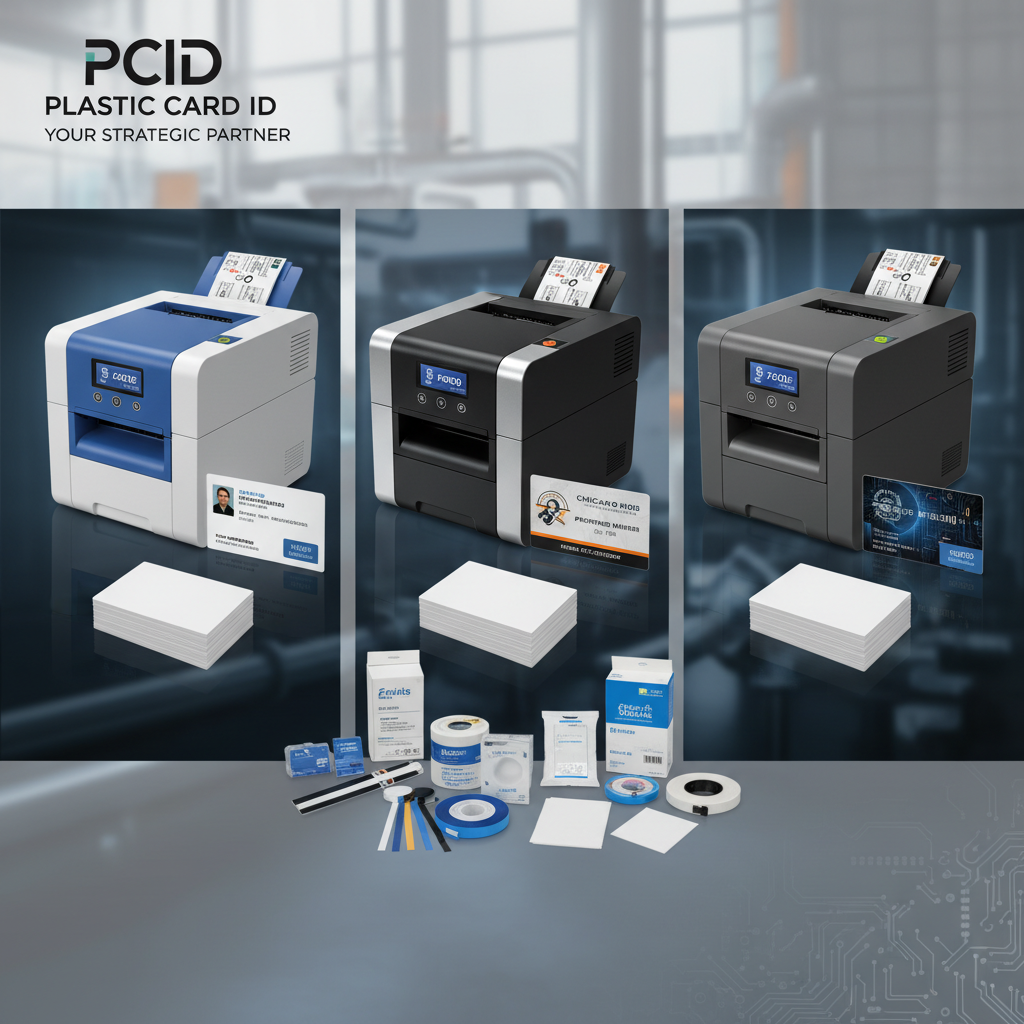 Most buyers arrive at this question already overwhelmed. You've got three major brand names bouncing around in your research tabs - Evolis, Fargo, Zebra - and possibly a fourth, Matica, lurking somewhere in the background. Each brand has evangelists. Each has critics. And almost every comparison article you've read so far was written by someone who has never actually fed a ribbon through a hopper at 2 a.m. before a conference. This guide is different.
Plastic Card ID has been putting professional card printers into the hands of real organizations for over 25 years. More than 100,000 customers served. Enough field experience to know that the "best" printer is never universal - it's situational, volume-dependent, and often determined by factors buyers forget to ask about until something goes wrong. So let's do this comparison the right way.
| Brand | Best For | Volume Range | Price Range | Notable Feature |
|---|---|---|---|---|
| Evolis | Versatile, all-scale use | Low to High | $300-$3,500 | Widest product range |
| Fargo | Security-focused ID programs | Mid to High | $600-$5,000 | Lamination and encoding |
| Zebra | Enterprise and access control | Mid to High | $700-$6,000 | Durability and integration |
| Matica | On-site event credentialing | High-speed bursts | $1,200-$4,000 | Event-ready speed |
Understanding the Landscape: Four Brands, Dozens of Decisions
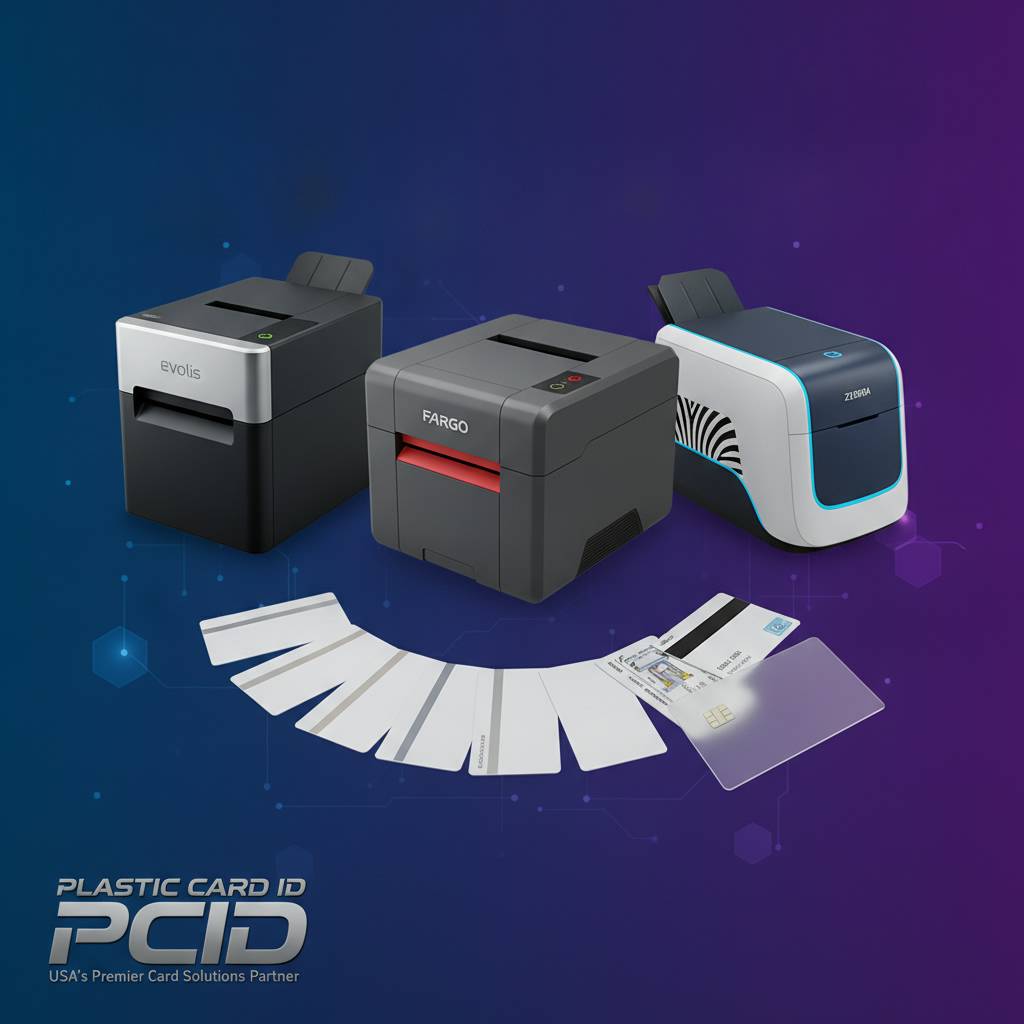 The card printer market isn't a commodity space. These are precision machines with sophisticated ribbon chemistry, encoding electronics, and software ecosystems behind them. Choosing poorly doesn't just cost you money upfront - it costs you in consumables, downtime, and the creeping frustration of a workflow that never quite runs smoothly. That's the context in which this comparison lives.
Evolis, Fargo, Zebra, and Matica each occupy a recognizable lane, but those lanes overlap more than brand marketing suggests. Understanding where they diverge is what makes or breaks a purchasing decision. Volume is one axis. Security features are another. The third - and most underappreciated - is total cost of ownership once ribbons, maintenance kits, and support are factored in.
Evolis: The Swiss Army Knife of Card Printing
Evolis has earned its reputation by doing something most brands struggle with: building a coherent product family that genuinely scales. At the low end, the Badgy200 is purpose-built for organizations printing fewer than 1,000 cards annually. It's compact, approachable, and doesn't require a dedicated IT setup to operate. That's not a small thing for a school district or a small nonprofit trying to produce basic membership cards.
Move up the lineup and you hit the Evolis Zenius and Primacy2 - genuinely capable workhorses handling 1,000 to 6,000 cards per month with dual-sided printing and magnetic stripe encoding options built in or available as upgrades. These mid-range models are where Evolis really shines, hitting a sweet spot of capability and cost that few competitors can match. And then there's the Evolis Agilia at the top tier, designed for organizations that demand edge-to-edge, highest-quality output without compromise.
The Evolis software ecosystem - Evolis Premium Suite - is another point in the brand's favor. Card design, encoding logic, and printer management all live under one roof. For buyers who don't have a dedicated IT team managing their badge program, this unified environment reduces friction significantly compared to stitching together third-party solutions.
Fargo: Built for Secure Identity Programs
When your card program involves access control, government-issued credentials, or any scenario where card tampering is a real concern, Fargo earns serious consideration. The brand has long prioritized security features - HoloKote watermarks, lamination overlaminates with custom security designs, and encoding options that go well beyond basic magnetic stripe. These aren't just features; they're deterrents.
Fargo printers in the mid-to-high volume range carry a build quality that reflects their target market: organizations that can't afford printer failures during critical ID issuance periods. Fargo's lamination modules are among the most respected in the industry, extending card life and adding tamper-evident layers that matter when credentials carry real-world access consequences. If you're running a university ID program or a corporate campus with restricted zones, these features translate directly into reduced security risk.
Zebra: Enterprise DNA at Every Level
Zebra Technologies brings something to the table that Evolis and Fargo don't always emphasize as heavily: deep enterprise integration. If your organization already runs Zebra devices for label printing, asset tracking, or warehouse operations, adding Zebra card printers creates a unified vendor relationship that simplifies procurement, support, and firmware management. That's not a trivial benefit at scale.
Zebra card printers are also known for durability in demanding environments. These machines are built to survive shift changes, temperature swings, and the kind of rough handling that happens in logistics hubs and large institutional settings. The ZC series and ZXP series give buyers solid options across the mid-to-high volume range, with robust encoding options including smart chip and contactless capabilities that align well with modern access control requirements.
Volume Is Everything: Matching the Machine to Your Print Demand
No single mistake costs card program managers more than buying a printer calibrated for the wrong volume tier. An entry-level printer pushed beyond its duty cycle wears out prematurely. An industrial printer purchased for a program printing 200 cards a year sits mostly idle while its consumables age and its ROI calculus collapses. Volume isn't just a spec - it's the foundation of every smart buying decision in this category.

CPE helps buyers navigate this constantly. The honest answer is that most organizations overestimate their print volume in the planning phase and then discover their actual numbers are much lower - or, conversely, that growth plans materialize faster than expected. Building in one tier of headroom above your current volume is almost always the right call.
Low-Volume Programs: Under 1,000 Cards Per Year
For small nonprofits, community organizations, boutique fitness studios, and similar operations, the Evolis Badgy200 exists as a purpose-designed answer. It's not a stripped-down professional printer - it's a printer designed from the ground up for exactly this use case, with software, ribbons, and blank cards packaged to make low-volume printing as straightforward as possible. The learning curve is gentle. The output is professional.
Fargo and Zebra don't really compete meaningfully at this tier. Their entry points skew toward higher-capability models that bring more cost and complexity than a low-volume program needs or can justify. Matching printer capability to actual production needs is how you keep total cost of ownership from running away from you in year two and three.
Mid-Range Programs: 1,000 to 6,000 Cards Per Month
This is where the comparison gets genuinely interesting. Evolis Zenius and Primacy2 are strong contenders here, with dual-sided printing and optional encoding upgrades making them adaptable as program requirements evolve. Fargo's mid-range lineup adds lamination capabilities and stronger security features. Zebra brings its enterprise durability and integration advantages. All three deserve real evaluation at this tier.
The differentiator at mid-range often comes down to what your cards actually need to do. If they're straightforward visual ID cards, Evolis wins on simplicity and cost-efficiency. If they carry access control credentials or require lamination for extended durability, Fargo earns a harder look. If they're part of a broader enterprise device ecosystem, Zebra's integration story becomes compelling. Ask yourself what your card does, not just how it looks.
- Dual-sided printing capability - does your design require a printed back?
- Magnetic stripe encoding - loyalty programs, access control, and hotel key cards often require this
- Smart chip encoding - higher-security applications may demand contact or contactless chip support
- Lamination needs - does card longevity or security require an overlaminatate layer?
- Software compatibility - does the printer work with your existing ID software platform?
High-Volume and Industrial Programs
Above 6,000 cards per month, the conversation shifts toward industrial-grade systems and event-specific solutions. The Evolis Agilia represents premium single-card output quality at the top of Evolis's lineup, while the Matica Event Printer is purpose-built for high-speed on-site badge credentialing - the kind of scenario where you need hundreds of badges printed, encoded, and delivered quickly in a live event environment.
Fargo and Zebra also offer high-volume options that satisfy demanding enterprise requirements, particularly when security overlaminates and multi-technology encoding are non-negotiable. At this tier, total cost of ownership analysis becomes critical - ribbon yield per card, cleaning kit frequency, laminate consumption, and support contract terms all accumulate into meaningful cost differentials over a 36-month period.
Consumables and Ongoing Costs: The Part Nobody Warns You About
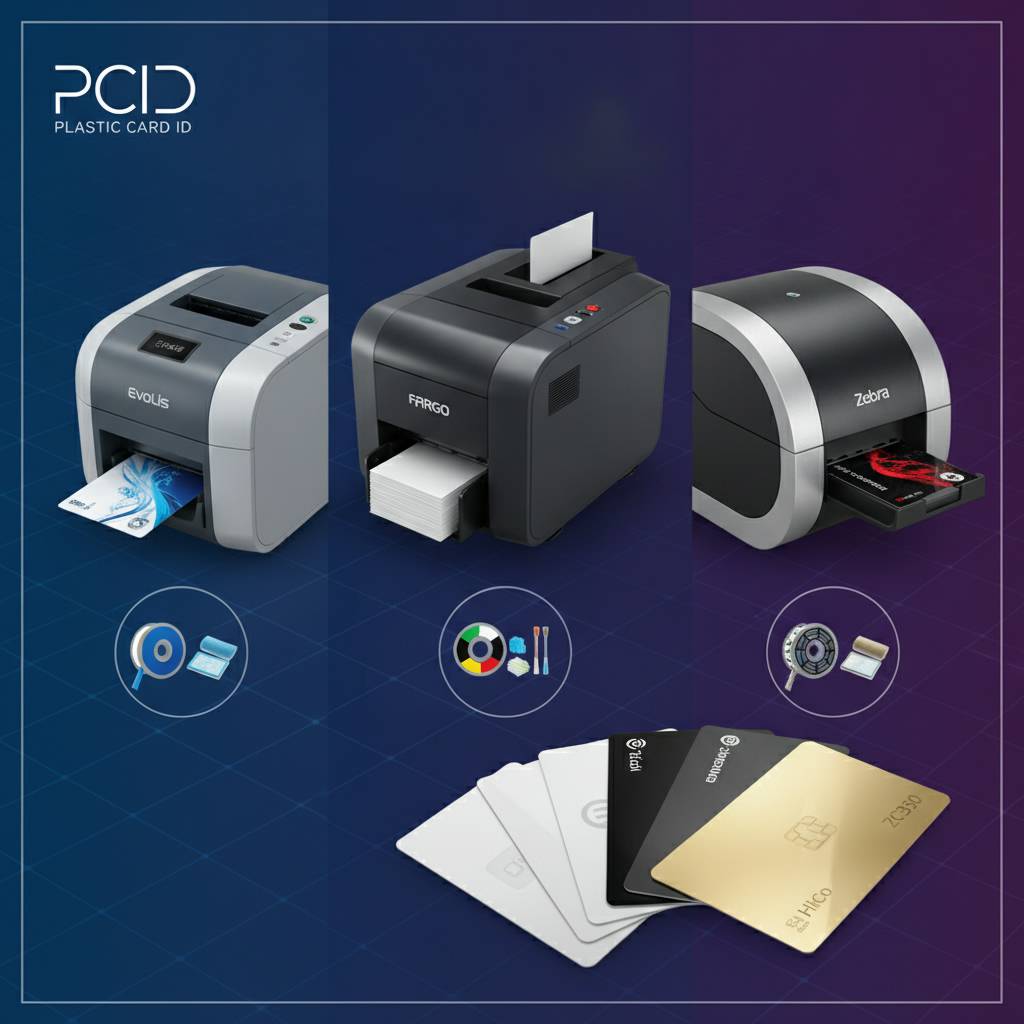 The printer purchase price is the number everyone fixates on. It's also, in many cases, the least important number over a three-year horizon. Consumables - ribbons, cleaning kits, lamination films - are recurring costs that compound quietly. A printer with lower ribbon yield per panel, or one that requires more frequent cleaning cycles, can easily outspend a more expensive unit over its operational life.
CPE supplies the full consumables lineup: YMCKO color ribbons, monochrome ribbons for single-color applications, specialty ribbons, cleaning kits, lamination modules, and encoding upgrades. Understanding which consumables your chosen printer requires - and what they cost per card produced - is as important as any hardware specification on the spec sheet.
Ribbon Types and What They Mean for Your Program
YMCKO ribbons are the workhorses of full-color card printing. The Y (yellow), M (magenta), C (cyan), K (black resin), and O (overlay) panels each contribute to the finished card image. The yield per ribbon roll - how many cards you get before a ribbon change - varies by brand and even by model within a brand. Always calculate your cost per card, not your cost per ribbon roll.
Monochrome ribbons for single-color printing (black, blue, white, and others) offer much higher yield at significantly lower cost per card. For applications like basic employee badges where a single-color logo and name field suffice, monochrome printing is a smart economic choice. Specialty ribbons - silver, gold, scratch-off coatings - serve niche applications but add real visual impact when the use case justifies them.
Cleaning Kits and Maintenance Cycles
Card printers are precision instruments. Dust, card debris, and residual dye contamination accumulate on rollers and print heads over time, degrading print quality and ultimately shortening hardware life. Cleaning kits - typically consisting of cleaning cards and cleaning swabs - are the first line of defense. Most manufacturers specify cleaning intervals in cards printed, and following those intervals is non-negotiable for maintaining print quality and warranty coverage.
Skipping cleaning cycles is one of the most common causes of premature printhead failure, and printheads are expensive to replace. Zebra, Fargo, and Evolis all have specific cleaning kit requirements for their respective models. Plastic Card ID stocks cleaning kits for all brands and can help match the right kit to your specific hardware.
Encoding Upgrades: Magnetic Stripe, Smart Chip, and Beyond
Not every card program starts with encoding requirements, but many grow into them. Employee ID cards that begin as purely visual credentials often evolve to incorporate magnetic stripe encoding for time-and-attendance systems or access control. Hotels need magnetic stripe encoding for key cards. Universities want smart chip encoding for library systems, dining accounts, and building access - all on the same credential.
The good news is that most professional card printers from Evolis, Fargo, and Zebra support encoding upgrades - either factory-installed or added as modules. Planning for future encoding needs at the time of initial purchase avoids the cost and disruption of replacing hardware later. Input hoppers for higher-capacity unattended printing and card carriers and sleeves round out the accessories ecosystem that keeps a card program running smoothly day to day.
| Consumable Type | Typical Use Case | Compatible Brands |
|---|---|---|
| YMCKO Color Ribbon | Full-color ID and membership cards | Evolis, Fargo, Zebra, Matica |
| Monochrome Ribbon | High-yield single-color printing | Evolis, Fargo, Zebra |
| Lamination Film | Security and durability overlay | Fargo, Zebra, Evolis (select models) |
| Cleaning Kits | Maintenance and print quality | All brands |
Use Cases That Drive the Decision: What Kind of Cards Are You Actually Making?
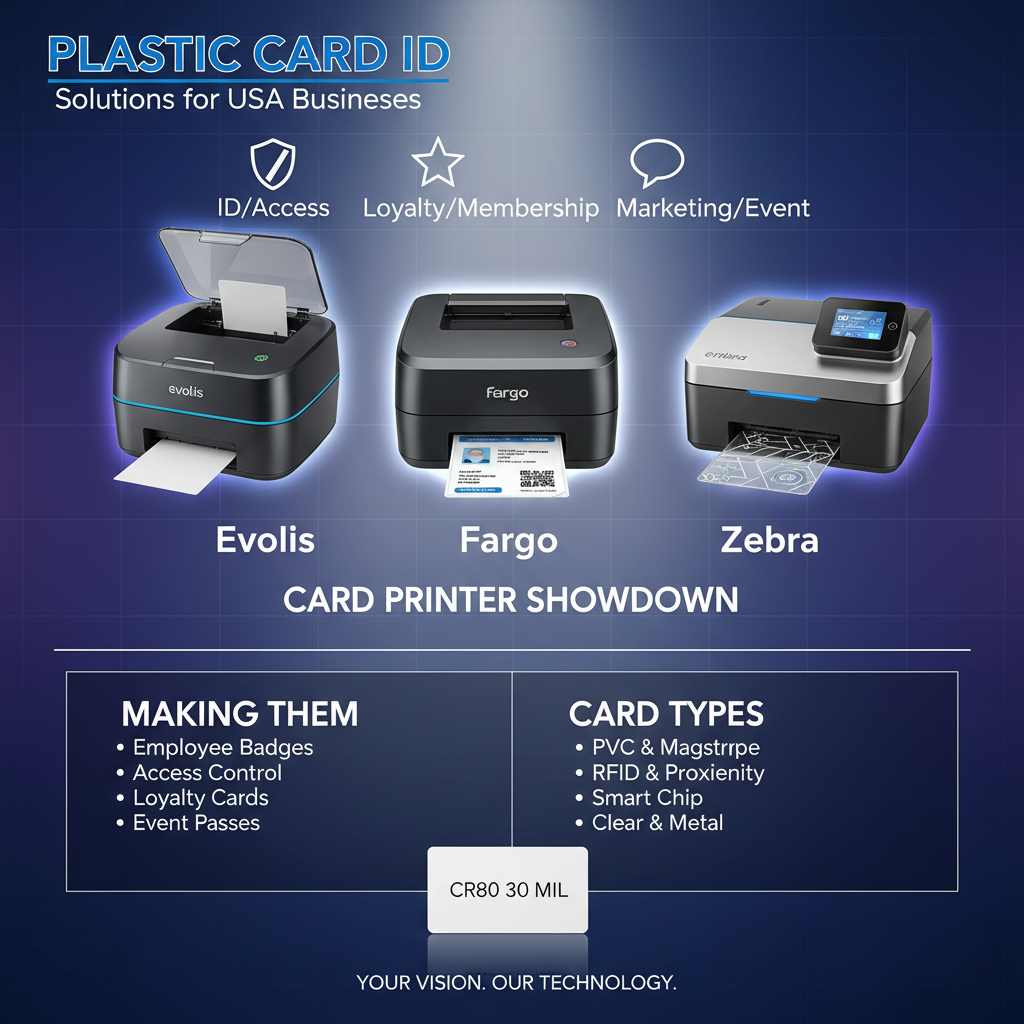 Brand comparison matters less than use case alignment, and that's a point worth emphasizing. An organization producing hotel key cards has fundamentally different requirements than a company producing secure government employee IDs - even if both are printing roughly the same volume per month. Card type, encoding requirements, durability demands, and personalization complexity all shape which printer family makes the most sense.
The breadth of card programs Plastic Card ID supports is genuinely wide: employee ID cards, membership cards, loyalty programs, access control credentials, student IDs, hotel key cards, event badges and lanyards, library cards - each with its own combination of design, encoding, and durability requirements. There's no one-size answer, which is exactly why having an experienced supplier matters.
Employee ID and Access Control Cards
Corporate employee ID programs almost universally involve some form of encoding - magnetic stripe for basic time-and-attendance, smart chip or contactless technology for building access. Fargo and Zebra are particularly well-suited here, given their strong security feature sets and encoding options. The visual quality of the card matters too - a professional-looking employee ID contributes to brand perception in ways that cheap output simply cannot.
Access control programs demand cards that work reliably in readers over extended periods. Card durability, encoding reliability, and consistent print quality are all table-stakes requirements. Fargo's lamination options are especially relevant for access control cards that see heavy daily use in high-traffic environments like manufacturing facilities and hospital campuses.
Membership and Loyalty Cards
Gyms, retail loyalty programs, professional associations, libraries - the membership card segment is enormous and surprisingly varied in its requirements. Some programs need nothing more than a visually appealing full-color card. Others require magnetic stripe encoding to interface with point-of-sale systems. A few want smart chip integration for enhanced security or stored-value functionality.
Evolis printers, particularly in the mid-range Zenius and Primacy2 tier, are exceptionally well-matched for membership and loyalty card programs. The combination of excellent color output, flexible encoding options, and reasonable consumable costs makes Evolis a natural fit for organizations managing active, growing card programs. The ability to print on demand - personalizing each card as members join - eliminates the waste and lead times of outsourcing card production.
Event Credentials and High-Speed Badge Printing
Event credentialing is its own specialized world. Conferences, trade shows, festivals, and corporate events all create sudden, intense demand for printed badges - often with on-site personalization, photo capture, and rapid distribution requirements. The Matica Event Printer was designed for exactly this scenario. It brings high-speed output capability to settings where throughput, not just quality, determines whether the event check-in experience succeeds or collapses into a queue nightmare.
For recurring annual events or organizations that run multiple events per year, owning a dedicated event credentialing setup is often more economical than renting equipment or outsourcing production. Total control over the badge printing process means last-minute changes, late registrations, and day-of additions are handled without panic. CPE can help size the right Matica configuration based on expected event attendance and badge complexity.
Frequently Asked Questions: Evolis vs Fargo vs Zebra Card Printer Comparison
After thousands of conversations with buyers across industries, certain questions surface repeatedly. They deserve direct, honest answers - not the carefully hedged non-answers you find in brand marketing materials. Here are the questions buyers ask most, answered plainly.

Which Brand Has the Lowest Total Cost of Ownership?
It depends on your volume and feature requirements. At low-to-mid volumes, Evolis generally delivers the most competitive cost per card when YMCKO ribbon yield and consumable pricing are factored in. At higher volumes with lamination requirements, Fargo's consumable ecosystem is well-optimized for security-grade output. Zebra's total cost case strengthens when enterprise integration eliminates support overhead from managing multiple vendor relationships.
Never evaluate total cost of ownership based on printer purchase price alone. A three-year cost model that includes ribbons, cleaning kits, lamination films, and expected maintenance is the only honest comparison. Plastic Card ID can help you build that model - contact the team at 800.835.7919 to talk through the numbers for your specific use case.
Can I Upgrade a Printer Later, or Do I Need to Buy the Right One Now?
Most professional card printers in the Evolis, Fargo, and Zebra lineups offer field-upgradeable encoding options - magnetic stripe modules, smart chip modules, dual-sided printing kits - that allow you to add capability without replacing the entire unit. However, not every upgrade path is available for every model, and some capabilities (like lamination) require models that are lamination-capable from the factory.
The smartest approach is to buy one tier above your current confirmed requirements, ensuring the hardware can accommodate the next logical growth step in your program. Trying to retrofit a printer with capabilities it was never designed to support is a frustrating and expensive lesson. Invest in the right foundation and the upgrades make sense when you need them.
How Do I Know When I've Outgrown My Current Printer?
There are clear signals. Print quality degradation that cleaning and maintenance don't resolve. Ribbon consumption rates that no longer align with your output volume. Extended print queue times during peak issuance periods. Frequent error states or jams that slow production. Any one of these, sustained over time, suggests your printer is operating beyond its intended duty cycle.
The more subtle signal is when your card program requirements - encoding types, security features, dual-sided printing - have grown beyond what your current hardware supports. Matching your printer's capability ceiling to your program's current and near-future requirements is what separates a proactive upgrade from an emergency replacement.
Why Plastic Card ID Should Be Your Long-Term Card Printer Partner
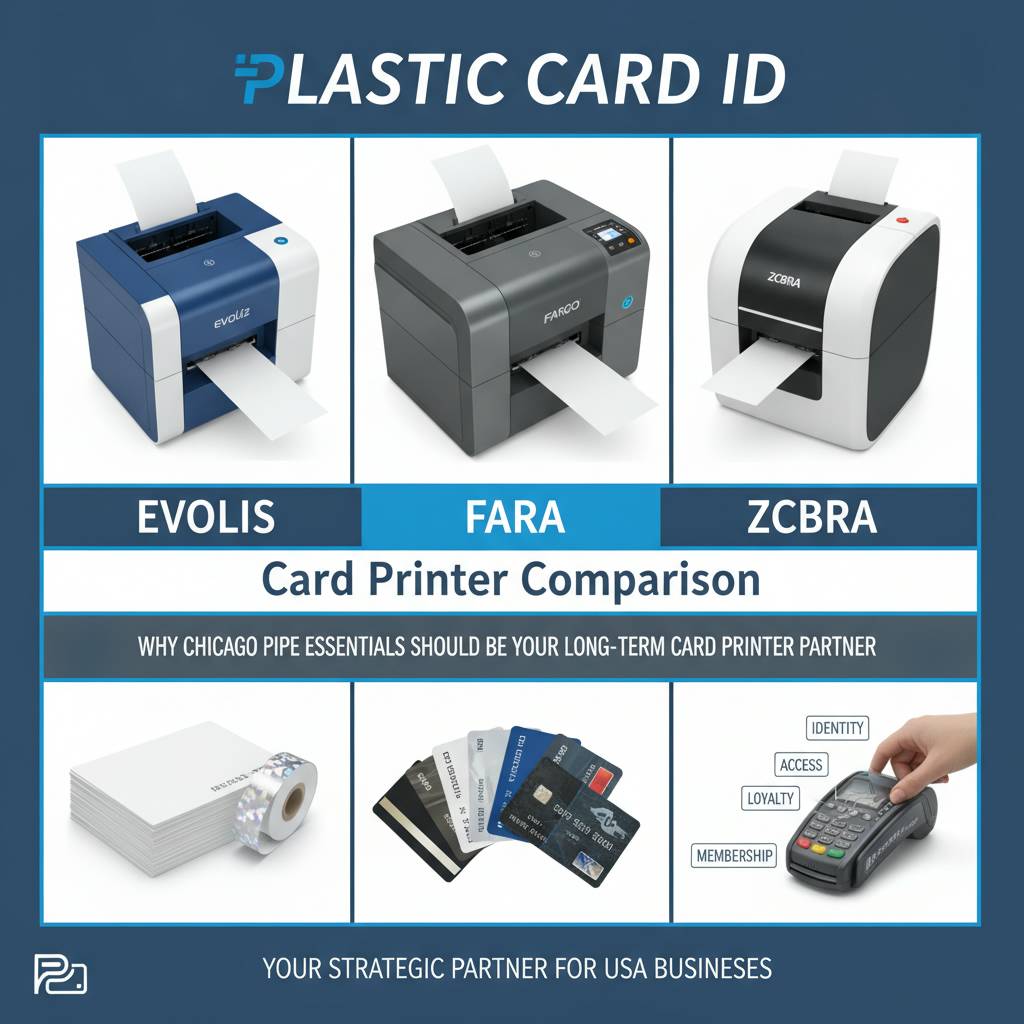 There are plenty of places to buy a card printer. What's genuinely harder to find is a supplier who knows the full picture - hardware, consumables, software compatibility, encoding options, and the practical realities of running a card program month after month. That's the value Plastic Card ID has built over 25 years and 100,000 customer relationships across the United States. The knowledge accumulated across that breadth of experience doesn't exist in a product listing on a marketplace site.
Having a knowledgeable partner in your corner when a ribbon specification changes, a firmware update causes unexpected behavior, or your program requirements evolve faster than planned is worth more than saving $50 on a printer purchase. CPE is positioned to support your card program at every stage - from initial printer selection through consumables supply, encoding upgrades, and hardware refresh planning.
The Full Supply Chain, Under One Roof
Beyond the printers themselves, Plastic Card ID supplies everything your card program needs to keep running without interruption. Ribbons across all types and brands. Cleaning kits calibrated to your specific hardware. Lamination films for Fargo and Zebra laminator-equipped models. Encoding upgrade modules. Input hoppers for higher-capacity unattended printing runs. Card carriers and sleeves for protecting finished credentials. The full supply chain, available from one trusted source.
Running out of ribbon mid-week isn't a minor inconvenience when it means your HR team can't onboard new employees or your event check-in line grinds to a halt. Having a reliable consumables supplier with deep stock across all major brands is a foundational operational advantage that buyers sometimes only appreciate after their first supply disruption.
Brands Carried and Support Offered
Evolis, Fargo, Zebra, and Matica - Plastic Card ID carries professional-grade equipment from all four. That means the comparison you're reading here isn't theoretical; it's grounded in hands-on familiarity with the actual machines, their ribbons, their software ecosystems, and the real-world scenarios where each brand performs best. The recommendation you receive is based on your needs, not on which brand has the most margin attached to it.
Whether your program is printing 500 student IDs once a year or 5,000 employee access control cards every month, the right printer, ribbon, and support relationship exist within the Plastic Card ID catalog. Get the right answer the first time and avoid the costly detour of buying the wrong hardware.
Ready to make a confident, informed decision on your next card printer? Plastic Card ID is ready to help. Call 800.835.7919 today and speak with a specialist who knows these machines inside and out.
Plastic Card Printer Cost Guide: Prices for Every Budget
Previous Page