Where to Buy Plastic Card Printers USA: Best Options
Table of Contents []
- Why Smart Buyers Come to Plastic Card ID When Searching Where to Buy Plastic Card Printers USA
- Understanding the Landscape: What Makes a Plastic Card Printer Worth Buying
- The Brands Behind the Hardware: Evolis, Fargo, Zebra, and Matica
- Supplies and Consumables: Keeping Your Card Program Running
- The Business Case for In-House Card Printing
- Frequently Asked Questions About Buying Plastic Card Printers in the USA
- Ready to Find Your Printer? Plastic Card ID Is Your Trusted Source
Why Smart Buyers Come to Plastic Card ID When Searching Where to Buy Plastic Card Printers USA
 Most businesses stumble into the card printer market without a roadmap. They search, they compare, they get overwhelmed by jargon - YMCKO ribbons, dye-sublimation, retransfer printing, lamination modules. Then they find Plastic Card ID, and suddenly the path is clear. With over 25 years of hands-on industry experience and more than 100,000 customers served across the United States, CPE is the destination serious buyers return to again and again.
This isn't a big-box situation where plastic card printers share shelf space with office chairs and copy paper. This is a curated, professional lineup built specifically for organizations that need reliable, high-quality card output on their own timeline. Whether you're printing 200 employee badges or 6,000 hotel key cards a month, the right machine - and the right supplier - makes all the difference.
| Production Tier | Typical Volume | Recommended Models | Best For |
|---|---|---|---|
| Entry-Level | Under 1,000 cards/year | Evolis Badgy200 | Small offices, clubs, community orgs |
| Mid-Range | 1,000-6,000 cards/month | Evolis Zenius, Primacy2 | Schools, healthcare, corporate ID |
| Premium | High-quality output priority | Evolis Agilia | Edge-to-edge, top-tier results |
| Security/Industrial | High-volume, security-focused | Fargo, Zebra | Government, access control, enterprise |
| Event/On-Site | Burst, on-demand | Matica Event Printer | Conferences, trade shows, events |
Understanding the Landscape: What Makes a Plastic Card Printer Worth Buying
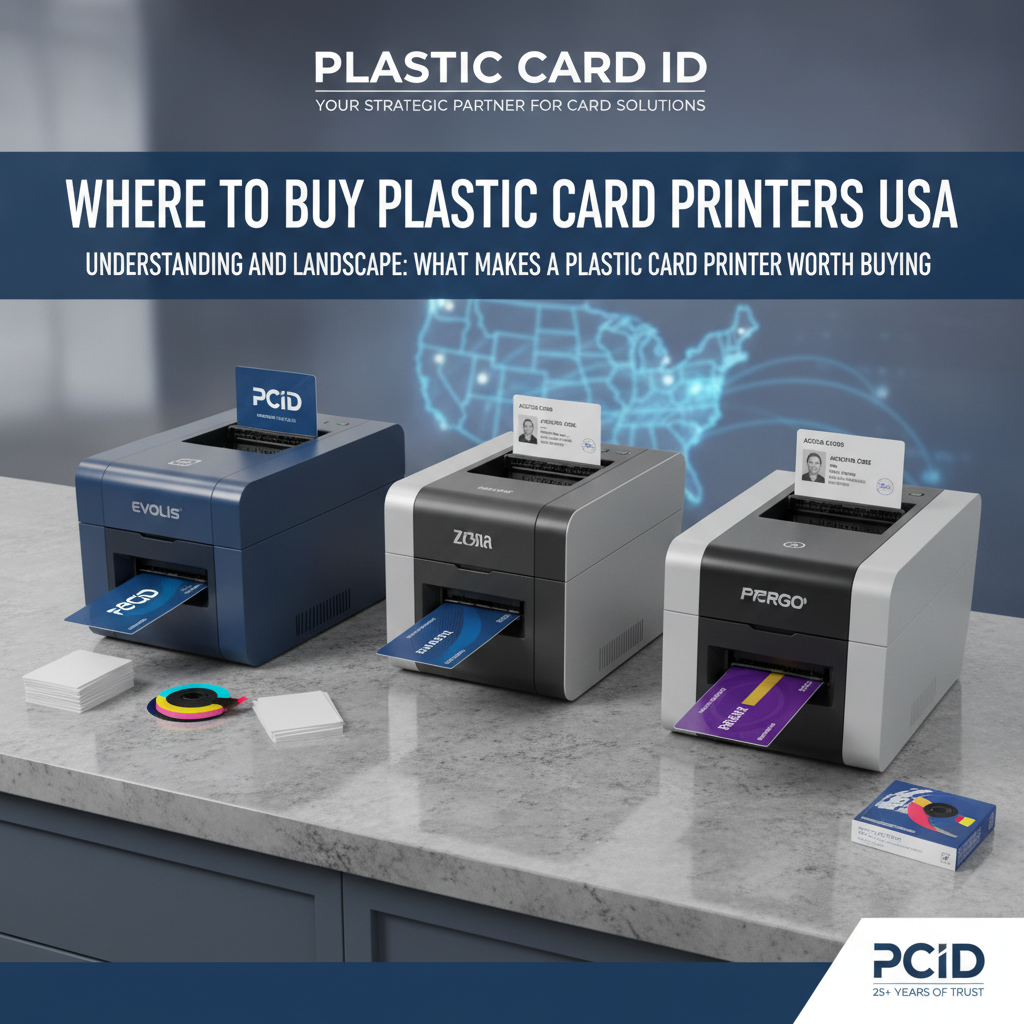 Not all plastic card printers are created equal - not by a long shot. The difference between a budget machine and a professional-grade unit shows up immediately: in print resolution, in ribbon efficiency, in how cleanly the card ejects from the output tray. Professional buyers understand that the printer is an investment, not just a purchase. Longevity, parts availability, and support matter as much as the sticker price.
The brands carried by CPE - Evolis, Fargo, Zebra, and Matica - represent the top tier of what the global card printing industry produces. These aren't off-brand units assembled without pedigree. These are machines that hospitals, universities, Fortune 500 companies, and government contractors rely on every single day. That's not marketing language; that's a track record stretching back decades.
Dye-Sublimation vs. Retransfer Printing: Know Before You Buy
Dye-sublimation is the workhorse technology in direct-to-card printing. Heat activates the dye in the ribbon, transferring it directly onto the card surface. It's fast, cost-effective, and produces vibrant, full-color output for the vast majority of card applications. Most Evolis, Fargo, and Zebra models in the mid-range tier use this approach.
Retransfer printing goes a step further - it prints to a clear film first, then fuses that film to the card. The result is edge-to-edge coverage with exceptional sharpness, even on cards with uneven surfaces like smart chip modules. If your program demands the absolute highest visual quality, retransfer technology delivers it. The Evolis Agilia is built precisely for this level of output.
Single-Sided vs. Dual-Sided: Making the Right Call
Single-sided printing handles the majority of basic ID card needs - a photo, a name, a logo, maybe a barcode. It's simpler, faster per card, and costs less upfront. For organizations that encode magnetic stripes or smart chips but keep card design minimal, single-sided is a rational choice.
Dual-sided printing opens up real estate on the card's back face. Contact information, emergency instructions, building access diagrams, policy text - both sides of a card can carry meaningful, functional content. Mid-range printers like the Evolis Primacy2 support dual-sided output without demanding a significant jump in hardware cost. The efficiency gain is substantial for programs where card content is dense.
Encoding Options That Extend Card Functionality
A card that only displays printed information is just the beginning. Modern card programs frequently require encoding - magnetic stripes for access control and time-tracking systems, smart chips for secure authentication, and contactless technology for tap-based entry. Encoding upgrades are available for many units in the Plastic Card ID lineup, installed directly into the printer during the card personalization process.
Magnetic stripe encoding writes data to the stripe in a single pass alongside printing - no separate step, no extra handling. Smart chip and contactless encoding require compatible hardware modules but follow the same workflow principle: one card goes in, and a fully personalized, encoded credential comes out. This integration is what makes in-house card printing so operationally powerful for enterprise and institutional users.
The Brands Behind the Hardware: Evolis, Fargo, Zebra, and Matica
Brand selection matters in plastic card printing because it directly affects your access to replacement parts, ribbon compatibility, firmware updates, and long-term support. Plastic Card ID made deliberate choices about which brands to carry, and every name in the lineup earns its place.
Each brand excels in distinct operational contexts. Evolis dominates the desktop and mid-volume segment with elegant design and strong consumable ecosystems. Fargo and Zebra are the go-to names for security-conscious programs - government IDs, physical access control, enterprise deployments. Matica addresses the high-speed, on-site event printing scenario that no other brand in the lineup covers as directly. Together, they cover virtually every card printing scenario a U.S. business will encounter.
Evolis: Precision at Every Volume Level
The Evolis catalog at CPE spans from the Badgy200 - a compact, approachable unit for organizations printing under 1,000 cards annually - up through the Zenius and Primacy2 for serious volume users, and culminates in the Agilia for maximum quality output. Each model is engineered with consistent design philosophy: clean card handling, intuitive ribbon loading, and reliable output across thousands of cycles.
The Primacy2 deserves particular attention. It handles both single and dual-sided printing, supports magnetic stripe encoding, and operates comfortably in the 1,000-6,000 cards per month range. For mid-size organizations that need a dependable daily driver, the Primacy2 hits a sweet spot that few printers at its price range can match. Call 800.835.7919 to discuss which Evolis model fits your current output needs.
Fargo and Zebra: Security-First Card Programs
When the application involves physical security - building access, government-issued credentials, law enforcement IDs, military base passes - the margin for error drops to zero. Fargo printers have long served this segment with robust build quality, advanced encoding compatibility, and support for high-security laminate overlays. Zebra brings similar credentials with particularly strong enterprise software integration, making it a natural fit for large IT-managed environments.
These aren't the printers you buy because they're the cheapest option in the category. You buy Fargo or Zebra because your card program cannot afford failures, inconsistency, or security gaps. For organizations managing access control in healthcare facilities, corporate campuses, or educational institutions, the choice becomes obvious once you understand what's actually at stake in a card printing operation.
Matica: Built for the Energy of Live Events
The Matica Event Printer occupies a unique and important niche. Consider a conference registering 2,000 attendees over two days - printed badges, on-demand, as each person checks in. Speed becomes the defining metric. Not weekly throughput, but prints-per-hour, queue management, and zero-jam reliability under continuous operation. That's exactly the problem Matica was designed to solve.
Trade shows, university orientation days, corporate summits, hospital employee onboarding sessions - any scenario where large numbers of unique cards must be produced rapidly in a single location is where the Matica Event Printer justifies its existence. CPE stocks this unit because the need is real and no other printer in the lineup handles it as efficiently.
Supplies and Consumables: Keeping Your Card Program Running
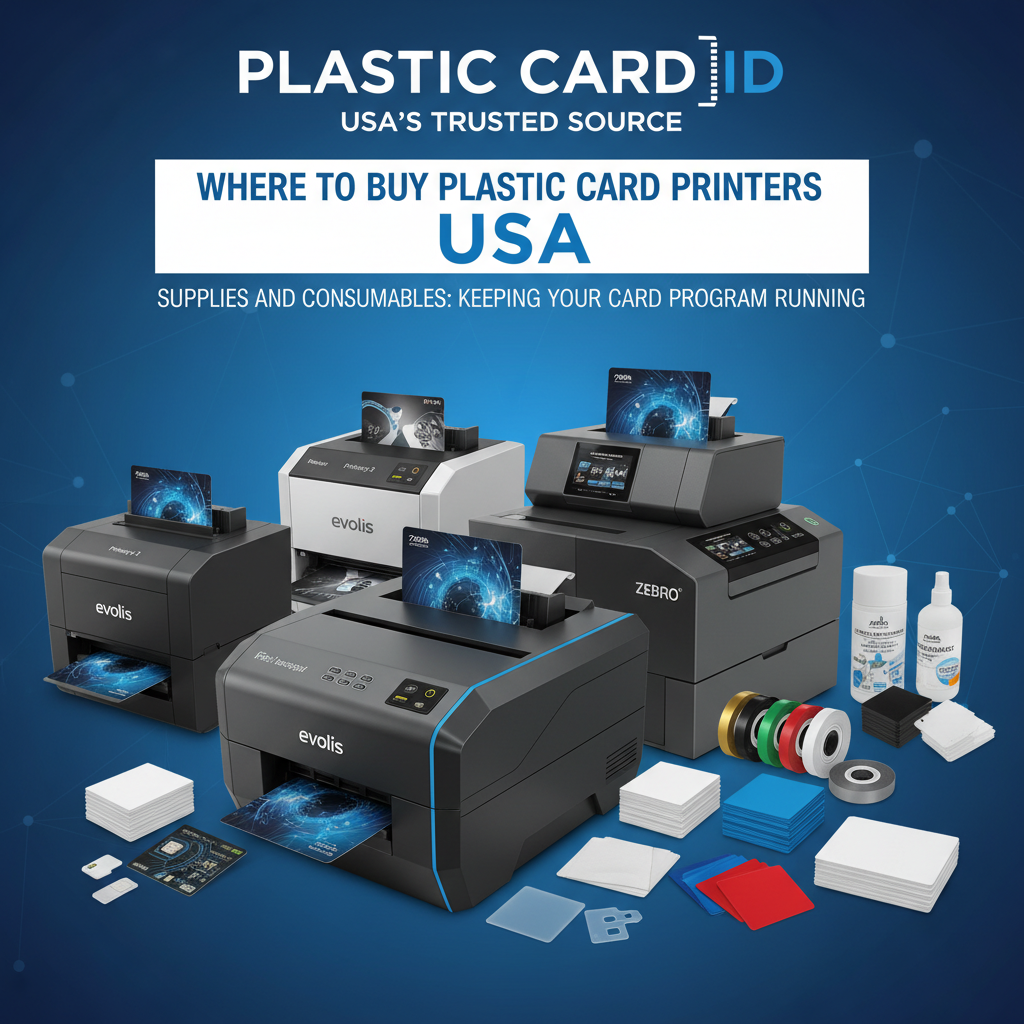 A printer without the right consumables is just an expensive piece of hardware collecting dust. Plastic Card ID supplies the complete ecosystem - ribbons, cleaning kits, lamination modules, and more - so your program never stalls waiting on parts from a third-party vendor you barely know.
This matters more than most buyers initially realize. When you're mid-run on a 500-card batch for a Monday morning employee orientation, running out of ribbon isn't a minor inconvenience - it's a program failure. Having a reliable, single-source supplier for both hardware and consumables eliminates that vulnerability entirely.
Ribbon Types and When to Use Them
YMCKO ribbons - yellow, magenta, cyan, black resin, and overlay - are the standard choice for full-color ID card printing. They produce the rich, photographic-quality output most people associate with professional card programs. The overlay panel adds a protective coating that extends card life and resists surface wear from regular handling.
Monochrome ribbons serve a different purpose: fast, high-volume single-color printing for cards where a photo isn't required - access cards, library cards, basic membership passes. They're significantly more cost-effective per card than YMCKO panels. Specialty ribbons round out the selection for specific encoding requirements or unique surface applications. Matching the ribbon type to your actual use case is one of the simplest ways to control long-term consumable costs.
Cleaning Kits: Protecting Your Investment
Card printer heads are precision instruments. Dust, card debris, and ribbon residue accumulate with every print cycle, and if left unaddressed, they degrade print quality - first subtly, then dramatically. Cleaning kits from Plastic Card ID include the cleaning cards, swabs, and solution needed to maintain both the print head and the card transport rollers on schedule.
Most manufacturers specify a cleaning interval - typically every ribbon change or every 1,000 cards, depending on the model. Following that schedule isn't optional maintenance; it's the single most effective way to extend print head life and prevent premature hardware failures. A cleaning kit costs a fraction of a print head replacement. The math is straightforward.
Lamination Modules and Encoding Upgrades
Lamination modules attach to compatible printers and apply a thin, durable overlay film to the card surface after printing. This adds a physical layer of protection against scratching, UV exposure, and tampering - particularly valuable for ID cards that see daily use over months or years. Some laminate types also incorporate holographic security features that deter counterfeiting.
Encoding upgrades - for magnetic stripe, smart chip, or contactless technology - transform a basic card printer into a full personalization system. For access control programs, these upgrades are non-negotiable. Buying a printer with encoding capability built in, rather than retrofitting later, typically produces better results at lower total cost. The Plastic Card ID team can advise which configurations make sense for your specific application when you call 800.835.7919.
The Business Case for In-House Card Printing
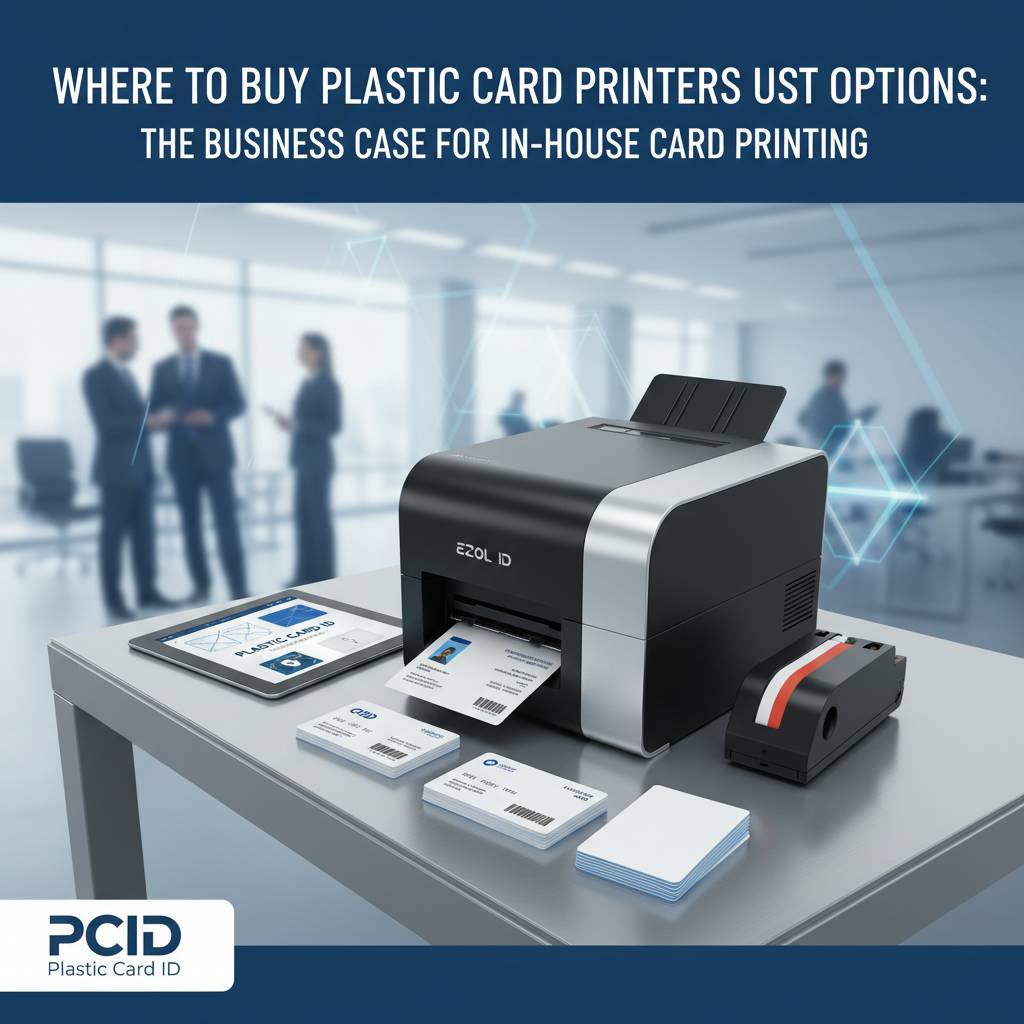 Outsourcing card production feels convenient - until you calculate the true cost. Per-card pricing from external vendors adds up fast, and that's before factoring in lead times, minimum order requirements, and the complete lack of flexibility when you need to make a last-minute change. In-house printing returns control to where it belongs: your organization.
Print on demand. Update card designs without re-ordering entire batches. Encode credentials at the moment of issuance. Revoke and reissue instantly. These aren't small advantages - they represent a fundamentally different operational posture, one that organizations with dynamic workforces, rotating memberships, or security-sensitive environments find genuinely transformative once they make the switch.
Use Cases That Drive Real ROI
Employee ID programs are the most obvious application, but the range of actual use cases at CPE customers is considerably broader. Schools print student IDs at enrollment and reprint them without waiting weeks for external fulfillment. Hotels encode key cards for each guest stay, maintaining full control over door access credentials. Loyalty programs issue branded membership cards that drive repeat visits and customer engagement.
- Employee ID cards - with photo, title, department, and optional encoded access credentials
- Student IDs - for K-12 schools, community colleges, and universities
- Membership cards - gyms, clubs, libraries, professional associations
- Loyalty cards - retail and hospitality programs that reward returning customers
- Hotel key cards - encoded per stay with full door access programming
- Event credentials - conference badges, VIP passes, staff identification
- Access control cards - building security systems with magnetic stripe or smart chip encoding
Calculating Your True Cost Per Card
The cost-per-card calculation for in-house printing typically includes the amortized cost of the printer over its useful life, ribbon cost per card, blank card stock, cleaning supplies, and any encoding consumables. When spread across realistic production volumes, in-house printing almost always produces a lower per-card cost than outsourced production once annual volume reaches even a few hundred cards.
For organizations printing thousands of cards annually, the savings become substantial - and that ignores the speed advantage entirely. A card needed urgently at 4:30 PM on a Friday gets printed in minutes in-house. From an external vendor, that same card might take days. The operational value of immediate fulfillment is real, and it compounds with every urgent request your program handles throughout the year.
Buyer Tips: What to Confirm Before Purchasing
First-time buyers frequently focus only on the printer itself and overlook the surrounding ecosystem questions that determine actual satisfaction. Before finalizing any card printer purchase, consider the following:
- What is your realistic annual card volume - not the maximum possible, but the actual expected number?
- Do you need dual-sided printing, or will single-sided output meet all your requirements?
- Will cards require magnetic stripe encoding, smart chip encoding, or contactless capability?
- What is your card design complexity - full-color photo IDs, or simpler monochrome passes?
- What software will you use for card design and database integration?
- Who in your organization will handle routine maintenance and ribbon changes?
Answering these questions before speaking with the Plastic Card ID team makes the consultation faster and the recommendation more precise. A well-matched printer on day one is far better than an over-specified or under-powered unit you grow to regret.
Frequently Asked Questions About Buying Plastic Card Printers in the USA
Buyers shopping for plastic card printers in the U.S. market arrive with consistent, reasonable questions. The answers below reflect real guidance based on Plastic Card ID's experience serving over 100,000 customers across every industry and volume segment.
What Is the Right Printer for a Small Organization?
For organizations printing fewer than 1,000 cards per year - a small nonprofit, a community sports league, a local gym - the Evolis Badgy200 is the natural starting point. It's compact, straightforward to operate, and produces professional-quality full-color cards without requiring significant technical expertise. The total investment, including starter ribbon and card stock, keeps first-year costs manageable.
The key insight for small-volume buyers is that you don't need to over-invest in capacity you won't use. The Badgy200 handles the low-volume scenario with precision. As your program grows and volume climbs, upgrading to a mid-range unit is a straightforward conversation - one the Plastic Card ID team has guided buyers through hundreds of times.
How Long Do Card Printers Typically Last?
Professional-grade plastic card printers from brands like Evolis, Fargo, and Zebra are built for extended service lives - often five to ten years or longer when properly maintained. Print head longevity is the most important maintenance variable. Following the recommended cleaning schedule, using genuine compatible ribbons, and storing the printer in a dust-managed environment all contribute directly to hardware lifespan.
Cutting corners on consumables is one of the most common ways buyers inadvertently shorten printer life. Off-brand or poorly matched ribbons can deposit residue, misalign during printing, and cause mechanical stress. CPE supplies genuine, compatible consumables for every printer brand in the lineup - an important advantage over piecing together supplies from multiple unvetted sources. Reach the team directly at 800.835.7919 for consumable compatibility guidance.
Can One Printer Handle Multiple Card Types?
Absolutely - and this is one of the strongest arguments for in-house printing. A mid-range printer like the Evolis Primacy2 can produce full-color photo ID employee cards in the morning, monochrome access cards for contractors in the afternoon, and encoded visitor badges before a site tour, all using the same hardware. Card design software handles the template switching; the printer handles the output.
The flexibility extends to encoding. A printer equipped with a magnetic stripe encoder can write different data to each card in a single print run - unique employee numbers, room access codes, loyalty point balances. This level of per-card personalization, produced on demand without external vendor involvement, is the operational core of what in-house card printing delivers for organizations that take their credential programs seriously.
Ready to Find Your Printer? Plastic Card ID Is Your Trusted Source
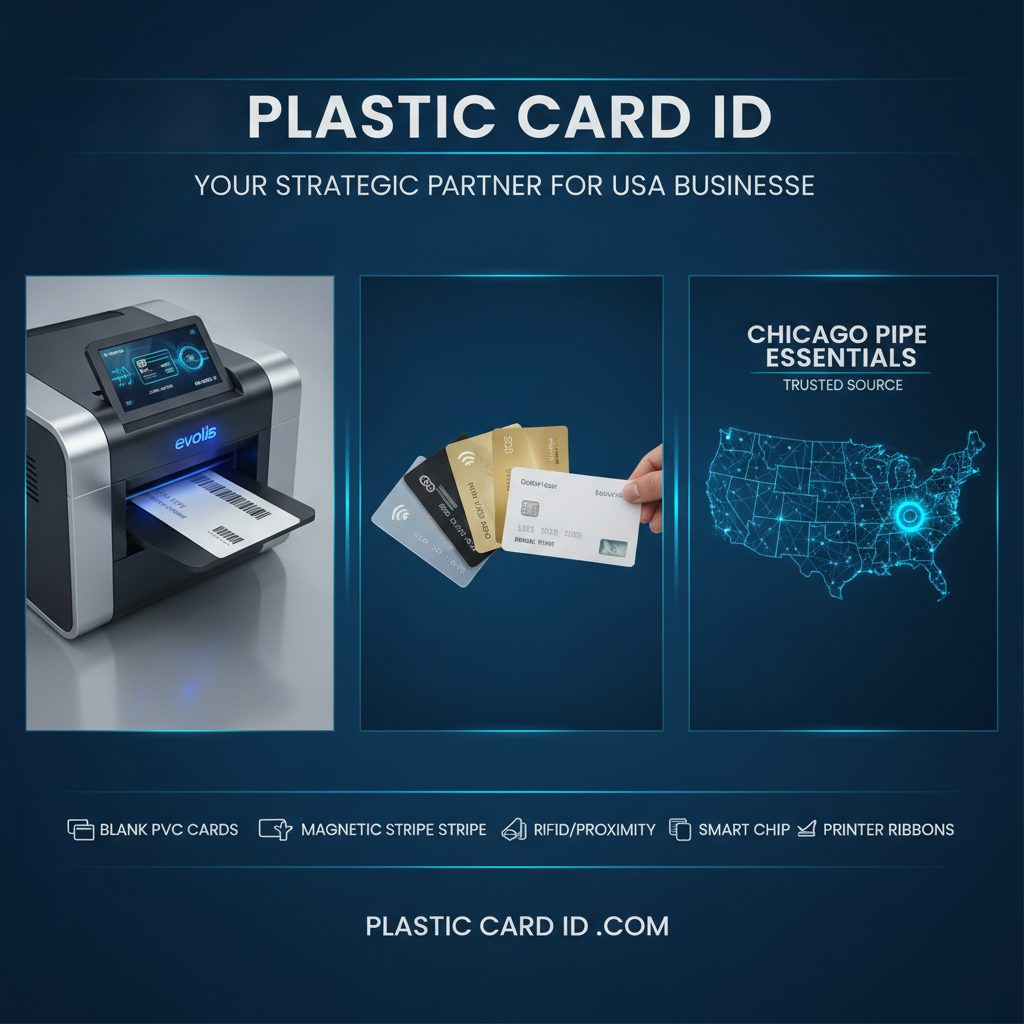 The search for where to buy plastic card printers in the USA ends in the same place for tens of thousands of organizations every year: Plastic Card ID. The combination of a curated professional lineup, deep consumable inventory, 25-plus years of industry knowledge, and a team that takes matching seriously - not just selling quickly - makes the difference between a purchase and a partnership.
Whether you're launching a brand-new card program, upgrading aging hardware, or scaling an existing operation to meet growing demand, the path forward is a conversation. The right printer, the right supplies, and the right guidance are all available in one place. Don't settle for generic retail advice from a seller who stocks card printers between garden hoses and wireless keyboards.
How to Start the Conversation
Beginning with Plastic Card ID is straightforward. Come prepared with your approximate card volume, your primary card type, and any encoding requirements you already know about. Even if you're still working out those details, the team can walk you through the right questions to clarify your needs. No program is too small to get serious attention, and no requirement is too complex to address.
The team's experience across 100,000 customers means they've almost certainly worked with an organization like yours before. That pattern recognition shortens the path from "I need a card printer" to "I have the exact right card printer" - and that's a genuinely valuable thing when you're making a hardware investment meant to serve your organization for years. Contact the team directly at 800.835.7919 to get started today.
What to Expect After Your Purchase
The relationship with CPE doesn't end when the printer ships. Consumable reordering, questions about new encoding capabilities, advice on scaling hardware as volume grows - these are ongoing conversations that benefit from a supplier who knows your program's history. Consistency in your supply chain is an operational asset that compounds over time.
Replacement ribbons arrive from the same source as the original printer. Cleaning kits are a quick reorder, not a research project. When it's time to add lamination capability or upgrade encoding, the conversation starts from a foundation of shared context. That continuity is exactly what separates a long-term supplier relationship from a one-time transaction - and it's what Plastic Card ID has built its reputation on across 25 years of serving U.S. businesses.
Take the next step toward a professional, in-house card printing program. Call Plastic Card ID today at 800.835.7919 and put 25 years of card printing expertise to work for your organization.
Plastic Card Printers for Professional Event Badges
Previous Page