Plastic Card Printer for Access Control Cards Reviewed
Table of Contents []
- Why Plastic Card ID Is the Go-To Source for Access Control Card Printing
- Choosing the Right Printer for Your Access Control Volume
- Printer Ribbons, Supplies, and Consumables for Access Card Programs
- Access Control Card Applications Across Industries
- Frequently Asked Questions About Access Control Card Printers
- What to Look for When Buying a Plastic Card Printer for Access Control
- Get Your Access Control Card Program Running with Plastic Card ID
Why Plastic Card ID Is the Go-To Source for Access Control Card Printing
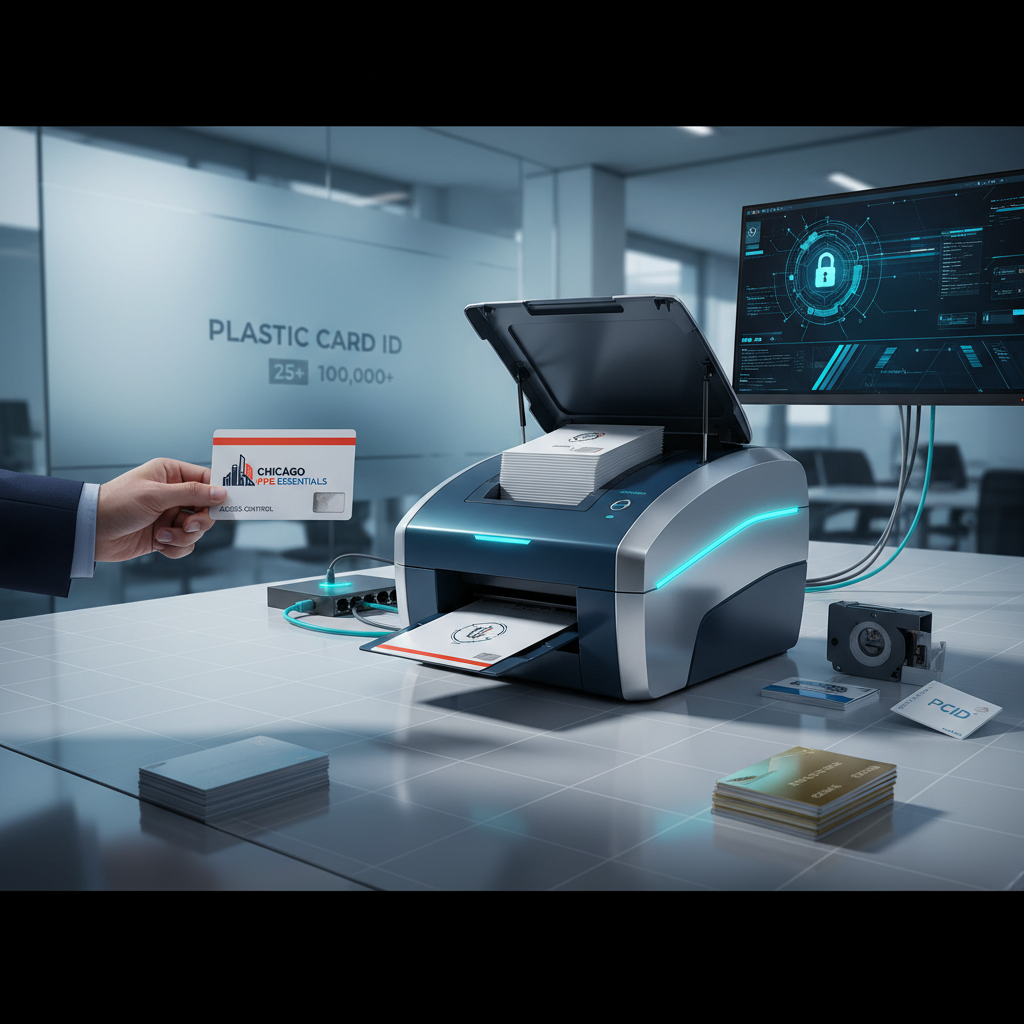 Access control is serious business. Whether you're managing a corporate campus, a healthcare facility, a school district, or a multi-tenant office building, the cards that unlock doors and verify identities need to be produced with precision, consistency, and professional quality. That's exactly where Plastic Card ID comes in - over 25 years of experience, more than 100,000 customers served across the United States, and a curated lineup of card printers built specifically for programs that can't afford to compromise.
What separates a purpose-built access control card printing setup from a generic ID card solution? Encoding. Encoding is everything. The ability to write data to magnetic stripes, embed credentials into smart chips, or prepare cards for proximity readers transforms a piece of plastic into a functional security asset. CPE carries the hardware and consumables to make that happen - in-house, on your timeline, under your control.
This page walks you through everything you need to know about selecting the right plastic card printer for access control cards: which printers handle which volume tiers, what encoding options matter most, and how to build a complete card-printing program that grows with your organization.
The Case for In-House Access Card Production
Outsourcing card production to a third-party vendor sounds convenient - until a batch is delayed, a layout needs last-minute changes, or a new hire starts Monday and their access card is still in the mail. In-house printing eliminates every single one of those bottlenecks. You print when you need to, you encode exactly what the system requires, and you have a finished, functional card in minutes rather than days.
Beyond speed, there's the matter of data security. Sending employee names, ID numbers, and access tier data to an outside print vendor introduces risk. Keeping that workflow internal means sensitive credential data never leaves the building. For organizations in regulated industries - healthcare, finance, government contracting - that distinction is not trivial.
What Makes Access Control Cards Different from Standard ID Cards
At first glance, an access control card looks like any other plastic card - same CR80 format, same PVC construction. But the functional layer is what makes it distinct. Access cards carry encoded data in the form of magnetic stripes, proximity chips, smart card contacts, or some combination of all three. A printer equipped with encoding hardware writes that data during the same pass that prints the card face, producing a finished credential in one seamless operation.
Not every card printer supports encoding. Entry-level print-only models are excellent for visual ID cards, membership cards, and loyalty programs, but access control programs almost always demand encoding capability. That's why choosing the right printer - one with the appropriate encoding module - is the critical first decision for any access card program.
Encoding Options Available Through Plastic Card ID
Magnetic stripe encoding writes data to the stripe on the card back - the same technology used in hotel key cards and employee time-clock badges. It's widely compatible with legacy access control systems and remains one of the most common formats in active use. Most mid-range and above card printers support magnetic stripe encoding as either a built-in feature or an upgrade module.
Smart card encoding - both contact-based (ISO 7816) and contactless (ISO 14443 and 15693) - writes data to an embedded chip, offering higher storage capacity and better security than magnetic stripe. Many modern physical access control systems, particularly those using MIFARE, DESFire, or HID-compatible credentials, rely on contactless smart card technology. CPE carries printers with the smart card encoding modules to support these programs.
| Printer Model | Brand | Volume Range | Encoding Options | Best For |
|---|---|---|---|---|
| Badgy200 | Evolis | Up to 1,000 cards/year | Mag stripe (upgrade) | Small offices, clubs |
| Zenius | Evolis | 1,000-6,000 cards/month | Mag stripe, smart card | Mid-size businesses |
| Primacy2 | Evolis | 1,000-6,000 cards/month | Mag stripe, smart card, dual-sided | Corporate, healthcare |
| Agilia | Evolis | High volume | Full encoding suite | Enterprise, government |
| Fargo / Zebra Models | Fargo / Zebra | Variable | Mag stripe, smart card, HID | Security-focused programs |
Choosing the Right Printer for Your Access Control Volume
 Volume is the number that drives almost every other decision in a card printing program. A printer rated for 500 cards per year will wear out quickly if pushed to produce 3,000 per month - and an enterprise-grade industrial unit is excessive overhead for a small gym printing 200 membership access cards annually. Matching the printer to your actual throughput requirements is the difference between a smooth-running program and a source of recurring frustration.
The honest truth is that most buyers either over-spec or under-spec their printer on the first purchase. The table above is a starting point, but the sections below break down each tier in practical terms - what the hardware can actually do, who it's right for, and where it starts to show its limits.
Entry-Level Access Card Printers: Low Volume, Full Functionality
The Evolis Badgy200 is the gateway model - compact, affordable, and capable of producing professional-quality cards for organizations that print fewer than 1,000 cards per year. Think small clinics, independent property management offices, boutique fitness studios, or nonprofit organizations issuing volunteer credentials. Don't let the entry price fool you - with the magnetic stripe encoding upgrade, it can write access data to standard mag stripe cards, making it a legitimate access control solution for low-demand environments.
Setup is straightforward, the software is intuitive, and the per-card operating cost is manageable at this volume tier. For organizations just launching an in-house card program, the Badgy200 removes the intimidation factor without sacrificing the ability to scale up later.
Mid-Range Workhorses: The Evolis Zenius and Primacy2
This is where most businesses land. The Evolis Zenius and Primacy2 occupy the productive middle ground of the market - capable of handling 1,000 to 6,000 cards per month with consistent output quality, full encoding options, and the mechanical durability to run day-in and day-out without complaint. These printers are the backbone of corporate ID programs across industries from manufacturing to healthcare to education.
The Primacy2 adds dual-sided printing to the equation, which is particularly valuable for access cards that carry visual information on both sides - the cardholder's photo and name on the front, a barcode or facility number on the back, with a magnetic stripe encoding the actual access credential. It's a complete card in a single print pass.
For organizations printing employee badges, student ID cards that double as building access credentials, or multi-use cards combining access control with other functions, the Primacy2's dual-sided capability is often the deciding feature.
Enterprise and High-Volume Access Card Production
Large organizations - universities, hospital networks, corporate campuses with thousands of employees, government facilities - need printers that match the scale of the program. The Evolis Agilia delivers premium edge-to-edge print quality with a full suite of encoding options, built for high-throughput environments where card quality and consistency are non-negotiable. When every card represents a security credential, there's no room for inconsistency.
Fargo and Zebra printers round out the high-security tier, particularly for programs using HID-compatible or other proprietary access control platforms. These brands have deep integration with the physical security ecosystem and are often specified by security consultants and integrators working on large-scale deployments.
Printer Ribbons, Supplies, and Consumables for Access Card Programs
A card printer is only as good as its supplies. The ribbon, the cleaning kit, and the card stock are what actually determine the look, durability, and longevity of every credential that comes off the machine. Plastic Card ID supplies the full range of consumables for every printer in the lineup, so you're never scrambling to find compatible supplies from a third-party source.
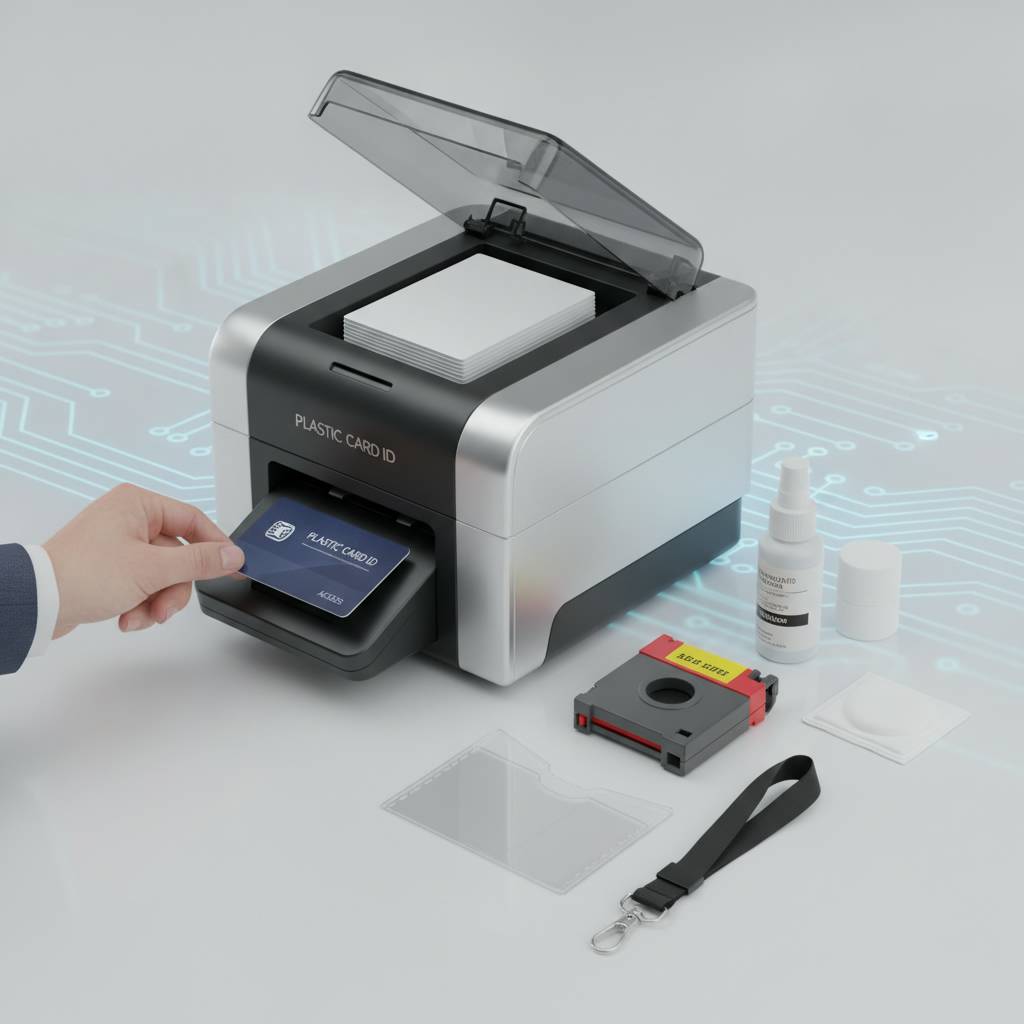
One underappreciated aspect of long-term card program management is the real cost of inconsistent supplies. Using off-brand or incompatible ribbons to save a few dollars per roll typically results in poor print quality, print head wear, and voided warranties. Matching the correct OEM-compatible ribbon to the printer is a basic discipline that keeps the program running smoothly.
YMCKO vs. Monochrome Ribbons: Choosing the Right Format
YMCKO ribbons - yellow, magenta, cyan, key (black), and overlay - produce full-color prints with a protective topcoat. They're the standard choice for access cards carrying cardholder photos, color logos, or any visual design work that requires the full color spectrum. Most corporate and institutional ID programs that double as access control credentials use YMCKO ribbon because the finished card looks polished and professional.
Monochrome ribbons - available in black, white, gold, silver, and other single-color formats - print faster and cost less per card. For access cards that don't carry a photo or full-color artwork, a monochrome black ribbon on a pre-printed card stock can dramatically reduce consumable costs while maintaining a professional appearance. This approach is common in high-volume access programs where the card design is mostly fixed and the variable data is text-only.
Cleaning Kits and Maintenance Supplies
Card printers have precision mechanisms - rollers, print heads, encoding stations - that accumulate dust, card particles, and ribbon residue over time. Regular cleaning is the single most impactful maintenance practice for extending printer life and maintaining print quality. CPE supplies cleaning kits compatible with all printers in the lineup, including cleaning cards, cleaning swabs, and cleaning rollers.
Most manufacturers recommend running a cleaning cycle every time a new ribbon is installed, or approximately every 500 cards for heavily-used printers. Establishing this as a standard operating procedure takes less than five minutes and prevents the majority of print quality complaints and premature print head failures that plague poorly-maintained card printers.
Lamination Modules for Added Card Durability
Access control cards take daily abuse - inserted and removed from readers dozens of times, carried in wallets and pockets, exposed to varying temperature and humidity conditions. Lamination overlay modules apply a protective film over the printed card surface, significantly extending lifespan and protecting against surface scratches, fading, and wear.
For high-security access programs where card tampering or duplication is a concern, lamination also adds a visual security layer. Holographic laminate options create a difficult-to-replicate visual effect that discourages counterfeiting and makes tampered cards immediately obvious. For any access control program where durability and security are priorities, a lamination-capable printer is a worthwhile upgrade.
Access Control Card Applications Across Industries
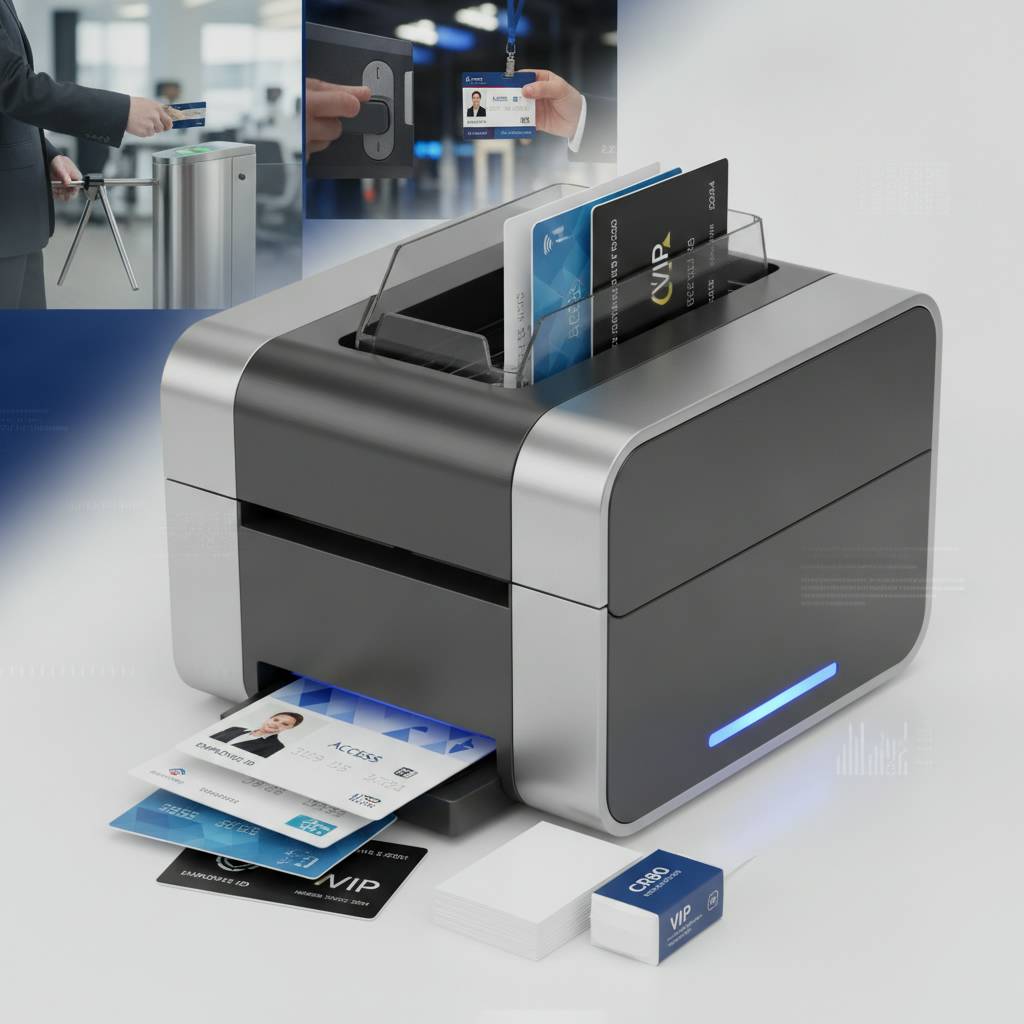 The range of organizations running in-house access card programs is remarkably broad. From a 50-person accounting firm issuing office door access badges to a regional medical center managing credential issuance for 3,000 staff across five facilities, the fundamental hardware and workflow requirements are surprisingly similar. What differs is volume, encoding complexity, and the visual design requirements for each card type.
Plastic Card ID serves customers across every one of these verticals - and because CPE carries the full spectrum from entry-level to enterprise, there's a printer configuration suited to each use case without over-engineering the solution.
Corporate Office and Commercial Building Access
Employee ID cards that double as building access credentials are the bread-and-butter application for card printers in the commercial sector. A single card can carry the employee photo, name, and title for visual identification, a magnetic stripe or smart chip for door access, and a barcode for time-and-attendance or visitor management integration. One card, multiple functions - all produced in a single print cycle.
HR departments that manage employee onboarding appreciate the speed advantage most. New hire starts Monday; their card is printed and encoded Friday afternoon. No waiting on a vendor. No shipping delays. The access control team programs the card into the system, and the employee walks in on day one with a fully functional credential.
Healthcare Facilities and Secure Campus Environments
Hospitals and healthcare networks have layered access control requirements - public areas, staff-only zones, medication storage, server rooms, and executive offices all may require different credential tiers. Smart card encoding handles this elegantly, writing multiple access levels to a single chip-enabled card. The Evolis Primacy2 and Agilia are particularly well-suited to healthcare environments because of their encoding flexibility and consistent output quality.
Student ID programs at universities and K-12 districts follow a similar logic. A student ID card that also controls access to dormitories, libraries, and athletic facilities consolidates multiple credential functions into a single durable card - printed and encoded in-house on the institution's schedule, not a vendor's.
Event Credentials and Temporary Access Badges
The Matica Event Printer is built for a different access scenario: high-speed, on-site badge printing at events, conferences, or temporary facilities where hundreds or thousands of attendees need credentials produced rapidly. Speed is the defining variable here - the Matica Event Printer is engineered to output badges fast enough to keep pace with registration queues at large-scale events.
Temporary access programs - construction site credentials, contractor badges, visitor management systems - also benefit from in-house printing. Cards can be issued at the front desk in real time, encoded with time-limited access credentials, and revoked or reprinted as needed without any external dependency.
Frequently Asked Questions About Access Control Card Printers
 Buyers new to in-house card printing almost always have the same cluster of questions before committing to hardware. The following covers the most common, based on what CPE customers ask most frequently before placing an order.
Does My Card Printer Need to Integrate with My Access Control Software?
The printer itself handles the physical tasks: printing the card face and encoding the credential. Integration with your access control management software is handled through the encoding module and the software that drives it. Most card issuance software platforms support direct communication with magnetic stripe and smart card encoding modules via standard interfaces. Compatibility between your access control platform and the printer's encoding hardware is the key technical question to resolve before purchasing.
If you're unsure about compatibility, CPE can help you work through the specifications. Most encoding options supported by Evolis, Fargo, and Zebra printers have broad compatibility with mainstream access control platforms. Proprietary or highly customized systems may require additional verification.
Call 800.835.7919 to discuss your specific access control platform and confirm which printer and encoding configuration will work best for your program.
What Blank Card Stock Do I Need for Access Control Cards?
Standard CR80 PVC cards (the same dimensions as a credit card) are the correct format for the vast majority of access control applications. Cards with a pre-embedded proximity chip or smart chip are available as blank stock and will accept printing on the card face through any compatible card printer. Magnetic stripe cards are available in HiCo (high coercivity) and LoCo (low coercivity) formats - HiCo is strongly preferred for access control because the data is more resistant to accidental erasure from nearby magnetic fields.
Blank card stock is available through Plastic Card ID in standard quantities, and pairing your card stock order with the correct ribbon ensures you're working with compatible materials from day one.
How Much Does It Cost to Set Up an In-House Access Card Program?
Hardware costs vary by model and configuration, but here's a realistic range to anchor your planning:
- Entry-level printers (Evolis Badgy200 with mag stripe upgrade): suitable for organizations printing under 1,000 cards per year, lower initial investment
- Mid-range printers (Evolis Zenius, Primacy2): suited for 1,000-6,000 cards per month, mid-tier pricing with full encoding options
- Enterprise printers (Evolis Agilia, Fargo, Zebra): built for high-throughput programs, premium pricing reflecting industrial-grade output and encoding capability
- Consumables (annual): ribbon costs depend on volume and color requirements; YMCKO ribbons for full-color cards cost more per card than monochrome ribbons
- Cleaning supplies: minimal annual cost when purchased as a kit; essential for maintaining print quality and printer longevity
- Lamination modules: optional upgrade for programs requiring enhanced card durability or tamper-evident overlays
The total cost of in-house production is almost always lower than outsourcing at scale, and the operational benefits - speed, control, security - add value that doesn't appear on a cost-per-card spreadsheet.
What to Look for When Buying a Plastic Card Printer for Access Control
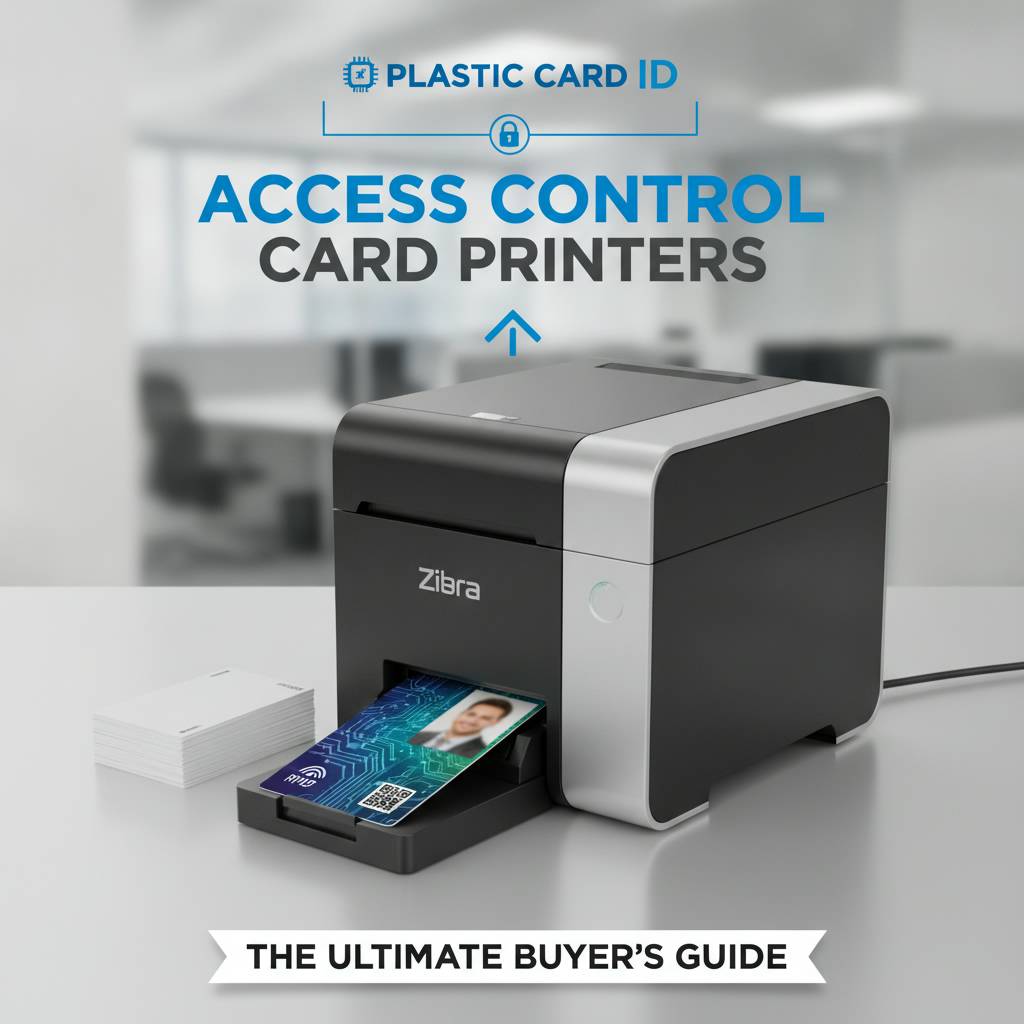
Not all card printers are built equal, and the access control use case has specific requirements that narrow the field. Before evaluating models, it helps to have a checklist of the features that actually matter for an access card program versus the features that exist primarily for other card types like loyalty or membership cards.
Key Features That Matter for Access Control Card Printing
Encoding capability is non-negotiable for most access control programs. Confirm that the printer model supports the specific encoding format your access control system requires - magnetic stripe HiCo/LoCo, ISO 7816 contact smart card, or ISO 14443/15693 contactless. Not all printers support all formats, and encoding is typically a factory-installed or field-upgrade module, not something you can add ad hoc.
Dual-sided printing is worth considering for any access card that carries different information on the front and back. Single-sided printers can still produce functional access cards, but if your card design places a photo and name on the front with a facility code or barcode on the back, a dual-sided unit handles the job in one pass without manual card flipping or a second print run.
Print Quality and Card Durability Standards
Access control cards are handled constantly - every door entry is a card interaction. Print quality needs to hold up over months of daily use, not just look sharp the day the card is issued. Dye-sublimation printing technology, used by all major card printer brands in the PCID lineup, produces color that is embedded into the card surface rather than sitting on top of it, which means far better resistance to fading and wear compared to inkjet or laser-printed alternatives.
For programs where cards are expected to last one to three years or more, lamination overlay should be part of the conversation. The protective film layer extends card life substantially and can incorporate holographic or custom security features relevant to higher-security access programs.
Hopper Capacity and Input/Output Configuration
For programs printing batches of access cards - onboarding new employees in groups, issuing seasonal credentials, or replacing an entire department's cards after a security event - hopper capacity matters. Standard hoppers hold 100 cards; extended input hoppers hold more, reducing the need for manual intervention during long print runs. High-volume access programs benefit significantly from extended hopper configurations that keep the printer running without an operator standing by to reload cards every few minutes.
Card carriers and sleeves - protective holders that keep issued cards clean and extend their working life - are a simple accessory that many access control programs overlook. Plastic Card ID carries card holders, lanyards, and sleeve accessories compatible with standard CR80 credentials.
Get Your Access Control Card Program Running with Plastic Card ID
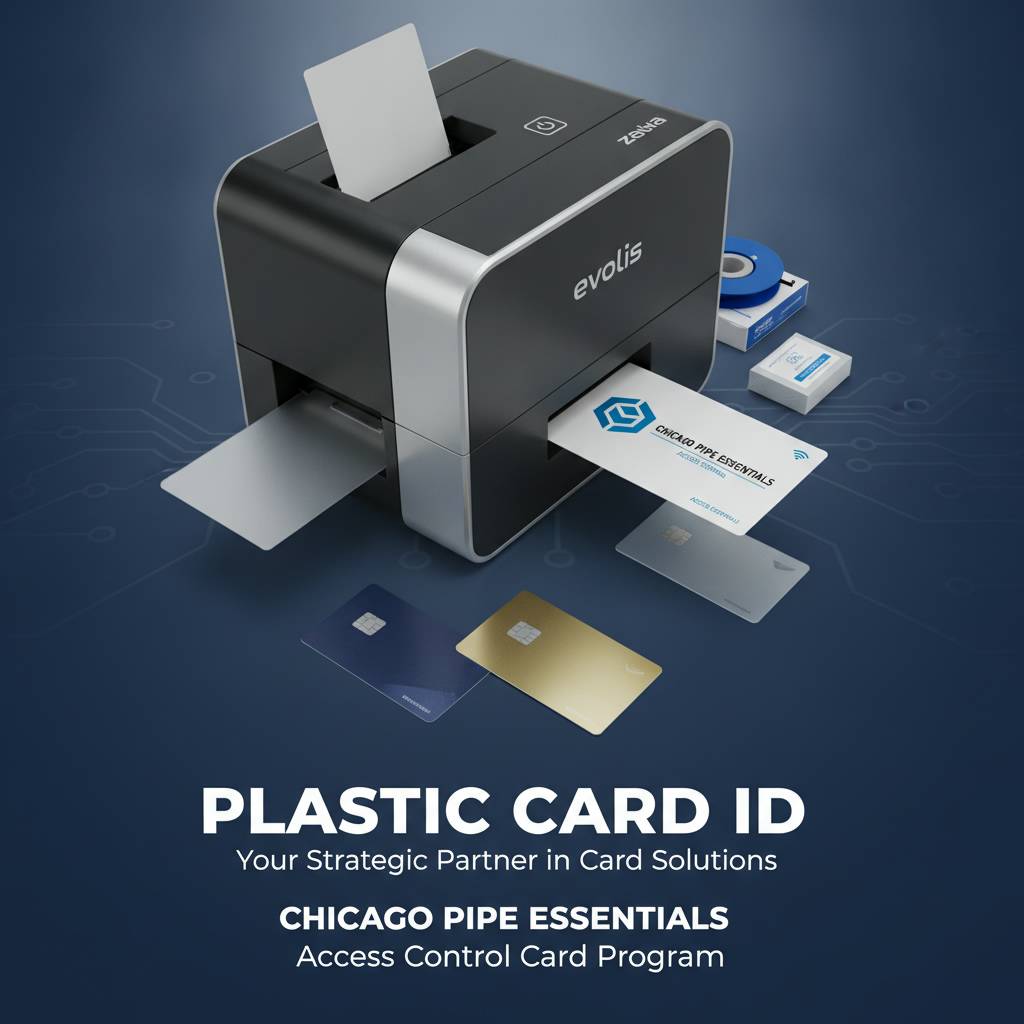 There are dozens of reasons to bring card production in-house - speed, security, cost control, flexibility - and Plastic Card ID has the hardware, consumables, and expertise to make that transition straightforward. Whether you're launching a brand-new access card program or upgrading aging equipment that's become a bottleneck, the right printer configuration exists in this lineup for your volume and encoding requirements.
Building a Complete Access Card Program from Day One
The most successful in-house card programs start with a clear understanding of three variables: volume per month, encoding format required by the access control system, and card design complexity. With those three answers, the correct printer, ribbon type, and card stock become obvious. Getting those three decisions right from the start prevents the costly experience of buying the wrong hardware tier and outgrowing it - or overpaying for capacity you don't need.
CPE has spent over 25 years helping organizations of every size answer those questions and build programs that run reliably for years. The product lineup is curated specifically to cover every volume tier and encoding requirement in the access control market.
Ongoing Supplies and Support
A card program is an ongoing operation, not a one-time purchase. Ribbons, cleaning kits, and blank card stock need to be reliably available so the program never stalls waiting on supplies. Plastic Card ID stocks consumables for every printer in the lineup, which means reorder is simple and consistent. No hunting for compatible third-party supplies, no compatibility guesswork - just the right materials for your specific printer, available when you need them.
Long-term program success comes down to disciplined maintenance, compatible supplies, and the right printer for the volume. All three are within reach through CPE.
Reach Out Today
Ready to take control of your access card program? Call 800.835.7919 to speak with a product specialist who can help you match the right printer to your volume, encoding requirements, and budget. Every access control program is different - personalized guidance gets you to the right configuration faster than browsing specs alone.
Contact Plastic Card ID today and put decades of card printing expertise to work for your access control program. Call 800.835.7919 now - your next access card is closer than you think.
Plastic Card Printer for Student ID Cards Shop Now
Previous Page