ID Card Printer Plastic Cards: Print Professional IDs In-House
Table of Contents []
- Your Trusted Source for ID Card Printer Plastic Cards - Plastic Card ID
- Matching the Right Printer to Your Card Volume
- Printer Supplies and Accessories That Keep Your Program Running
- Applications Across Industries: Who Uses In-House Card Printing
- Buyer's Guide: What to Evaluate Before Purchasing an ID Card Printer
- Frequently Asked Questions About ID Card Printer Plastic Cards
- Start Your Card Program with Plastic Card ID
Your Trusted Source for ID Card Printer Plastic Cards - Plastic Card ID
 Walk into almost any organization that takes security seriously - a hospital, a university, a corporate campus - and you'll find plastic ID cards doing quiet, essential work. They open doors, verify identities, track access, and project professionalism without saying a single word. What most people never think about is where those cards come from. For thousands of businesses across the United States, the answer starts with CPE and an in-house card printer that puts full control directly in their hands.
Plastic Card ID has been supplying plastic card printers and the hardware that supports them for over 25 years, building a customer base that now exceeds 100,000 organizations nationwide. The lineup covers every scale of card production imaginable - from a small nonprofit printing a few hundred membership cards annually to a major university churning through thousands of student IDs every semester. This is not a catalog of generic products. Every printer, ribbon, cleaning kit, and accessory is curated from the industry's most respected brands.
Choosing the right ID card printer is a decision with real operational consequences. Get it right and your card program runs efficiently, your cards look sharp, and your team never waits on an outside vendor. Get it wrong and you're stuck with a machine that either can't keep up with demand or is so over-engineered for your needs that you've wasted serious budget. That's exactly why working with an experienced partner matters.
What In-House Card Printing Actually Means for Your Organization
Printing plastic ID cards in-house is fundamentally different from outsourcing to a card vendor. When you own the printer, you print on demand - one card, fifty cards, or five hundred, whenever you need them. There's no minimum order, no lead time, no waiting a week for a batch of replacements when an employee loses their badge.
In-house printing also means each card can be fully personalized. Photos, names, job titles, barcodes, magnetic stripe data, and smart chip encoding can all be applied in a single pass. For organizations managing employee IDs, student credentials, or access control cards, that level of individual customization isn't just convenient - it's essential.
The Brands Behind the Printers
Not all card printers are built the same. Plastic Card ID carries a focused, professional-grade lineup from four brands that have earned genuine reputations in the industry: Evolis, Fargo, Zebra, and Matica. Each brings something distinct to the table, and together they cover virtually every use case a business could face.
Evolis is known for elegant engineering and a broad model range that scales gracefully from entry-level to premium output. Fargo and Zebra bring serious muscle to security-focused ID programs, particularly where government or enterprise requirements demand robust encoding and verification features. Matica rounds out the lineup with high-speed capability designed for event and on-site badging scenarios where time is everything.
Reach Plastic Card ID Before You Buy
Buying a card printer without talking to someone who understands your specific volume, card type, and encoding needs is a gamble most buyers regret. CPE exists precisely to help you avoid that mistake. Call 800.835.7919 before you commit to a model, and get straightforward guidance on exactly what fits your program.
Whether you're setting up a brand new card program or replacing aging equipment, a quick conversation can save you from buying too little capacity, too much complexity, or the wrong encoding options. The team at Plastic Card ID has seen every type of card printing scenario - there's very little they haven't already helped someone solve.
Matching the Right Printer to Your Card Volume
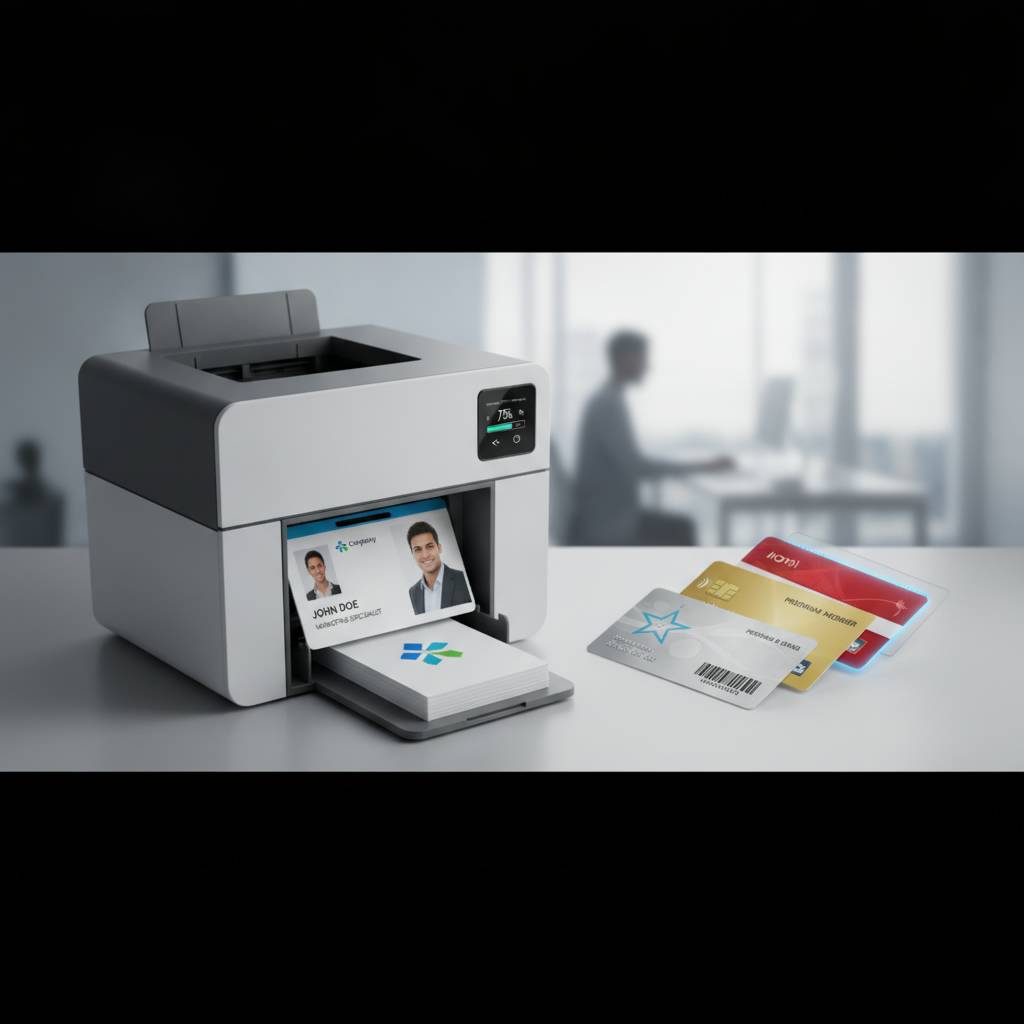 Volume is the single most important factor in choosing an ID card printer. A printer that's perfect for a 200-employee company would be completely wrong for a 5,000-student university. Understanding where your program falls on the volume spectrum - and where it's likely to go in the next two or three years - shapes every other decision you'll make.
The most common mistake buyers make is underestimating their future growth. A printer that barely handles current volume becomes a bottleneck the moment enrollment spikes or headcount grows. Conversely, buying industrial-scale equipment for a low-volume program means paying for capacity you'll never use. CPE helps you find the rational middle ground.
| Volume Category | Cards Per Year | Recommended Models | Typical Use Cases |
|---|---|---|---|
| Entry-Level | Under 1,000 | Evolis Badgy200 | Small business, nonprofits, clubs |
| Mid-Range | 1,000 - 72,000 | Evolis Zenius, Primacy2 | Corporate ID, universities, healthcare |
| High-Volume | 72,000 | Matica Event Printer, Zebra, Fargo | Events, large institutions, government |
| Premium Quality | Variable | Evolis Agilia | Brand-sensitive, edge-to-edge output |
Entry-Level: The Evolis Badgy200
For organizations printing fewer than 1,000 cards per year, the Evolis Badgy200 delivers professional results without demanding a large investment. It's compact, straightforward to operate, and capable of producing full-color cards that look every bit as polished as what an outside vendor would deliver - often faster and always cheaper over time.
Small businesses, community organizations, gyms, and clubs consistently find the Badgy200 hits the right balance of affordability and quality. It's not a toy - it uses the same dye-sublimation printing technology as far more expensive machines - but it's scaled for environments where card printing is an occasional task rather than a daily workflow.
Mid-Range Workhorses: Evolis Zenius and Primacy2
The Evolis Zenius and Primacy2 occupy the sweet spot that most businesses actually need. Handling between 1,000 and 6,000 cards per month with ease, these printers are built for consistent, reliable production. The Primacy2 in particular supports dual-sided printing and a range of encoding options including magnetic stripe - making it genuinely versatile for complex ID programs.
Corporate HR departments, healthcare systems, and mid-size universities gravitate toward this range because it's where capability and cost-efficiency genuinely intersect. These aren't printers you outgrow in a year - they're designed to serve as the backbone of a card program for the long haul, with upgrade paths available as needs evolve.
High-Throughput and Premium Output Options
When volume is serious or quality standards are uncompromising, the upper tier of the Plastic Card ID lineup steps in. The Evolis Agilia produces edge-to-edge, full-bleed printing with color accuracy that makes a card look genuinely premium - not just functional. For organizations where the card itself is a brand statement, this matters enormously.
The Matica Event Printer was engineered for a completely different challenge: speed. On-site badge printing at conferences, trade shows, and large-scale events demands a machine that keeps pace with registration lines. Fargo and Zebra models round out the high-end options with deep encoding capability and the kind of durability that keeps running through demanding enterprise environments without complaint.
Printer Supplies and Accessories That Keep Your Program Running
A card printer without the right supplies is a very expensive paperweight. The ongoing operational side of a card program - ribbons, cleaning kits, lamination, encoding modules - is where many organizations underestimate complexity and cost. CPE supplies the complete ecosystem, not just the printer itself.
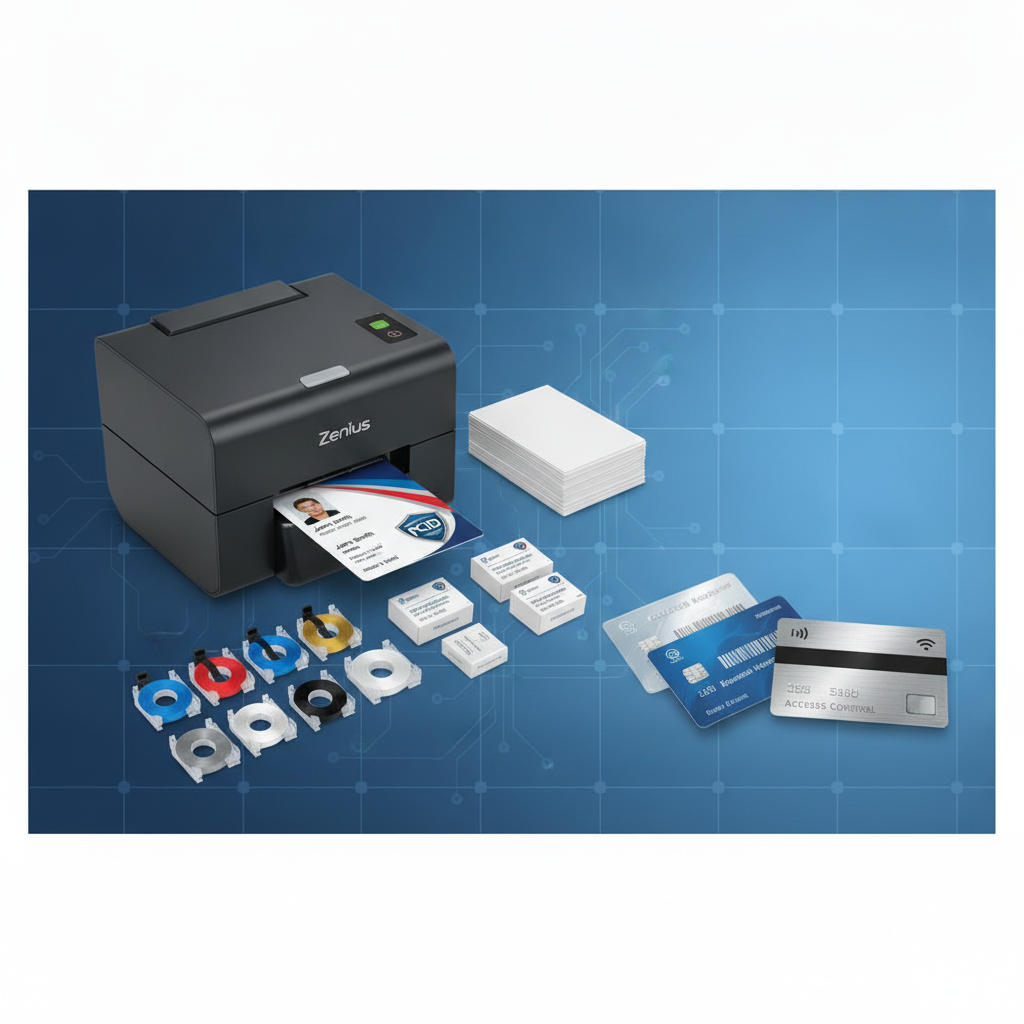
This matters more than it might seem. Using the wrong ribbon for your printer model, skipping cleaning cycles, or running cards without proper lamination can all degrade print quality and shorten equipment life. Having a single knowledgeable supplier for every component of your card program simplifies procurement and keeps everything compatible.
Printer Ribbons: Choosing the Right Type
Ribbons are the consumable that most directly affects card appearance. YMCKO ribbons - which deliver full color plus a clear overlay panel for protection - are the standard choice for most photo ID applications. Monochrome ribbons in black, blue, or other single colors are far more economical for high-volume applications where color isn't required, such as encoding-only cards or text-heavy batch runs.
Specialty ribbons expand the possibilities further. Holographic overlay ribbons add a visible security layer that's difficult to counterfeit. Some programs use two-color ribbons to add a colored text layer without the cost of full YMCKO. Matching the right ribbon to the right application is something Plastic Card ID can help you work through systematically - call 800.835.7919 for ribbon selection guidance tailored to your printer model and use case.
Encoding Upgrades: Magnetic Stripe and Smart Chip
Many card printers can be upgraded or are available with built-in encoding modules that write data directly to magnetic stripes or smart chips during the printing process. This is what makes a plastic card more than just a photo ID - it's what turns a card into an access credential, a loyalty card with a readable account number, or a campus card that opens dormitory doors and buys lunch.
Magnetic stripe encoding remains widely used for hotel key cards, employee access systems, and membership programs. Smart chip (contact and contactless) encoding supports more sophisticated applications including high-security access control and multi-function campus cards. The printer model you choose needs to match the encoding technology your existing infrastructure uses - another reason to discuss your full program with CPE before purchasing.
Cleaning Kits and Lamination Modules
Routine cleaning is not optional for card printers - it's the maintenance habit that separates a printer that lasts five years from one that develops print defects after eighteen months. Cleaning kits use specially formulated cards and rollers to remove dust and residue from the print head and transport system. Most manufacturers specify cleaning intervals, and Plastic Card ID stocks the appropriate kits for every printer in the lineup.
Lamination modules add a physical protective layer to finished cards, significantly extending card life in demanding environments. Laminated cards resist scratching, UV fading, and wear from daily handling far better than unlaminated ones. For cards that need to last years - employee badges, student IDs, access credentials - lamination is worth the investment in both the module and the ongoing film supply.
Applications Across Industries: Who Uses In-House Card Printing
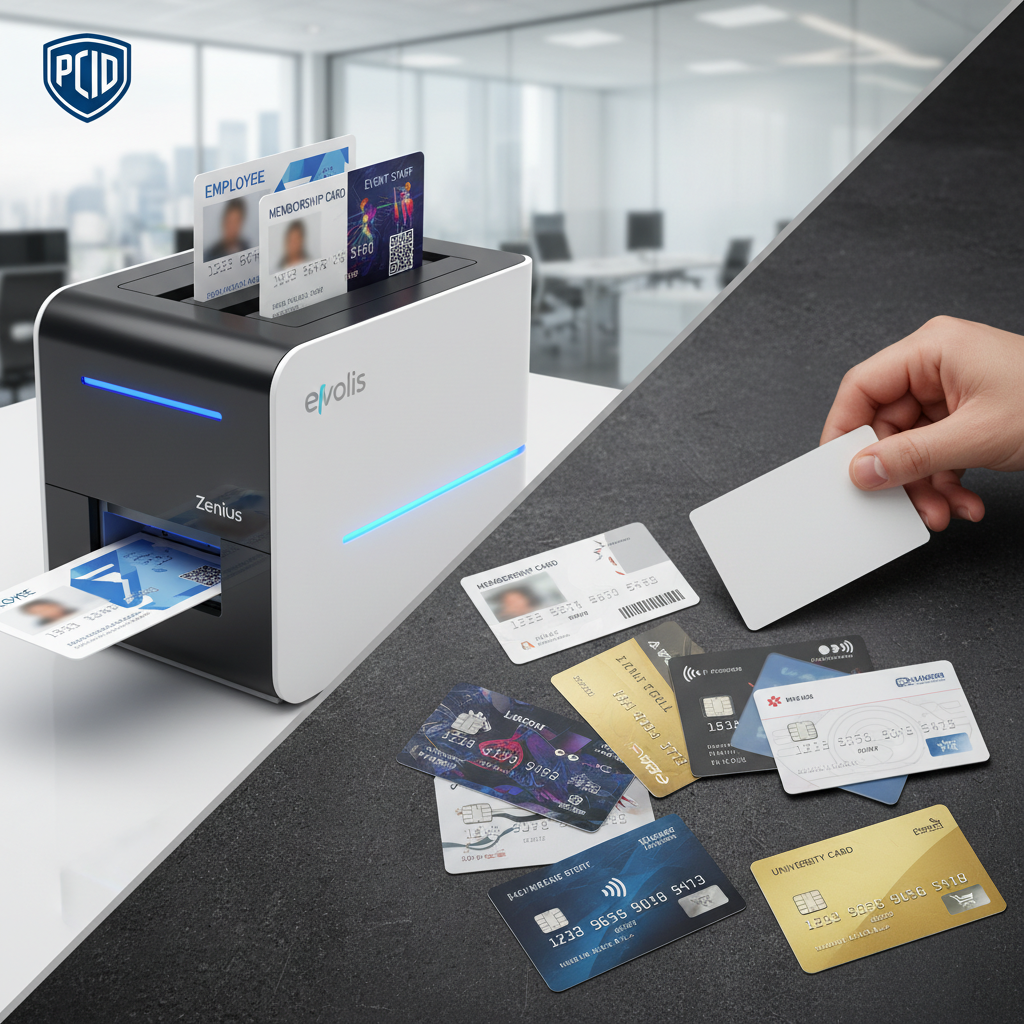 The breadth of organizations that rely on in-house plastic card printing is genuinely wide. What they share is a need for professional-quality cards produced on their own timeline, with their own data, personalized to individual cardholders. Beyond that, the use cases diverge significantly - which is part of why the printer lineup spans such a broad range.
Understanding how other organizations have solved card printing challenges often helps buyers clarify their own requirements. The applications below represent the most common programs Plastic Card ID supports, though the list is by no means exhaustive.
Employee ID and Access Control Cards
Corporate employee ID programs are among the most common use cases for in-house card printing. A well-executed employee ID program serves multiple functions simultaneously: it identifies staff visually, encodes access permissions for doors and systems, and projects organizational professionalism to visitors and clients. Printing in-house means new hire cards are ready same-day, lost card replacements are immediate, and terminated employee cards can be invalidated and reprinted without any vendor interaction.
Access control integration is where encoding capability becomes critical. Cards that work with electronic door locks and security systems must have magnetic stripes or chips encoded to the exact specifications of the access control platform. This is a technical detail that absolutely requires getting the printer model and encoding module right from the start - and it's a conversation CPE has helped hundreds of organizations navigate successfully.
Student IDs, Membership Cards, and Loyalty Programs
Universities, community colleges, and K-12 schools represent some of the highest-volume card printing environments in existence. A mid-size university processing enrollment each fall may need thousands of student ID cards printed and distributed within a few weeks - a timeline that makes in-house printing not just convenient but operationally necessary. The Evolis Primacy2 and similar mid-range models handle this kind of periodic burst demand reliably.
Membership organizations and loyalty programs face a different version of the same challenge: ongoing, personalized card issuance at scale. Gyms, retail loyalty programs, libraries, and professional associations all issue cards that carry individual member data. Printing those cards in-house eliminates per-card vendor fees that add up quickly across a large member base, and keeps issuance time immediate rather than days-long.
Hotel Key Cards and Event Credentials
Hospitality is one of the more specialized card printing applications, because hotel key cards require specific encoding compatibility with door lock systems - and they need to be produced quickly at check-in. Hotels and resorts operating their own card program have precise control over card quality, encoding, and the card design itself. The Matica Event Printer's high-speed capability makes it particularly relevant for properties with high guest throughput.
Event credentials - conference badges, festival wristbands in card format, trade show access passes - present yet another variation. These are often high-volume, time-compressed print runs where the priority is speed and reliability under pressure. On-site badge printing that keeps pace with registration arrivals requires equipment built for exactly that scenario, and it's an application where having the right machine is the difference between smooth operations and chaos.
Buyer's Guide: What to Evaluate Before Purchasing an ID Card Printer
 Buyers who approach a printer purchase with the right questions in mind almost always make better decisions than those who shop by price or brand name alone. There are several dimensions worth examining carefully before committing to a model - and some of them are easy to overlook until you've already made the wrong choice.
This guide is meant to give you a practical framework, not an exhaustive technical manual. The goal is to help you walk into a purchase conversation with CPE already knowing what you need to discuss.
Key Questions to Ask Before You Buy
- What is your current card volume, and what might it be in two years? Buying for today's volume and ignoring growth projections is the most common planning error in card program management.
- Do your cards need to be printed on both sides? Dual-sided printing requires either a flip-capable printer or a dual-sided model - not every entry-level unit supports it.
- What encoding does your access system or loyalty platform require? Magnetic stripe, contactless smart chip, and contact chip are not interchangeable - they must match your infrastructure.
- How important is card durability? If cards are handled daily for two or three years, lamination adds significant life. If they're short-term passes, it may not be necessary.
- What is your total budget for the printer, initial ribbon and card supply, and ongoing consumables? The printer purchase price is typically a fraction of the three-year total cost of ownership.
- Who will operate the printer? Some models are significantly more user-friendly than others, and training time matters if turnover in the operator role is frequent.
- Does your organization have IT restrictions that affect driver installation or USB connectivity? Some enterprise environments require specific compatibility considerations.
Understanding Total Cost of Ownership
The sticker price of a card printer tells only part of the financial story. Ribbons, cleaning kits, lamination film, and replacement cards are ongoing costs that vary by print volume and card type. A color YMCKO ribbon typically yields 100-200 cards depending on coverage, and ribbon costs per card can range meaningfully between printer models and ribbon types.
Over three years, a printer running 500 cards per month will consume considerably more in supplies than one running 50. Working out a realistic cost-per-card estimate before purchasing - accounting for ribbons, lamination if applicable, and periodic cleaning supplies - gives you a much clearer financial picture than comparing hardware prices alone. Plastic Card ID can help you build that estimate accurately based on your specific use case.
Warranties, Support, and Longevity
Card printers from reputable brands carry manufacturer warranties, and Plastic Card ID can walk you through what's covered and for how long on each model. Understanding warranty terms matters because a printer that develops a print head issue six months in should be covered without drama - and knowing your coverage going in means you're not caught off guard.
Longevity considerations extend beyond the warranty period. Availability of replacement parts, ribbon compatibility over time, and the manufacturer's track record for supporting a model years after purchase are all worth factoring in. This is another area where buying from an experienced, established supplier rather than a discount marketplace pays genuine dividends - CPE has been placing these machines and supporting customers through their operational life for over 25 years.
Frequently Asked Questions About ID Card Printer Plastic Cards
Over the years, Plastic Card ID has fielded thousands of questions from buyers at every stage of the decision process - from organizations just starting to explore in-house printing to established programs looking to upgrade aging equipment. The questions below represent the ones that come up most consistently.
Can I print on both sides of a card?
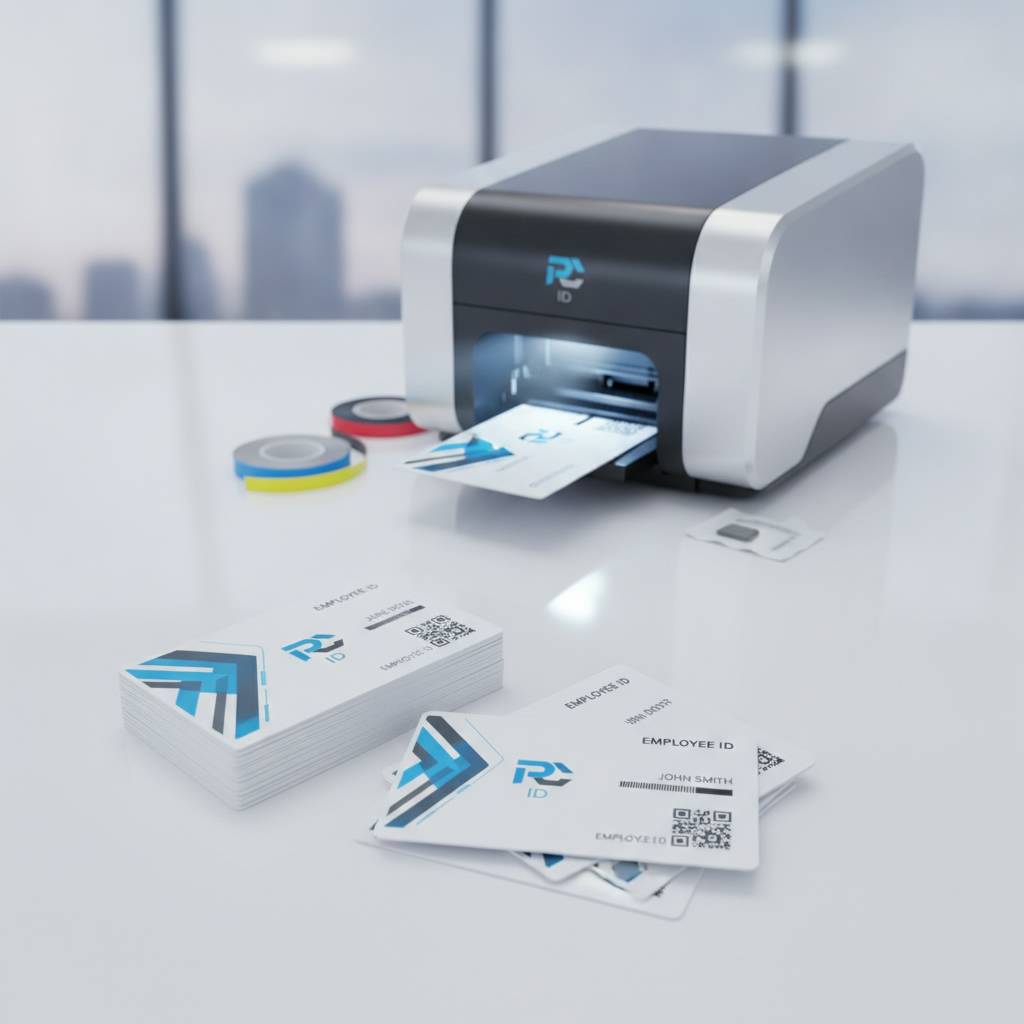
Yes - many printers in the lineup support dual-sided printing, either natively or through an optional module. The Evolis Primacy2, for example, can be configured for dual-sided output, which is useful for cards that carry a photo and personal information on the front and a barcode, magnetic stripe, or policy text on the back. Not every printer supports this, so it's worth specifying as a requirement upfront.
For organizations where only a portion of cards need dual-sided printing, it's also possible to run a manual flip process on single-sided printers - though this is more labor-intensive and less consistent than a purpose-built dual-sided model. For anything beyond occasional dual-sided needs, a dedicated model is the better long-term choice.
What cards work with these printers?
The printers at Plastic Card ID are designed for standard CR80 PVC plastic cards - the same size as a credit card, 3.375 inches by 2.125 inches. These are durable, professional-grade cards that accept dye-sublimation printing cleanly and consistently. Card stock quality matters for print output - using inferior blank cards can degrade color accuracy and cause transport issues inside the printer.
Cards with pre-applied magnetic stripes, smart chip inlays, or RFID modules are also available for use with appropriately equipped printers. The encoding happens during the print cycle when the right module is installed - the card needs to have the physical component (stripe or chip) pre-embedded before printing, but the data writing happens in the machine.
How difficult is it to set up and operate a card printer?
Entry-level models like the Badgy200 are designed to be operational within minutes of unboxing - plug in, load the ribbon and cards, install the driver, and you're printing. Mid-range and higher-end models involve a bit more setup, particularly if encoding modules are being configured, but none of the printers in the Plastic Card ID lineup require specialized technical skills to operate day-to-day once initial setup is complete.
Software is an important consideration alongside the hardware. Most printers ship with design software that handles card layout, database connectivity for personalization, and encoding management. For organizations with more complex requirements - large databases, integration with HR systems, or multi-location printing - more sophisticated software solutions are available and worth discussing with CPE during the buying process. Call 800.835.7919 to talk through your software requirements alongside your hardware selection.
Start Your Card Program with Plastic Card ID
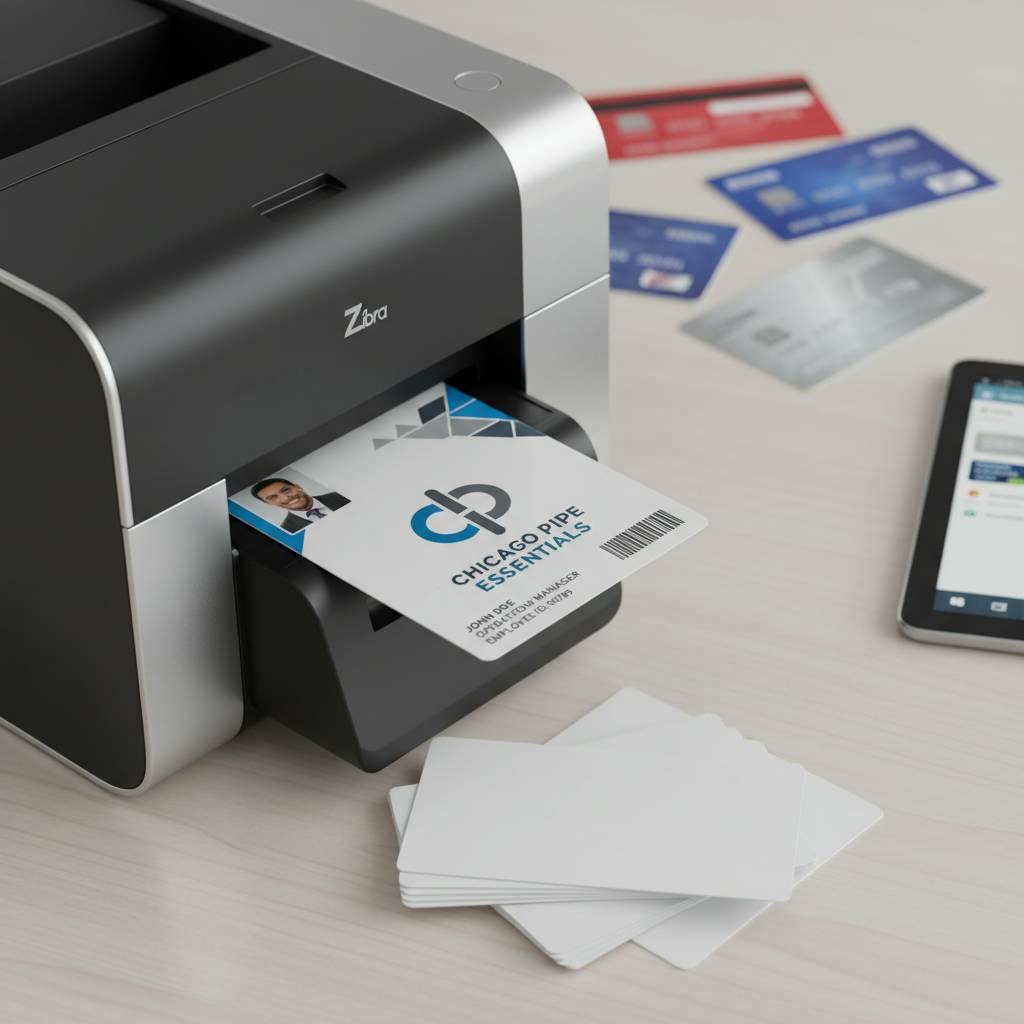 There are plenty of places to buy a card printer. What sets Plastic Card ID apart after more than 25 years in this specific market is depth - depth of product knowledge, depth of application experience, and depth of supply inventory that means your program never runs out of what it needs. Over 100,000 customers haven't stayed with CPE because there was no other option. They've stayed because the combination of product quality, expert guidance, and reliable supply has made their card programs work better.
In-house plastic card printing is one of the few operational investments that pays back on almost every measurable dimension - faster issuance, lower per-card cost at volume, complete personalization capability, and total control over your card program from design through delivery. The only real question is which printer and configuration is right for your organization's specific needs - and that's exactly the question Plastic Card ID exists to answer.
What to Expect When You Call
When you reach out to Plastic Card ID, you'll speak with someone who knows the product line in genuine detail - not a generalist reading from a spec sheet. Expect questions about your current volume, card types, encoding requirements, and any specific constraints like budget or timeline. The goal is to understand your actual program, not just hand you a brochure.
From there, the recommendation you receive will be specific and justified - here's the model, here's why it fits your volume and encoding needs, here's what the ongoing supply cost looks like. No upselling you to industrial equipment for a 300-card-per-year program. No pointing you toward entry-level hardware when your volume demands something more capable. Just a straight answer from people who've been doing this a long time.
Ongoing Supply and Support
The relationship doesn't end when the printer ships. Plastic Card ID supplies ribbons, cleaning kits, lamination film, blank card stock, and accessories on an ongoing basis - everything your program needs to keep running. Having a single reliable supplier for hardware and consumables simplifies procurement, ensures compatibility, and means you're never scrambling to find the right ribbon for your specific printer model.
Reorder intervals for supplies vary by volume. A low-volume program might order ribbons a couple of times per year. A high-volume operation might have a standing reorder schedule to ensure continuity. Either way, CPE makes it straightforward.
Ready to Get Started?
Call Plastic Card ID today at 800.835.7919 to speak with an ID card printing specialist. Whether you're launching a new card program from scratch or upgrading equipment that's no longer meeting your organization's demands, the team is ready to help you find exactly what you need - and get you printing professional plastic ID cards as quickly as possible.
Plastic Card ID - your trusted partner for ID card printer plastic cards. Call 800.835.7919 now and get expert guidance, the right equipment, and a supply partner that supports your program for the long term.