Custom Plastic Card Printer: Create Unique Branded Cards
Table of Contents []
- Your Custom Plastic Card Printer Headquarters - Plastic Card ID
- What a Custom Plastic Card Printer Actually Does for Your Organization
- The Brand Lineup - Industry Leaders, Curated for Performance
- Supplies and Accessories - The Other Half of the Equation
- Use Cases Across Industries - Who Is Actually Buying These Printers
- Buyer's Guide - How to Choose the Right Custom Plastic Card Printer
- Frequently Asked Questions About Custom Plastic Card Printers
- Partner With Plastic Card ID for Your Custom Plastic Card Printer Needs
Your Custom Plastic Card Printer Headquarters - Plastic Card ID
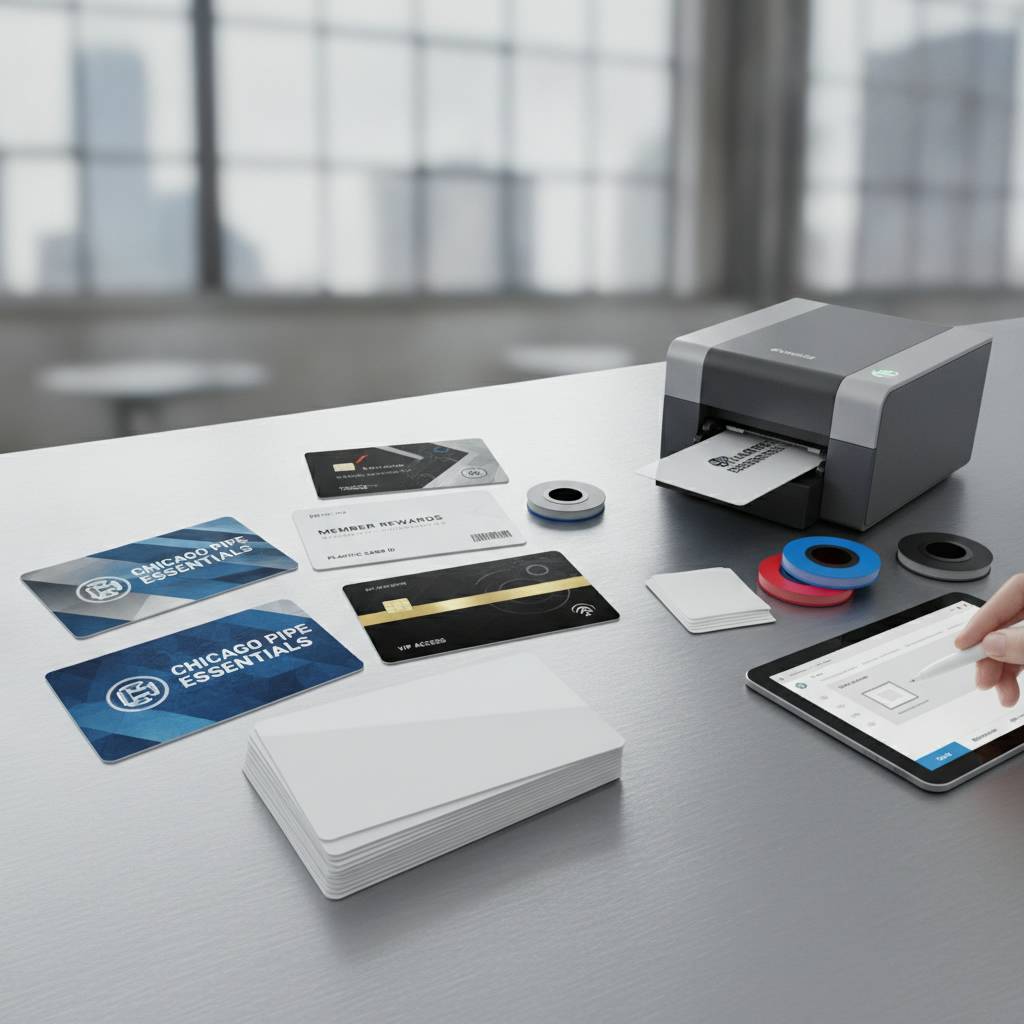 There's a moment every operations manager, HR director, or school administrator eventually faces: the outside vendor takes too long, the order comes back wrong, and someone is standing at the front desk without a badge. That's exactly the problem a custom plastic card printer eliminates - permanently. When the hardware lives in your building, you print what you need, when you need it, exactly the way it should look.
Plastic Card ID has been supplying professional-grade card printing hardware to businesses across the United States for over 25 years, building a customer base that now exceeds 100,000 organizations. From single-employee boutique operations to sprawling enterprise campuses, the right printer exists for every program - and CPE carries the full lineup to prove it.
This page walks you through everything worth knowing before you buy: what the hardware actually does, which brands lead the industry, how to match a machine to your real volume, and what accessories keep the whole program running smoothly. Read it once and you'll shop like a pro.
| Printer Model | Brand | Best For | Volume Range |
|---|---|---|---|
| Badgy200 | Evolis | Small orgs, entry-level ID programs | Up to 1,000 cards/year |
| Zenius / Primacy2 | Evolis | Mid-range, dual-sided, mag stripe | 1,000-6,000 cards/month |
| Agilia | Evolis | Edge-to-edge premium output | High-quality production runs |
| Fargo Series | Fargo | Security-focused ID programs | Mid to high volume |
| Zebra Series | Zebra | Robust enterprise ID | Mid to high volume |
| Event Printer | Matica | On-site event badge printing | High-speed batch runs |
What a Custom Plastic Card Printer Actually Does for Your Organization
Printing On Demand - The Real Operational Advantage
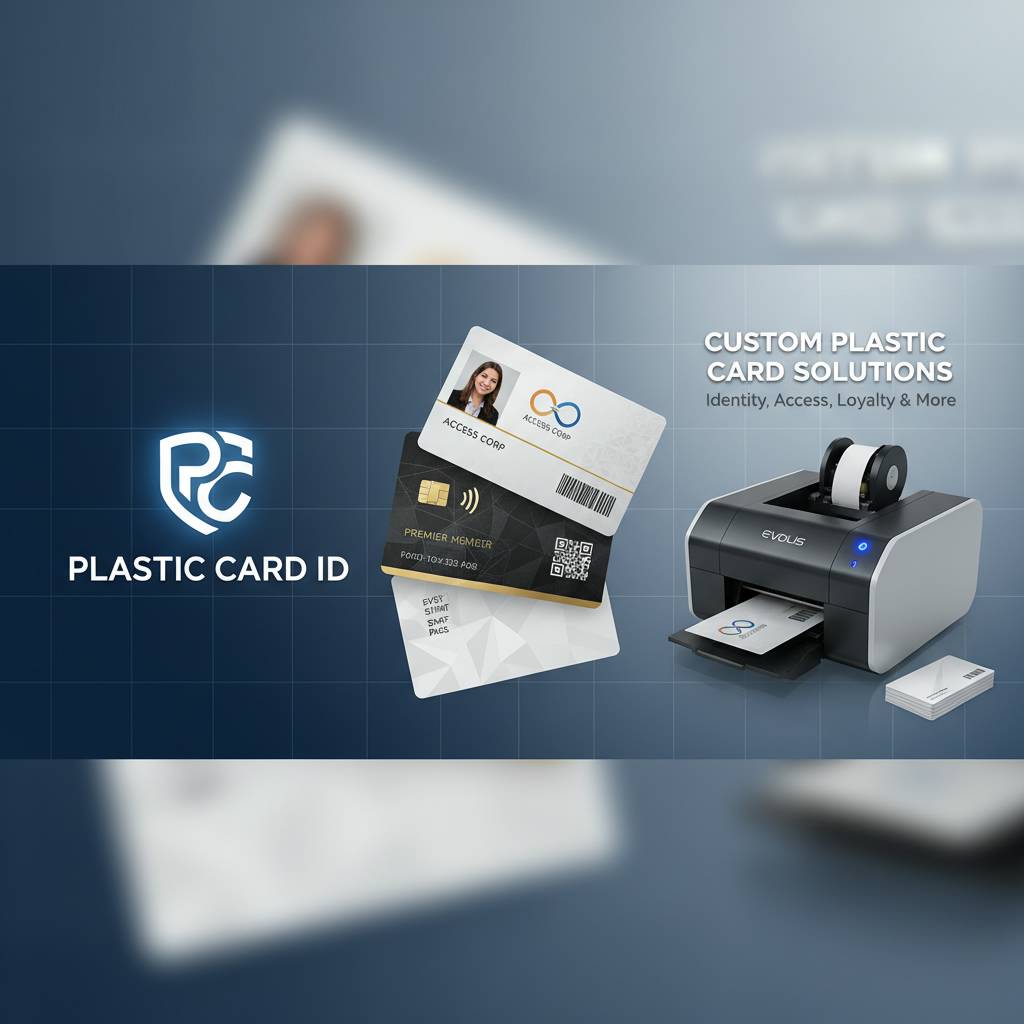
When you control the hardware in-house, the entire concept of lead time disappears. Need a replacement badge for a new hire starting Monday morning? Print it Friday afternoon. Launching a loyalty program mid-campaign? Update the design, load fresh cards, and run the job in minutes. That responsiveness is simply not available from outside vendors, no matter how fast they claim to be.
This is especially valuable for organizations with high employee turnover, rotating event staff, or seasonal membership cycles. The ability to print, encode, and deliver a finished card the same day someone walks through the door is a genuine operational edge - not a marketing talking point.
Personalization at the Card Level
A custom plastic card printer doesn't just reproduce a template. It personalizes each individual card with unique data - a name, a photo, an employee number, a magnetic stripe encoding, or a smart chip. Every single card that comes off the printer can be distinct, and the process happens automatically when your card design software feeds the right data to the machine.
Personalization at this level used to require a commercial print shop with expensive minimum orders. Today, a single desktop unit sitting on a shelf in your HR office handles the same task at a fraction of the cost per card over time. The economics shift dramatically in favor of in-house printing once your volume reaches even a few hundred cards per year.
Security and Access Control Applications
Many organizations don't just need a card that looks professional - they need one that works with a physical access control system. That means encoding a magnetic stripe, programming a smart chip, or both. CPE carries printers with built-in encoding modules as well as add-on upgrade kits, so existing hardware can often be upgraded rather than replaced.
Fargo and Zebra printers are particularly well-suited to security-sensitive environments where tamper resistance, holographic overlaminates, and consistent encoding accuracy aren't optional features - they're baseline requirements. Getting the encoding right every single time is exactly what these machines are engineered to do.
The Brand Lineup - Industry Leaders, Curated for Performance
Evolis - The Most Complete Card Printer Family
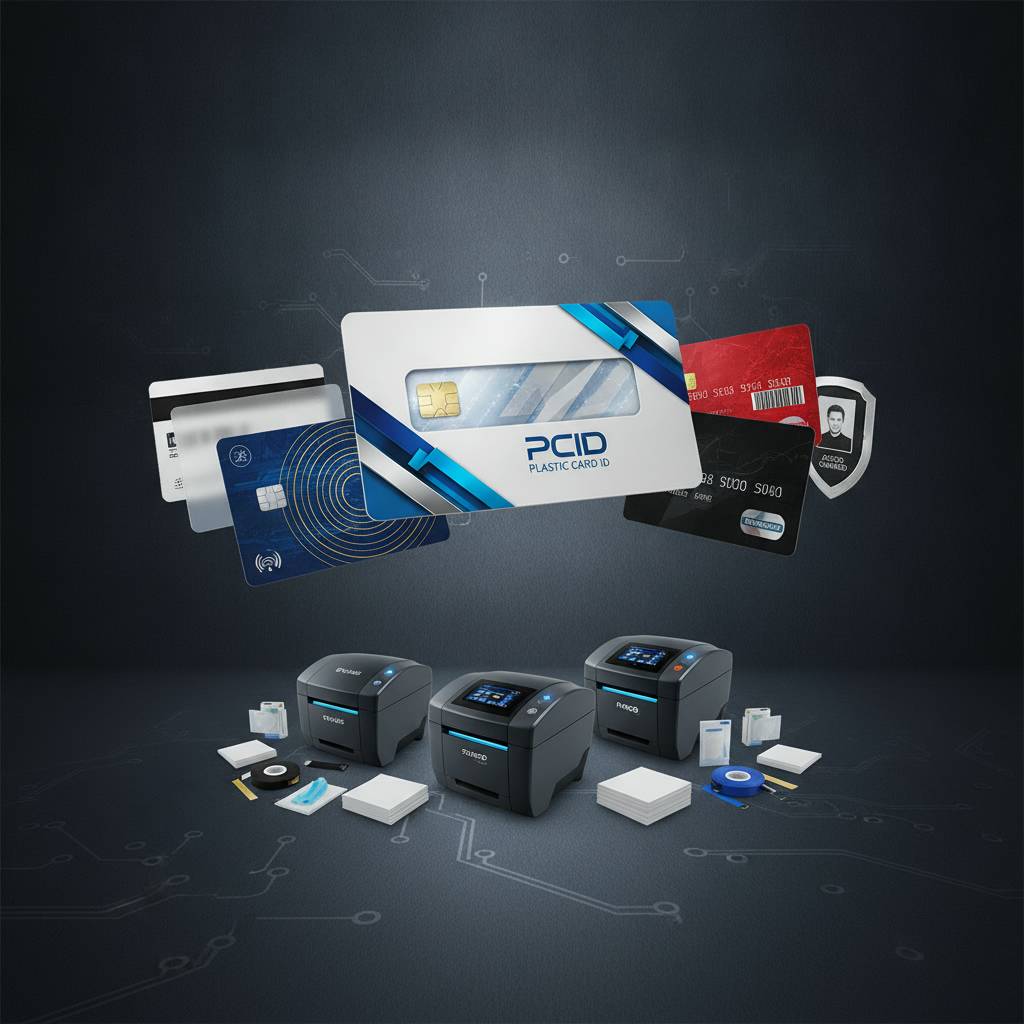
Evolis has built one of the most comprehensive families of card printers available anywhere. The entry-level Badgy200 is an honest, no-nonsense machine for organizations printing fewer than 1,000 cards per year - small nonprofits, independent schools, boutique fitness studios. It's compact, straightforward to operate, and produces cards that look entirely professional.
Step up to the Zenius or Primacy2 and the capabilities multiply noticeably. Dual-sided printing, magnetic stripe encoding, and the ability to handle 1,000 to 6,000 cards per month place these models squarely in the workhouse category. They're the kind of equipment that runs quietly in the background for years without demanding attention. Reliable, mid-range, and genuinely versatile - these printers serve the widest range of customers in the lineup.
Evolis Agilia - When Quality Margin Matters
The Agilia sits at the premium end of the Evolis range and earns its position. Edge-to-edge printing with no white borders, exceptional color fidelity, and a finished card that genuinely looks like it came from a commercial print facility. For organizations where the card itself is a brand statement - a premium membership club, a high-end hotel, a corporate headquarters - the Agilia delivers the quality margin that justifies the investment.
It's not the right choice for a break room timecard system. But when the card is the first physical touchpoint a member, guest, or employee has with your brand, the visual difference is immediately apparent - and the Agilia is the machine that creates it.
Fargo and Zebra - Security, Scale, and Reliability
Fargo printers have long been the go-to choice for government agencies, universities, and corporate security departments that need ID programs built around trust. Zebra brings a similar philosophy with a hardware platform known for durability under sustained production loads. Both brands support lamination modules, encoding upgrades, and the kind of consistent output that high-stakes ID programs demand.
Call 800.835.7919 if you're building or upgrading a security-focused program and need help choosing between Fargo and Zebra hardware. The differences matter, and the right guidance saves both time and money. CPE keeps both brands fully stocked and can walk you through the technical specifications that determine the best fit for your environment.
Matica Event Printer - Fast Badges, No Compromises
Event credentials have a unique set of demands. You need speed, because hundreds of attendees are queued at registration. You need portability, because the printer may travel to different venues. And you need reliability, because there's no time for troubleshooting when doors open in twenty minutes. The Matica Event Printer is built specifically for this scenario.
High-speed on-site badge printing at the level the Matica delivers makes it genuinely useful for conference organizers, trade show managers, and any organization running recurring events with on-demand credentialing requirements. It's a specialized tool, but for the right use case it has no equal in the lineup.
| Accessory Type | Common Variants | Purpose |
|---|---|---|
| Printer Ribbons | YMCKO, Monochrome, Specialty | Full-color and single-color card printing |
| Cleaning Kits | Roller, Card, Swab Sets | Maintaining print head and feed mechanism |
| Lamination Modules | Clear, Holographic | Card durability and security overlays |
| Encoding Upgrades | Magnetic Stripe, Smart Chip | Access control and data storage |
| Input Hoppers | Extended Capacity | Higher-volume unattended printing runs |
| Card Carriers and Sleeves | Standard, Badge Holder | Card protection and professional presentation |
Supplies and Accessories - The Other Half of the Equation
Ribbons: Choosing the Right Consumable
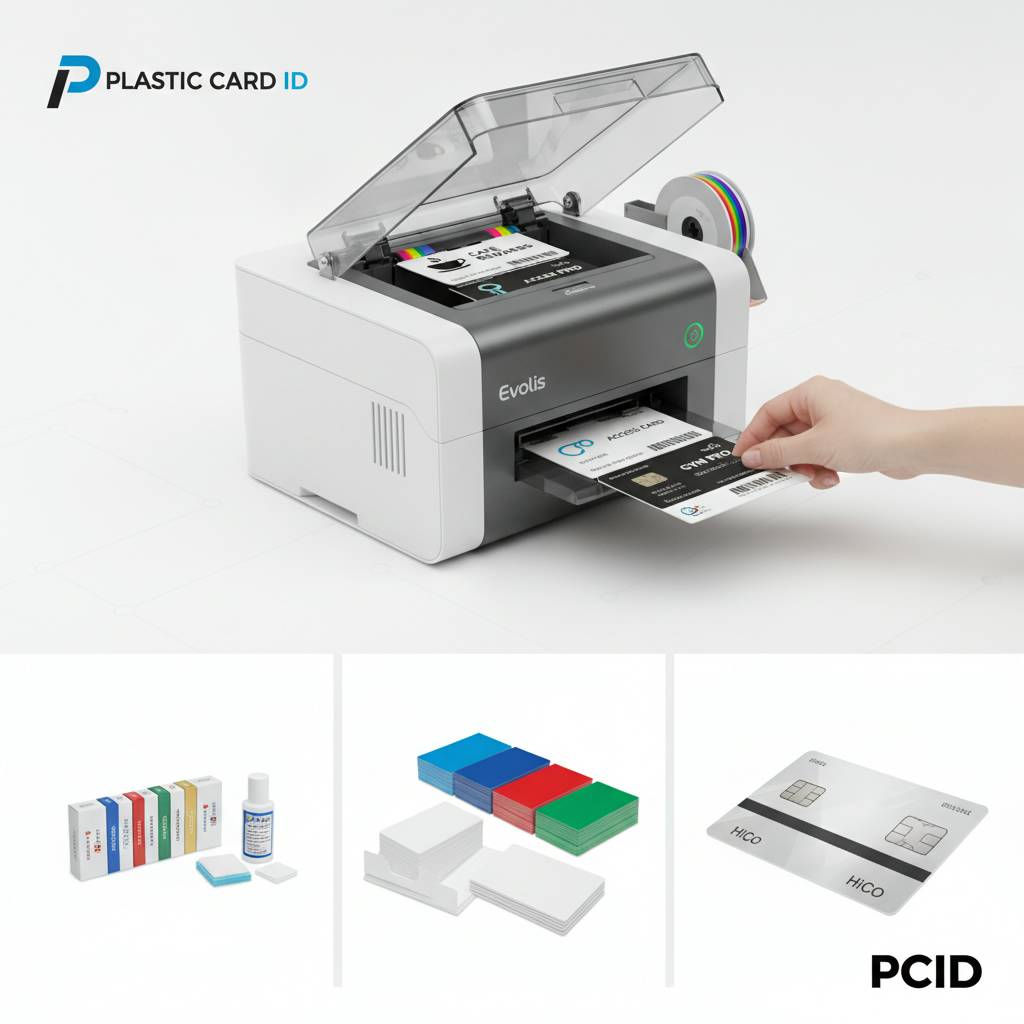
The ribbon is the consumable that most directly determines print quality. YMCKO ribbons - yellow, magenta, cyan, black, and overlay - are the standard choice for full-color ID cards with a protective topcoat. Monochrome ribbons in black or blue suit applications where color isn't needed, running at a significantly lower cost per card. Specialty ribbons add metallic effects, UV-reactive security inks, or other properties for specific program needs.
Matching the ribbon to the printer model is non-negotiable. Every brand - Evolis, Fargo, Zebra, Matica - has its own ribbon format, and using the correct consumable protects the print head while guaranteeing consistent results. CPE stocks ribbons for all current models in the lineup and can help you calculate the right order quantity based on your monthly volume.
Cleaning Kits - Protecting Your Investment
Card printers pass PVC cards through a set of rollers and past a thermal print head hundreds or thousands of times. Dust, card debris, and adhesive residue accumulate gradually and degrade print quality before most operators notice. A regular cleaning cycle - using the manufacturer-specified cards, swabs, and roller-cleaning tools - prevents that degradation entirely.
Neglecting routine cleaning is the single most common cause of premature print head failure, which is also the most expensive component to replace. Most manufacturers include a recommended cleaning interval in their documentation. Following it costs almost nothing. Ignoring it costs significantly more.
Encoding Upgrades, Lamination, and Hoppers
Lamination modules attach directly to compatible printers and apply a thin protective overlay to each card as it exits. Clear laminates extend card life dramatically. Holographic laminates add a visible security feature that's difficult to replicate and immediately recognizable to anyone inspecting the card. Both options are available through CPE for supported models.
Encoding upgrades for magnetic stripe and smart chip are available either as factory-installed options on new printers or as field-installable kits for existing hardware. Input hoppers extend the card feed capacity of compatible printers, making longer unattended print runs practical. Together, these accessories transform a basic desktop printer into a full-featured card issuance system without requiring a separate hardware purchase.
Use Cases Across Industries - Who Is Actually Buying These Printers

Corporate and Enterprise ID Programs
Large employers need employee ID cards that work with physical access systems, carry a professional appearance, and can be produced without a vendor's involvement every time someone joins or leaves. A mid-range or enterprise-class custom plastic card printer handles this entire workflow in-house. HR departments print the card, encode the magnetic stripe, and have a finished credential in hand before the employee finishes onboarding paperwork.
Replacement cards for lost or damaged badges - a recurring expense with outside vendors - become trivial in-house. The operational math is compelling: the printer pays for itself within the first year for organizations with even moderate turnover. After that, the ongoing cost is ribbons, cleaning supplies, and blank cards.
Schools, Universities, and Student ID Programs
Educational institutions print student IDs that serve multiple functions simultaneously: library access, meal plans, building entry, and institutional identification. A mid-range Evolis printer handles dual-sided printing with photo personalization and magnetic stripe encoding in a single pass. School IT departments and administrative offices run the hardware themselves, issuing cards during registration periods or replacing individual cards when needed.
For university campuses with higher volume requirements, Fargo and Zebra options scale appropriately. The consistency of the output matters in institutional environments where cards must interface with third-party reader systems across multiple buildings and departments. CPE supports this entire category and can advise on encoding compatibility with common access control platforms.
Hospitality, Events, and Membership Organizations
Hotels print key cards that look as polished as the property itself. Event organizers need same-day credentials for hundreds of attendees. Gyms, clubs, and membership associations issue loyalty and access cards that members carry daily. All of these applications benefit from in-house printing - not just for cost reasons, but for the control it provides over design, timing, and personalization.
The Matica Event Printer specifically addresses the high-speed batch printing requirement common at conferences and trade shows. For ongoing membership programs, the Evolis Primacy2 or a comparable mid-range unit handles the volume comfortably. Call 800.835.7919 to discuss which hardware configuration fits your specific hospitality or events use case - the answer depends on volume, encoding needs, and how the cards will be used in practice.
Buyer's Guide - How to Choose the Right Custom Plastic Card Printer
Start With Honest Volume Estimates
The most common purchasing mistake in this category is either significantly overbuying or choosing a machine that becomes a bottleneck within six months. Start by estimating your realistic annual card volume, not your aspirational one. If you're a small nonprofit issuing fewer than 500 cards per year, the Badgy200 is genuinely sufficient - and the cost savings versus a mid-range unit are real money.
If you're a corporate office expecting 200 new hires per quarter plus ongoing replacements, a mid-range unit like the Primacy2 is the right starting point. Scale the hardware to your actual need, not the maximum theoretical capacity. Matching hardware to real volume is the single factor that most determines long-term satisfaction with a card printing program.
Consider Encoding Requirements Before You Buy
A printer that produces beautiful visual cards but lacks encoding capability is useless in an access control environment. Before purchasing, confirm whether your program requires magnetic stripe encoding, smart chip encoding, or both - and verify that the printer model you're considering either includes those modules or supports them as upgrades. Not all models in every brand family support every encoding type.
- Magnetic stripe encoding - Standard for hotel key cards, loyalty programs, and basic access control systems
- Smart chip encoding (contact) - Used in higher-security applications where data capacity or cryptographic features are needed
- Dual encoding modules - Available on select Fargo, Zebra, and Evolis models for programs requiring both
- Upgrade kits - Allow encoding capability to be added to some existing printers without a full hardware replacement
- Compatibility check - Always verify that the encoder's output format is compatible with your access control reader hardware
Budget for Consumables, Not Just Hardware
The printer is a one-time purchase. The ribbons, cleaning kits, and blank PVC cards are ongoing. A realistic cost-per-card calculation includes all three. YMCKO ribbons typically yield somewhere between 100 and 500 cards per roll depending on the model, and ribbon pricing varies by brand and volume purchased. Cleaning kits are inexpensive relative to the print head damage they prevent.
When comparing printer options at similar price points, also compare the cost and availability of consumables for each model. A slightly cheaper printer with expensive or hard-to-source ribbons may cost more over three years than a moderately priced unit with readily available supplies. CPE stocks consumables for every printer brand in the lineup, making ongoing supply management straightforward.
Frequently Asked Questions About Custom Plastic Card Printers
Can I print cards with photos and variable data on the same run?
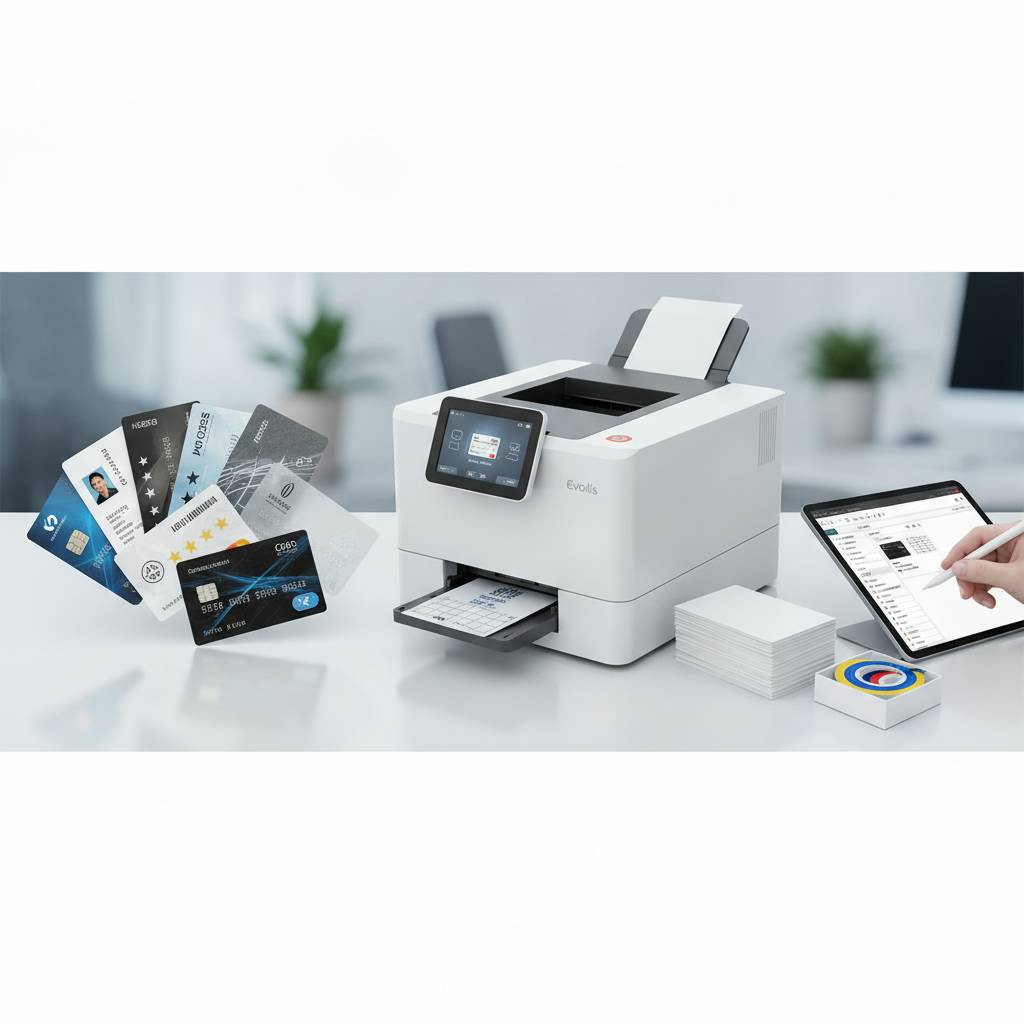
Yes - and this is one of the core advantages of in-house card printing. Modern card design software connects to your printer and a data source (a spreadsheet, a database, or a dedicated ID management platform) and automatically pulls the unique name, photo, and data for each card. The printer processes each card individually, producing a fully personalized credential without manual intervention between cards.
This capability is available at every price tier. The Badgy200 handles it for small runs. The Primacy2 handles it at mid-volume with dual-sided output. The Agilia handles it with premium edge-to-edge print quality. Variable data printing is a standard feature, not a premium upgrade, across the lineup CPE carries.
What is the typical cost per card for in-house printing?
The cost per card depends on the ribbon type, the printer model, whether dual-sided printing is used, and the cost of the blank PVC cards themselves. A rough range for full-color single-sided cards using YMCKO ribbons typically falls between $0.30 and $0.75 per card in consumables alone, not counting the amortized hardware cost. Monochrome prints are considerably less expensive.
Compared to ordering cards from an outside vendor - where setup fees, minimum orders, and per-card pricing typically push costs higher, plus the unavoidable lead time - in-house printing becomes cost-competitive relatively quickly. For most organizations printing more than 300 cards per year, the economics favor in-house hardware within the first 12 to 18 months.
Do these printers work with standard CR80 PVC cards?
Yes. All printers in the lineup - Evolis, Fargo, Zebra, and Matica - are designed to work with standard CR80 format PVC cards, the same dimensions as a standard credit card (3.375 inches by 2.125 inches). This is the universal format for ID cards, access cards, loyalty cards, and hotel key cards. Blank CR80 PVC cards are available in standard thickness as well as various specialty configurations.
Card thickness is worth noting: most printers in this lineup are optimized for 30 mil thickness, which is the standard for most ID programs. Some models also support thicker or thinner stock for specific applications. Call 800.835.7919 if you have a non-standard card substrate requirement and need to verify compatibility before purchasing hardware.
Partner With Plastic Card ID for Your Custom Plastic Card Printer Needs
 Choosing the right custom plastic card printer is a decision that affects your organization's operations, budget, and credentialing quality for years. It deserves more than a quick search result - it deserves a supplier with 25 years of experience, more than 100,000 customers served, and a complete lineup covering every brand, every volume tier, and every accessory your program will ever need.
Plastic Card ID is that supplier. Whether you're starting a card program from scratch, upgrading aging hardware, or adding encoding capabilities to an existing printer, CPE has the expertise and inventory to get it right the first time. From entry-level Evolis units to enterprise Fargo and Zebra systems, every product in the lineup is backed by real product knowledge and genuine customer support.
Ready to take full control of your card program? Contact Plastic Card ID today at 800.835.7919 and put 25 years of card printing expertise to work for your organization. The right hardware is one conversation away.
PVC Card Printers for ID Badges & Business Cards
Previous Page