Dye Sublimation Card Printer Explained: Complete Overview
Table of Contents []
- What Exactly Is a Dye Sublimation Card Printer? Plastic Card ID Has Answers
- Choosing the Right Dye Sublimation Card Printer for Your Volume
- The Full Ecosystem: Beyond Just the Printer
- Applications: Who Prints In-House and Why It Makes Sense
- Buyer's Guide: Key Questions Before You Purchase a Dye Sublimation Card Printer
- Why Plastic Card ID Remains the Trusted Source for Dye Sublimation Card Printers
What Exactly Is a Dye Sublimation Card Printer? Plastic Card ID Has Answers
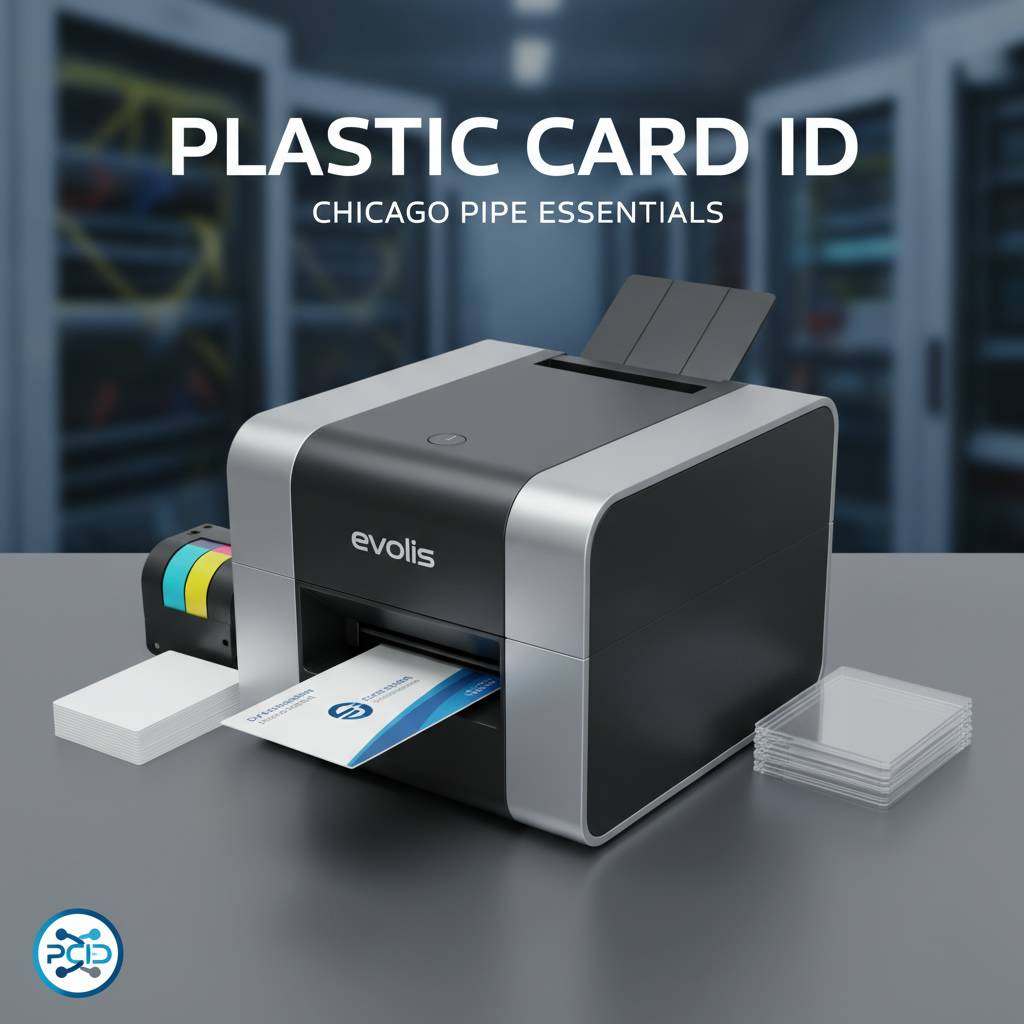 Walk into almost any organization that prints its own ID cards in-house, and you'll likely find a dye sublimation card printer humming quietly on a desk or shelf. Yet despite being a cornerstone technology of professional card printing for decades, the term "dye sublimation" still leaves many buyers scratching their heads. What makes it different? Why does it produce such sharp, vibrant results? And - critically - is it the right choice for your operation?
This guide unpacks every layer of the dye sublimation process, compares it against alternative print methods, and walks you through the real-world printer models that CPE carries, so you can make a confident, well-informed purchase decision rather than a costly guess.
The Core Science Behind Dye Sublimation Printing
Dye sublimation - sometimes called "dye-sub" - works by converting solid dye panels on a ribbon directly into a gas state, bypassing the liquid phase entirely. That gas then permeates the surface of a specially coated PVC card and re-solidifies within the card's material layer. The result is not an ink deposit sitting on top of the card but a dye that is literally part of the card surface.
This process happens through precisely controlled heat applied by a thermal print head. The head contains thousands of tiny heating elements, each capable of varying its temperature to release more or less dye. That level of control is what produces the incredibly smooth gradients, true-to-life skin tones, and crisp photographic detail that dye sublimation cards are famous for delivering.
How It Differs From Direct-to-Card and Other Methods
Not every card printer uses dye sublimation in the same way, and there are competing technologies worth understanding. Direct-to-card (DTC) printing is the most common approach in desktop card printers - the print head moves across the card surface at a very close distance and transfers dye or resin from the ribbon. It is fast, cost-effective, and suitable for a wide range of standard applications.
Retransfer printing, by contrast, first prints the image onto a clear film, then thermally bonds that film to the card surface. This method produces edge-to-edge printing on non-standard cards and delivers even sharper resolution, making it popular for high-security credentials. Both methods can use dye sublimation ribbon technology, but retransfer adds a lamination step that increases durability considerably. CPE carries printers covering both approaches.
Why the Ribbon Composition Matters Enormously
The ribbon used in a dye sublimation card printer is divided into panels, typically in a sequence referred to as YMCKO - Yellow, Magenta, Cyan, Black, and Overlay. The YMC panels carry the color dyes, the K (resin black) panel produces sharp text and barcodes, and the O (overlay) panel lays down a clear protective coating over the finished print. Together, these panels produce a full-color, protected card in a single pass.
Monochrome ribbons - available in black, blue, red, gold, silver, and other colors - print single-color images and text at higher speeds and lower per-card costs. Specialty ribbons with holographic overlays or custom security panels add another layer of credential protection. Choosing the right ribbon type for your application is just as important as choosing the right printer model, and CPE supplies ribbons for every printer in its lineup.
| Ribbon Type | Best Use Case | Typical Card Yield | Cost Range Per Card |
|---|---|---|---|
| YMCKO (Full Color) | Photo ID, membership, loyalty | 200-500 cards | $0.25-$0.75 |
| Monochrome | High-volume single-color text/logo | 1000-1500 cards | $0.05-$0.15 |
| YMCKOK (Dual Black) | Color crisp barcode printing | 200-400 cards | $0.30-$0.85 |
| Holographic Overlay | High-security credentials | 250-500 cards | $0.40-$1.10 |
Choosing the Right Dye Sublimation Card Printer for Your Volume
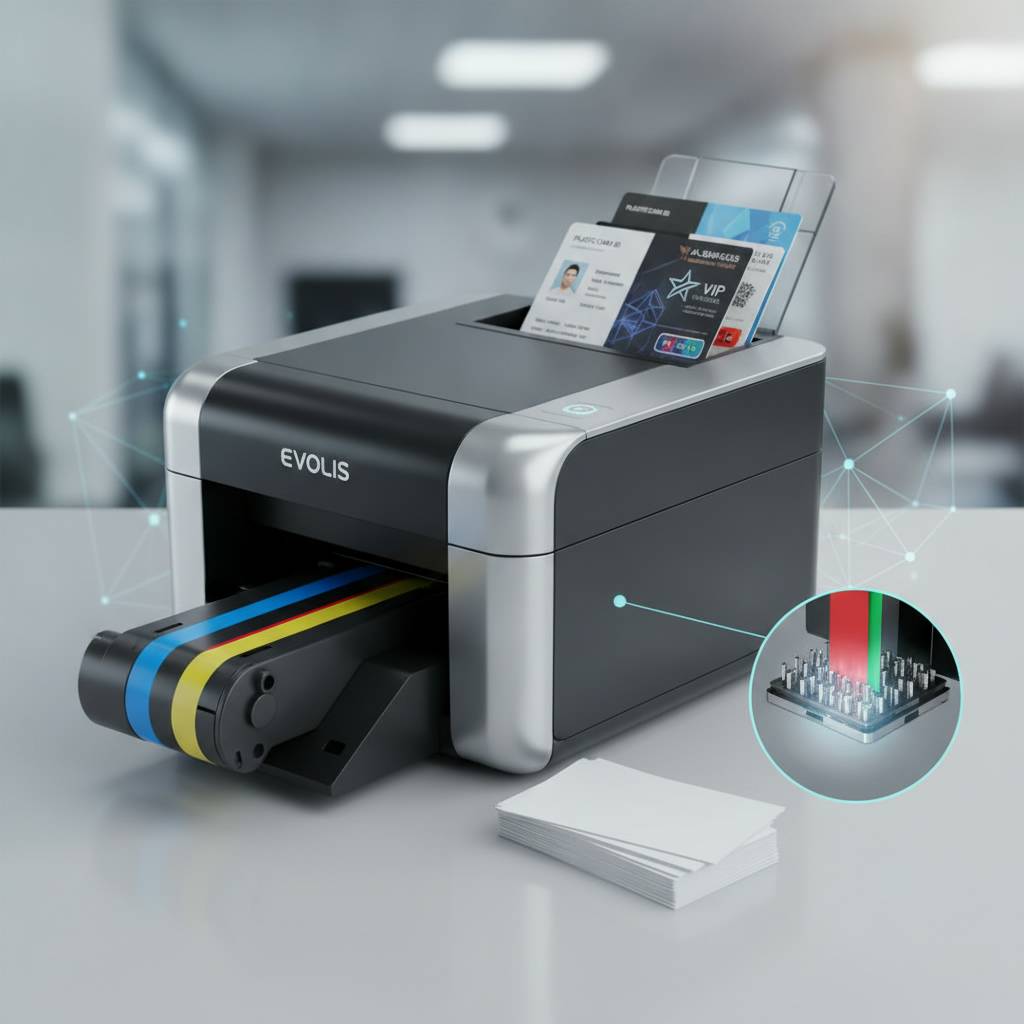 One of the most common mistakes buyers make is treating all card printers as interchangeable. They are not. Matching the printer to your actual card volume and feature requirements is the single most important step in building a card program that stays efficient and cost-effective over time. Undersizing leads to print head burnout from overuse; oversizing means paying a premium for capacity you'll never use.
The good news is that CPE has spent over 25 years aligning customers with the right hardware. The lineup spans everything from compact desktop units designed for organizations printing a few hundred cards per year all the way up to high-throughput industrial systems capable of sustaining demanding, around-the-clock workloads. Let's look at those tiers in honest detail.
Entry-Level Dye Sublimation Printers: When Simplicity Wins
The Evolis Badgy200 is the defining entry-level option in CPE's catalog. Designed for organizations printing fewer than 1,000 cards per year, it offers full YMCKO color printing in a compact, affordable package. Setup is genuinely straightforward - the included software, proprietary Cardpresso Lite, handles basic card design without requiring IT involvement.
Schools, small nonprofits, community centers, and boutique fitness studios often land in this category. They need real, professional-looking ID cards or membership cards but have no need to invest in enterprise hardware. The Badgy200 delivers clean dye sublimation results at a price point - typically under $200 - $300 range - that makes in-house printing immediately cost-justifiable versus outsourcing to a print vendor every time a new employee joins or a member needs a replacement card.
Mid-Range Workhorses: Where Most Businesses Live
Mid-range printers are where the majority of serious card programs operate, and the Evolis Zenius and Evolis Primacy2 represent the sweet spot of that category. Both handle 1,000 to 6,000 cards per month comfortably, with the Primacy2 offering faster throughput, dual-sided printing capability, and a broader range of encoding options - including magnetic stripe and smart chip - as factory or field-installable upgrades.
Corporate HR departments printing employee IDs, healthcare facilities issuing staff credentials, hotels encoding key cards, and universities managing student ID programs all gravitate to this tier. The combination of speed, encoding flexibility, and professional output quality makes these printers genuinely versatile. A university department that prints 300 new student IDs at the start of each semester, then reprints 50-100 replacements throughout the year, will find the Primacy2 handles that workload with ease while leaving significant headroom.
Fargo and Zebra: Security-Driven Dye Sublimation Printing
For organizations where credential security is paramount - government contractors, financial institutions, law enforcement support services, and large enterprise campuses - Fargo and Zebra printers bring a different level of robustness to the dye sublimation space. Both brands are deeply embedded in security ID printing and offer features like encrypted USB connections, secure print queuing, and compatibility with a wide range of smart card encoding standards.
Fargo printers in particular are widely specified in government and large enterprise ID programs because their hardware and software ecosystems are built with access control integration in mind. Zebra card printers similarly carry a reputation for durability in demanding environments. CPE carries models from both brands and can help you identify which configuration matches your security and volume requirements.
Call Plastic Card ID at 800.835.7919 to discuss which Fargo or Zebra model fits your specific security credential program.
Premium and Industrial Options: Maximum Output, Maximum Quality
When volume and print quality both need to be uncompromising, the Evolis Agilia steps in as the premium retransfer option in CPE's lineup. Its retransfer printing process delivers edge-to-edge imaging on standard and non-standard card sizes, with resolution and color fidelity that simply cannot be matched by direct-to-card printers. For organizations issuing premium membership cards, executive access credentials, or highly branded corporate ID programs, this level of output is worth the investment.
The Matica Event Printer occupies a unique niche - high-speed on-site badge printing for conferences, trade shows, festivals, and large-scale events where hundreds or thousands of credentials must be produced quickly, on-demand, and reliably. When an event registration system needs to print a personalized badge in seconds as each attendee checks in, the Matica delivers. It is a purpose-built machine, and for its intended use case, nothing in the lineup touches it.
The Full Ecosystem: Beyond Just the Printer
A dye sublimation card printer is only one component of a complete card printing program. The ongoing consumables, optional modules, and accessories that surround it determine how smoothly your program runs day to day and how much each card ultimately costs to produce. Ignoring the total cost of ownership at the time of purchase is one of the most expensive mistakes a buyer can make.
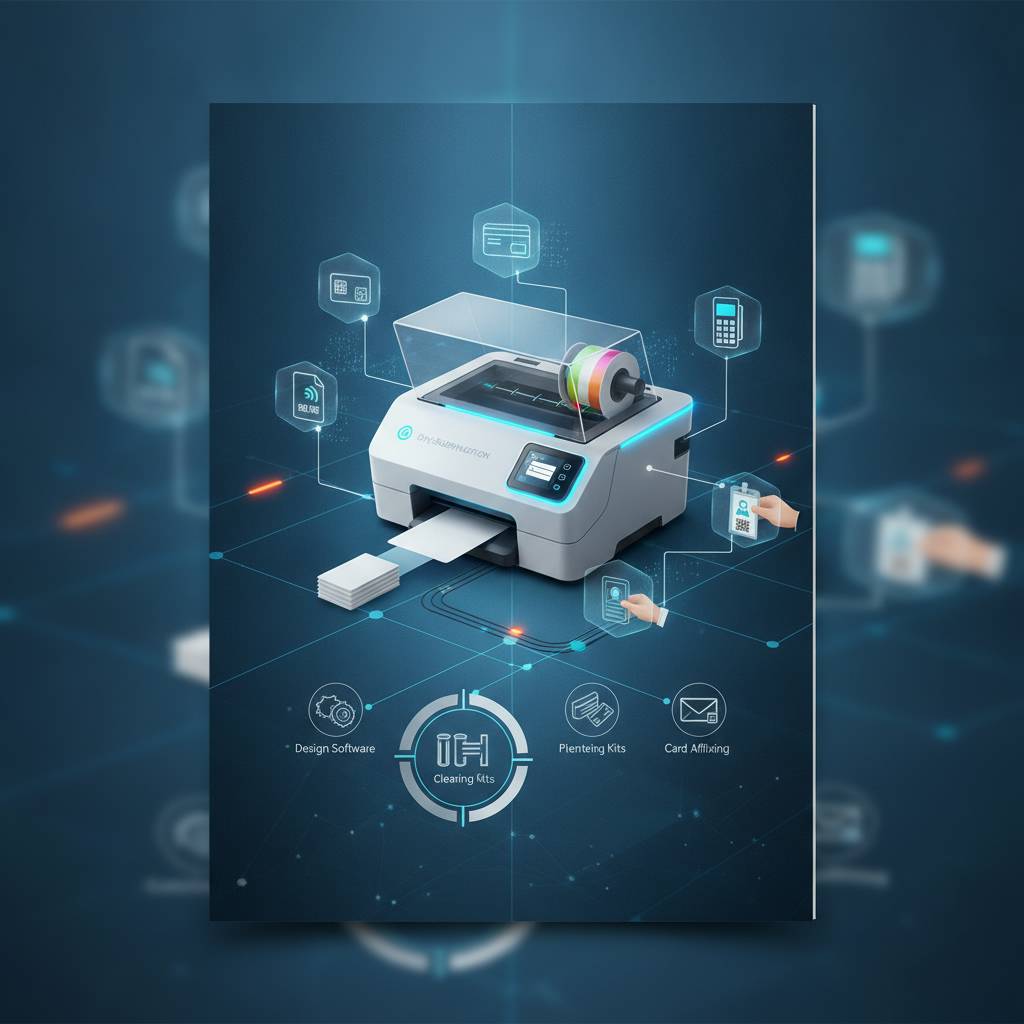
CPE supplies everything a card program needs beyond the hardware itself - not as an afterthought, but as a core part of what they offer. From ribbons and cleaning kits to lamination modules and encoding upgrades, every component is available and stocked for the brands they carry.
Ribbons, Cleaning Kits, and Routine Maintenance
Print ribbons are the primary ongoing consumable in any dye sublimation card printing operation. YMCKO ribbons for full-color photo ID printing, monochrome ribbons for high-volume single-color applications, and specialty ribbons with holographic overlays for security credentials all serve different purposes. Stocking the right ribbon and replacing it at the right time is fundamental to maintaining consistent print quality.
Cleaning kits are equally critical and frequently overlooked. Dye sublimation printers accumulate dust, card debris, and residual dye on rollers and the print head if not cleaned on schedule. Most manufacturers recommend a cleaning cycle with every ribbon change at minimum. CPE supplies brand-matched cleaning kits - pre-saturated cleaning cards, swabs, and roller cleaning sets - for every printer model they carry. A $20-$40 cleaning kit used regularly protects a printer worth $500-$3,000 or more.
Lamination Modules and Encoding Upgrades
Lamination modules, available for select Evolis and Fargo models, apply a thin overlay film to finished cards that dramatically extends card lifespan and adds a physical security layer. Some lamination films incorporate holographic patches, tactile surface features, or UV-reactive elements that make duplication extremely difficult. For ID programs where card longevity and anti-counterfeiting matter, adding a lamination module is one of the highest-return upgrades available.
Magnetic stripe encoding and smart chip encoding are available as integrated options on mid-range and premium printers. Magnetic stripe encoding turns a printed card into a functional access card, loyalty card, hotel key, or time-and-attendance credential simultaneously with printing - no separate step required. Smart chip encoding supports contact and contactless (RFID/NFC) chip standards, enabling cards to interact with electronic door access systems, cashless payment systems, and secure login applications.
Input Hoppers, Card Carriers, and Sleeves
High-capacity input hoppers extend a printer's ability to run unattended batch jobs, which matters significantly when an HR team needs to print 200 new employee IDs before a Monday onboarding session. Standard hoppers on desktop printers typically hold 50-100 cards; extended hoppers can accommodate 200-500 cards, reducing how often an operator needs to reload and monitor the machine.
Card carriers and sleeves are the final step in protecting finished credentials. Horizontal badge holders, retractable reel lanyards, vertical ID holders, and rigid card sleeves all serve functional and presentational roles. An employee badge printed on a $0.50 card that gets scratched and bent within a week because it lacks a protective sleeve undermines the entire investment in professional printing. CPE stocks a broad selection of carriers and accessories to complement every card program.
Applications: Who Prints In-House and Why It Makes Sense
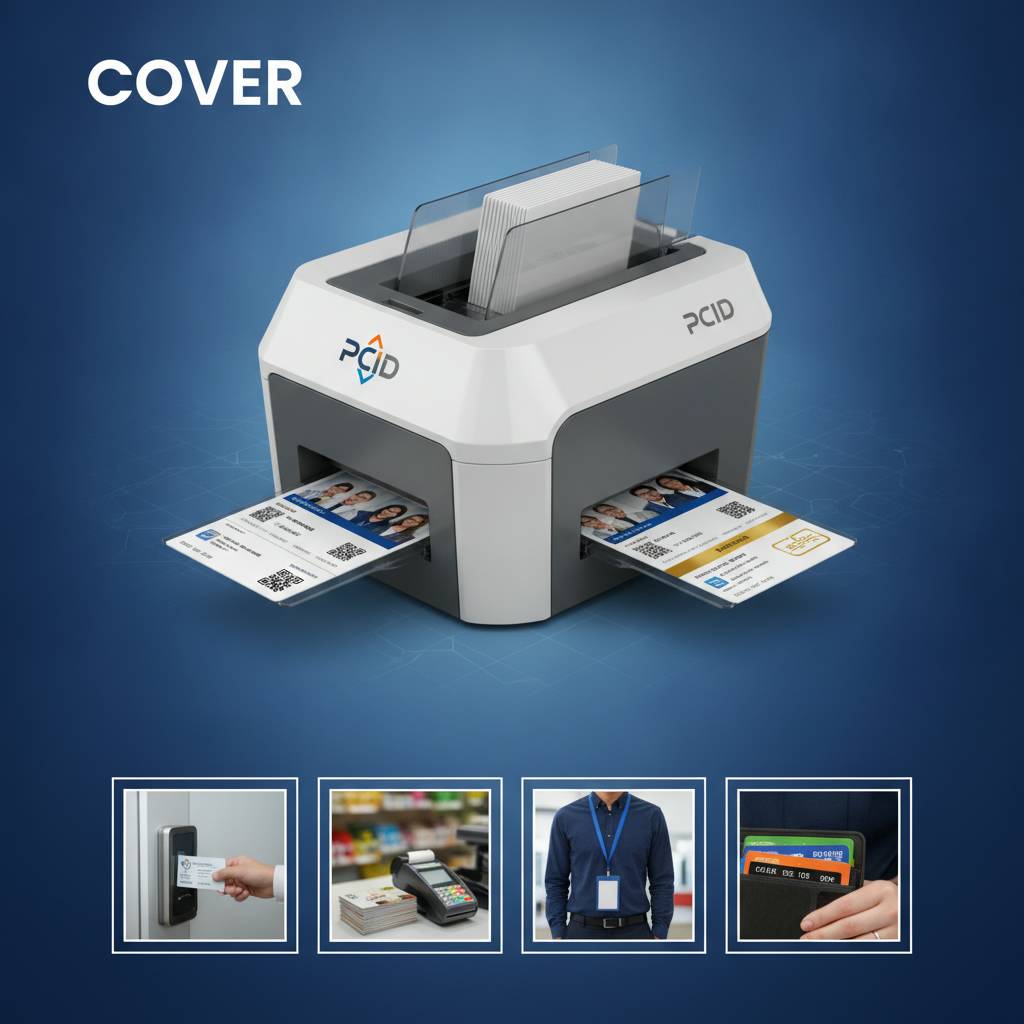 In-house dye sublimation card printing is not a niche practice reserved for large enterprises. It is a practical, cost-effective approach for organizations of all sizes across virtually every industry. The common thread is a need for control - the ability to print a card when it is needed, personalize it immediately, and not wait days or weeks for an outside vendor to fulfill an order.
The shift from outsourced card printing to in-house production typically pays for the printer within one to two years, depending on volume and the cost of previous outsourcing. Beyond the financial math, the operational benefits - on-demand printing, same-day replacement, data security, and design flexibility - often prove more valuable than the cost savings alone.
Employee ID and Access Control Cards
Employee identification is the most common use case for in-house dye sublimation printing. Organizations with regular employee turnover, frequent contractor rotations, or seasonal staffing spikes find that waiting on an outside vendor to produce ID cards creates real operational friction. New employees cannot access facilities or systems until their cards arrive - a problem that vanishes entirely when a printer sits on the HR desk.
When those employee IDs need to double as access control credentials - encoded with magnetic stripe data or a smart chip to operate electronic door locks, time clocks, or secure workstations - the case for in-house printing becomes even stronger. Every card is printed and encoded in a single step, with all sensitive data handled internally rather than transmitted to a third-party vendor. For many organizations, that data security consideration alone justifies the investment.
Student IDs, Membership Cards, and Loyalty Programs
Universities, K-12 schools, gyms, libraries, professional associations, and retail loyalty programs all share a common need: issuing personalized cards to a large and constantly changing membership base. Student populations turn over annually. Gym memberships fluctuate monthly. Library patrons lose cards. Loyalty program enrollments happen at the point of sale. In every one of these scenarios, in-house dye sublimation printing enables instant issuance.
A fitness club that can hand a new member their personalized loyalty and access card within two minutes of signing up creates a fundamentally different first impression than one that says "your card will arrive by mail in 7-10 business days." The operational advantage is clear, but the brand impression and member experience advantages are just as real and arguably more lasting.
Event Credentials and Hotel Key Cards
The Matica Event Printer was designed specifically for the conference and event credential market, where speed and reliability under pressure are non-negotiable. Large-format events printing hundreds or thousands of personalized badges on-site - name, title, company, photo, access tier - need hardware that can sustain that pace without jamming, overheating, or producing inconsistent output. The Matica delivers exactly that kind of performance.
Hotel key cards are another high-volume, operationally sensitive application that benefits from in-house printing. Properties that encode and print their own key cards using a dye sublimation printer combined with a magnetic stripe encoding module can produce branded, personalized key cards at the front desk in moments. No pre-printed stock with the wrong brand logo, no delays waiting on an outside supplier, and no minimum order quantities forcing over-purchasing of a design that may change within the year.
Buyer's Guide: Key Questions Before You Purchase a Dye Sublimation Card Printer
 With multiple brands, dozens of models, and a wide range of optional features to consider, the purchasing process can feel overwhelming if approached without a framework. These questions are the ones that CPE's experienced team walks buyers through every day - and answering them clearly before you shop will save significant time and prevent costly mismatches.
Volume, Connectivity, and Encoding Requirements
- How many cards do you print per month or year? This single question narrows the field immediately. Fewer than 1,000 per year points toward the Badgy200. 1,000-6,000 per month points toward the Zenius or Primacy2. Higher volumes call for premium or industrial options.
- Do you need single-sided or dual-sided printing? Dual-sided printing doubles the information density of each card but adds cost and requires a printer model that supports it.
- Do your cards need to function as access or transactional credentials? If yes, magnetic stripe or smart chip encoding is essential and must be factored into printer selection from the start.
- What is your network environment? Some printers connect via USB only; others support Ethernet or Wi-Fi for shared office printing. Knowing your connectivity requirements upfront prevents deployment headaches.
- What design software will you use? Most printers come with bundled design software at varying capability levels. Higher-end options support integration with HR databases for automated batch personalization.
- What is your total budget including consumables? A printer at $400 with expensive proprietary ribbons may cost more per card over two years than a $700 printer with lower consumable costs. Always model the total cost of ownership.
Understanding Print Head Warranty and Longevity
The print head is the most expensive component in a dye sublimation card printer, and its lifespan directly affects the total cost of ownership. Most manufacturers rate print heads by the number of card sides printed before replacement is expected. Entry-level print heads may be rated at 10,000-20,000 prints; mid-range and premium heads often carry ratings of 50,000-100,000 prints or more. Using the right cleaning kit on schedule is the single most effective way to reach that rated lifespan.
Warranty terms vary by brand and model. Some manufacturers include the print head under standard warranty; others offer extended print head warranties as a paid option. Understanding these terms before purchase - and factoring print head replacement cost into your total cost of ownership model - prevents unpleasant financial surprises later. CPE's team can walk you through warranty specifics for every model they carry.
When to Call Before You Buy
Some purchasing decisions are simple enough to complete online with confidence. Others - particularly those involving encoding requirements, security credential integration, high-volume batch printing, or multi-location deployments - benefit enormously from a conversation with someone who has seen the same scenario dozens of times. Getting the right printer on the first attempt is far less expensive than returning a printer, waiting on a replacement, and losing weeks of production time.
Contact Plastic Card ID at 800.835.7919 whenever your requirements go beyond a straightforward desktop ID card program. The team's depth of experience across over 100,000 customer deployments means your specific situation has almost certainly been navigated before.
Why Plastic Card ID Remains the Trusted Source for Dye Sublimation Card Printers
There is no shortage of places to purchase a card printer online. What is far rarer is a supplier that has spent more than 25 years building genuine expertise across the full range of professional card printing hardware, consumables, and applications - and that has served over 100,000 customers across the United States in the process. That depth of experience shows up in practical ways that matter: accurate product recommendations, knowledgeable answers to technical questions, and a curated lineup that excludes mediocre hardware rather than listing everything available.
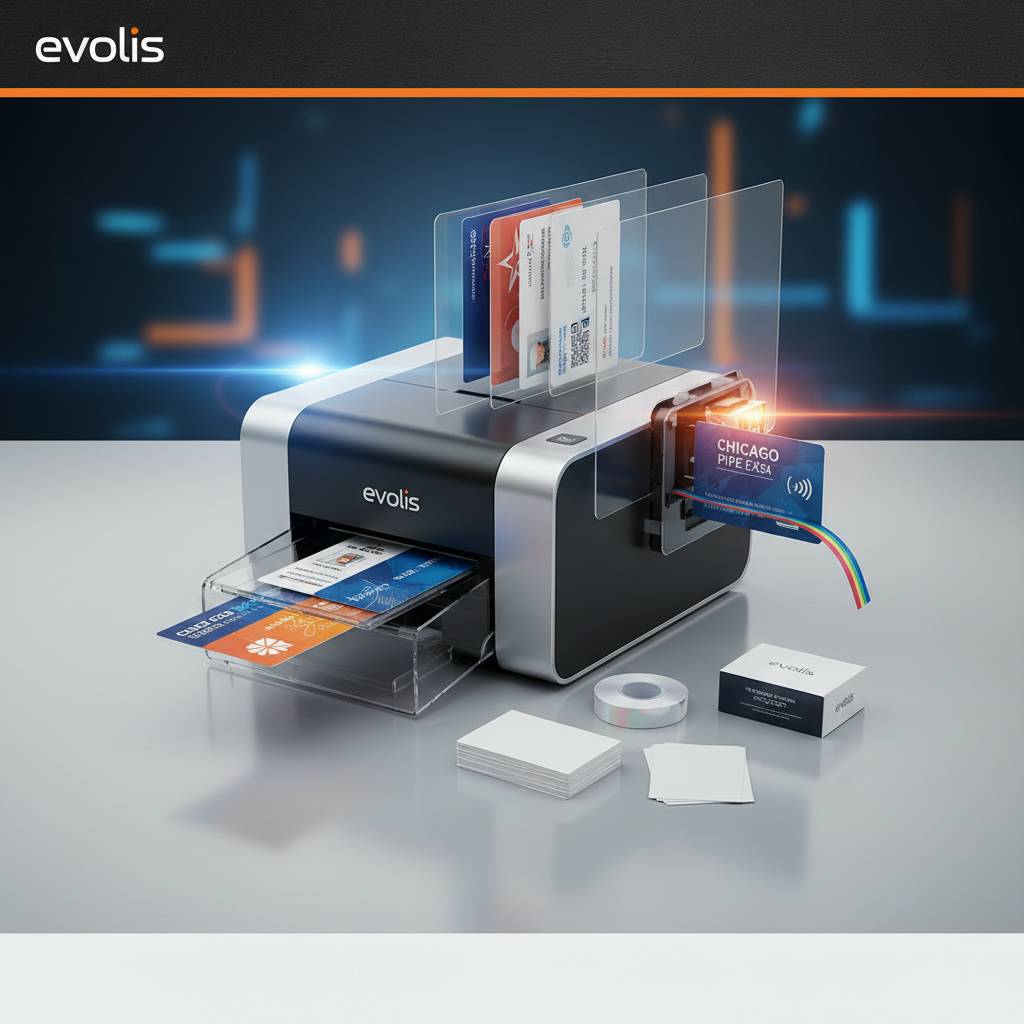
Plastic Card ID carries only professional-grade hardware from brands that have earned their reputations - Evolis, Fargo, Zebra, and Matica. Every printer in the lineup is supported by the full range of compatible consumables and accessories, so customers are never left hunting across multiple vendors to keep their card programs running. That completeness is deliberate, and it reflects a straightforward commitment: make it easy for businesses to print professional cards in-house, consistently, reliably, and cost-effectively.
A Curated Lineup Built on Real-World Expertise
Carrying a curated lineup rather than an exhaustive catalog is a deliberate choice. It means every product CPE recommends has been evaluated, understood, and matched to specific use cases rather than simply listed because it exists. When the Evolis Primacy2 is recommended for a mid-volume corporate ID program, that recommendation comes from having placed the same hardware in hundreds of comparable deployments. When the Matica is specified for an event credentialing operation, it is because its performance in that exact scenario has been validated repeatedly.
This approach benefits buyers directly. Rather than wading through dozens of superficially similar options and trying to decode spec sheets alone, customers engage with a team that can translate requirements into hardware quickly and accurately. The result is faster purchasing decisions, fewer returns, and card programs that perform as expected from day one.
Consumables Stocked, Support Ready
A printer without ribbon stock is a paperweight. CPE maintains inventory of ribbons, cleaning kits, lamination film, and accessories for the printer brands it carries, so reordering is straightforward and programs are not interrupted by supply gaps. Whether you need a standard YMCKO ribbon for an Evolis Primacy2, a monochrome ribbon for high-volume Zebra printing, or a specialty holographic overlay ribbon for a Fargo security credential program, the consumables are available and matched to your specific model.
Beyond product availability, the CPE team brings genuine technical familiarity with the products they sell. Questions about configuring encoding settings, troubleshooting print quality issues, or planning a printer upgrade are handled by people who know card printing hardware - not by a generalist customer service team reading from a script.
Serving Businesses Across Every Industry
Over 25 years and 100,000-plus customer deployments, Plastic Card ID has served organizations across a remarkable range of industries and applications. School districts issuing student IDs, hospital systems managing staff credentials, hotel chains encoding key cards, fitness franchises printing membership cards, manufacturing facilities issuing contractor access badges, event production companies credentialing attendees by the thousands - the common thread is the need for professional, reliable, in-house card printing, and CPE has been the supplier that delivers it.
That breadth of experience informs every product recommendation and every conversation. When you describe your use case, CPE has almost certainly seen it before, solved the specific challenges it presents, and knows exactly which hardware and consumable configuration makes it work smoothly. That institutional knowledge is genuinely difficult to replicate and genuinely valuable to every buyer.
Ready to find your ideal dye sublimation card printer? Plastic Card ID is ready to help you get it right.
Call 800.835.7919 today. Talk to an expert, get a straight recommendation, and start printing professional cards in-house with confidence.
Plastic Card ID - Your trusted partner in professional card printing for over 25 years. Call 800.835.7919 now and let's build the right card program for your organization.
How Plastic Card Printers Work: A Complete Guide
Previous Page