Dual-Sided Plastic Card Printer: Print Both Sides Effortlessly
Table of Contents []
- Why Plastic Card ID Is the Go-To Source for Dual-Sided Plastic Card Printers
- Choosing the Right Dual-Sided Card Printer for Your Volume
- Ribbons, Supplies, and Everything That Keeps Your Printer Running
- Buyer's Guide: What to Ask Before You Purchase
- Applications: Where Dual-Sided Card Printers Deliver Real Value
- Frequently Asked Questions About Dual-Sided Card Printers
- Get Started with Plastic Card ID Today
Why Plastic Card ID Is the Go-To Source for Dual-Sided Plastic Card Printers
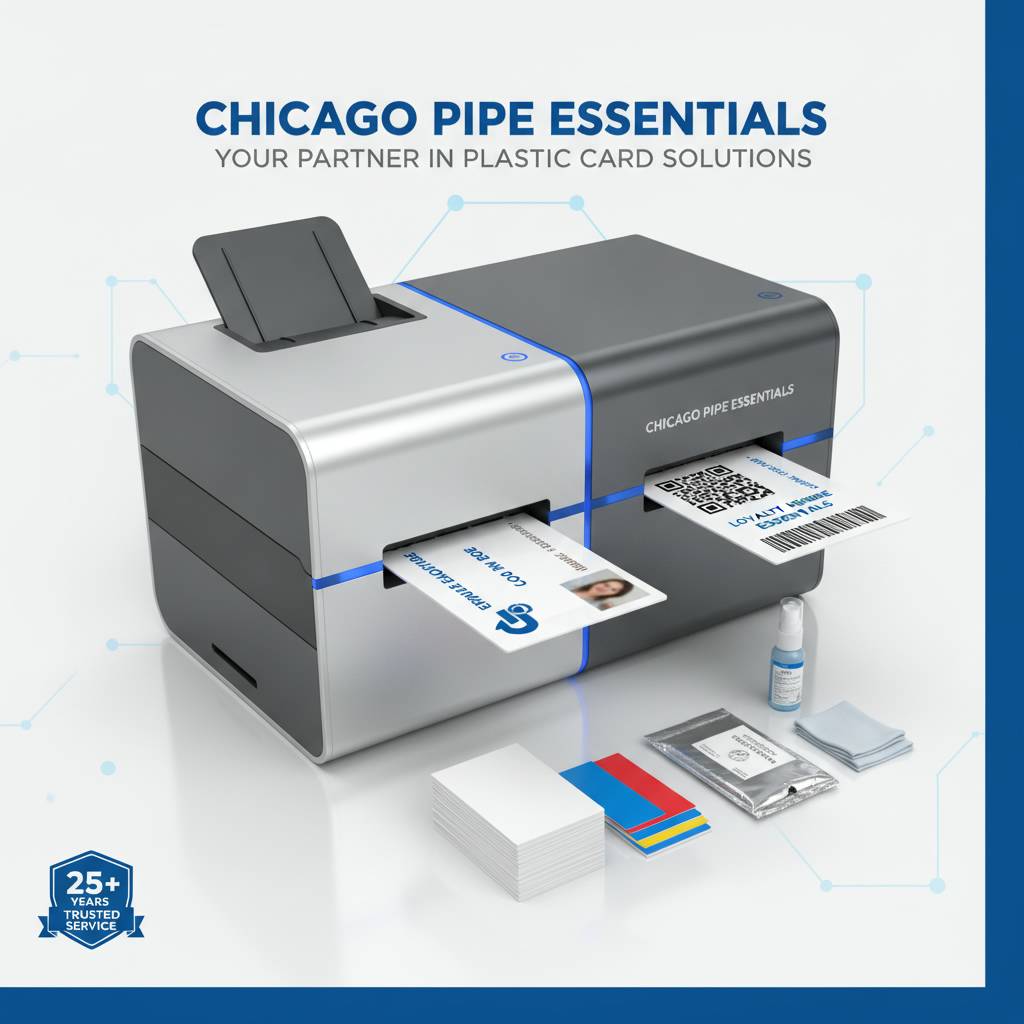 There's a moment every organization reaches - when single-sided cards just don't cut it anymore. Maybe your employee IDs need a barcode on the back. Maybe your membership cards require terms and conditions printed on the reverse. Whatever the trigger, the leap to a dual-sided plastic card printer is one of the smartest investments a business can make in its credentialing program. And when that moment arrives, Plastic Card ID is ready.
With over 25 years of experience supplying professional card printing hardware to businesses across the United States, Plastic Card ID has helped more than 100,000 customers find the right equipment for their specific needs. From compact desktop units for low-volume offices to high-throughput industrial systems for enterprise-scale programs, the selection here is both curated and comprehensive. This isn't a marketplace flooded with random products - it's a focused lineup of proven, professional-grade machines.
Dual-sided printing, sometimes called duplex printing, transforms a card from a simple identifier into a fully functional credential. Both surfaces become usable real estate for branding, data, instructions, and security features. The difference in perceived professionalism is immediate and measurable. CPE carries the brands that make this possible at every price point and production scale.
What Dual-Sided Printing Actually Means for Your Cards
A dual-sided card printer flips the card internally during the print cycle, applying graphics, text, and encoding data to both the front and the back in a single pass. No manual flipping. No realignment errors. The result is a crisp, consistent credential that looks like it came from a professional print shop - because it did, just one that lives in your office.
This capability matters enormously for organizations that need to pack more information onto a credential. An employee ID might carry a photo, name, and title on the front while the back holds an access code, magnetic stripe, or emergency contact. A loyalty card might feature branding on one side and a scannable barcode or loyalty number on the other. Dual-sided printing doubles the utility of every card you produce.
The Brands Behind the Hardware
Not all card printers are created equal, and Plastic Card ID knows this better than anyone. The lineup includes Evolis, Fargo, Zebra, and Matica - four of the most respected names in professional card printing. Each brand brings distinct strengths: Evolis is known for elegant engineering and quiet, reliable output; Fargo excels in security-driven ID programs; Zebra brings industrial durability to high-demand environments; and Matica delivers speed when on-site, high-volume event credentialing is the priority.
Choosing among them isn't just a matter of brand preference. It's about matching the machine to the job. CPE helps customers navigate this by offering clear guidance on which printers support dual-sided printing, which models add encoding options, and which make the most sense for a given production volume. Call 800.835.7919 to speak directly with a product specialist who knows these machines inside and out.
Who Needs a Dual-Sided Card Printer?
The short answer: almost anyone running a serious card program. Schools issuing student IDs with emergency info on the back. Hotels encoding key cards with property instructions on the reverse. Corporations producing access control cards that need both a photo ID and a magnetic stripe. Healthcare facilities printing staff badges with role designations on the front and security-level indicators on the back.
Membership organizations, gyms, libraries, event venues, and government agencies all share the same fundamental need: a card that works harder. Dual-sided printing is not a luxury - it's a practical upgrade that reduces the number of cards you need to carry, improves security compliance, and elevates the overall impression your organization makes.
| Printer Model | Brand | Dual-Sided | Volume Range | Best For |
|---|---|---|---|---|
| Badgy200 | Evolis | No (entry-level) | Under 1,000/year | Small offices, clubs |
| Zenius | Evolis | Optional module | 1,000-3,000/month | Mid-size organizations |
| Primacy2 | Evolis | Yes (duplex model) | Up to 6,000/month | HR, access control |
| Agilia | Evolis | Yes | High volume | Premium edge-to-edge output |
| Fargo HID Series | Fargo | Yes | Medium-high | Security ID programs |
| Zebra ZC Series | Zebra | Yes | High volume | Enterprise, government |
Choosing the Right Dual-Sided Card Printer for Your Volume
 Volume is the single most important factor in selecting a dual-sided plastic card printer. Buy too little machine and you'll fight jams, overheating, and premature wear. Buy too much and you're paying for capacity you'll never use. The sweet spot is matching the printer's rated throughput to your realistic monthly output - with a comfortable buffer for growth.
The Evolis Primacy2 in its duplex configuration is one of the most popular mid-range workhorses CPE carries. It handles up to 6,000 cards per month, supports magnetic stripe encoding, and produces clean, vibrant output consistently. For organizations running HR departments, university campuses, or multi-location retail programs, this machine tends to hit exactly the right balance of price and performance. It's the printer that serious card programs grow into and stay with.
Low-Volume: Getting Started Without Overinvesting
Not every organization needs to print 5,000 cards a month. A small private school issuing student IDs once a year, a boutique hotel printing a few hundred key cards quarterly, a local gym onboarding new members at a steady but modest pace - these operations need a reliable, affordable entry point. The Evolis Badgy200 serves this tier well for single-sided needs, but organizations that anticipate any back-of-card requirements should move directly to the Evolis Zenius with a duplex module.
The cost difference between single and dual-sided capability at the entry level is often less significant than buyers expect. Investing in dual-sided capability from the start prevents costly re-equipment down the line. When you're printing under 1,000 cards per year, the printer's per-card cost is less critical than its reliability and flexibility - and dual-sided capability is a flexibility you'll almost certainly want eventually.
Mid-Range: The Primacy2 and Its Competitors
The 1,000-6,000 cards per month range is where most serious business card programs live. Human resources departments issuing employee credentials, hospitals managing staff badge rotations, universities cycling through student IDs each semester - these are the operations that need a machine capable of consistent, high-quality dual-sided output without demanding constant maintenance attention.
Both Fargo and Zebra offer competitive options in this range with strong dual-sided capabilities and optional encoding upgrades. Fargo's printers are particularly favored by security-conscious organizations because of their compatibility with HID smart card technology. Zebra's ZC series brings that brand's famous industrial durability to desktop form factors. Each option has merit; the right choice depends on your encoding needs, software compatibility, and support preferences. CPE carries them all.
High-Volume and Premium: Agilia and Enterprise Solutions
When output quality is non-negotiable and volume demands consistency at scale, the conversation shifts to the Evolis Agilia. This machine delivers edge-to-edge printing with premium color accuracy, making it the preferred choice for organizations where card appearance directly reflects brand value. VIP membership programs, corporate access systems, and government-issued credentials all fall into this category.
For truly industrial-scale needs, the Matica Event Printer earns its place at the table. Designed for high-speed, on-site badge printing at large events and enterprise environments, it operates at a pace that smaller desktop printers simply cannot match. When hundreds of credentials need to be printed and issued within hours, this is the machine that delivers. Contact Plastic Card ID to discuss which high-volume solution fits your deployment requirements.
Ribbons, Supplies, and Everything That Keeps Your Printer Running
A dual-sided plastic card printer is only as good as the supplies feeding it. Even the finest hardware produces disappointing results with the wrong ribbon installed. Plastic Card ID doesn't just sell printers - it maintains a complete supply chain for every machine in its lineup, ensuring customers can keep their card programs running without hunting down compatible consumables from unreliable third parties.
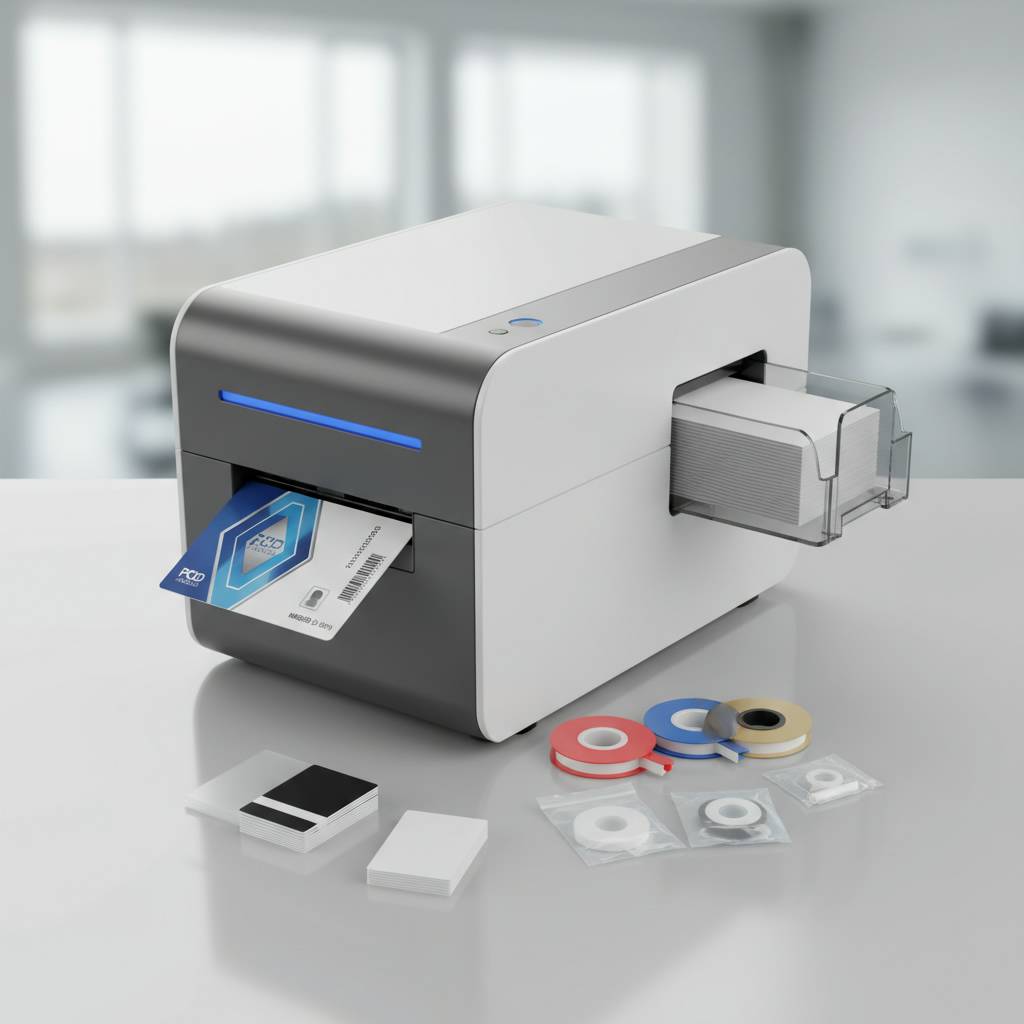
The most common ribbon type for full-color card printing is the YMCKO ribbon - yellow, magenta, cyan, black, and overlay panels in a single cartridge. This produces vivid, full-color cards with a protective clear overlay that resists fading and scratching. For organizations printing monochrome cards - black text on white, for example - single-color ribbon options are significantly more cost-effective and produce crisp, professional results. Matching the ribbon type to the job is as important as choosing the right printer.
Ribbon Types and When to Use Each
YMCKO ribbons are the standard for photo ID cards, loyalty cards, and any application requiring full-color printing. They're versatile, widely compatible, and produce the polished results most organizations expect from a professional card program. However, they come at a higher per-card cost than monochrome options, which matters when you're printing thousands of cards monthly.
Monochrome ribbons - available in black, blue, red, gold, silver, and white - are ideal when color isn't required. Access control cards that encode data but carry only text or simple graphics, back-of-card terms-and-conditions panels, and signature strips all print cleanly with monochrome ribbon at a fraction of the per-card cost. Smart operators use monochrome for back-panel printing and YMCKO for the front to optimize ribbon consumption without sacrificing quality. Call 800.835.7919 for help selecting the right ribbon combination for your specific printer and use case.
Cleaning Kits: The Maintenance Step Most People Skip
Here's a fact that surprises many first-time card printer owners: the most common cause of print quality degradation isn't ribbon failure or printer age - it's dust and debris on the print rollers. Card printers move cards past sensitive thermal print heads at high speed. Any particle on the transport rollers leaves a visible artifact on the finished card. Regular cleaning prevents this almost entirely.
Cleaning kits for card printers typically include pre-saturated cleaning cards and roller cleaning swabs. Most manufacturers recommend a cleaning cycle every time a ribbon is changed, with a deeper clean every few months depending on volume. CPE stocks cleaning kits compatible with every printer brand in the lineup. A ten-minute cleaning routine can extend printer life by years.
Encoding Upgrades: Magnetic Stripe, Smart Chip, and More
Many organizations discover mid-program that they need more than just a printed card - they need a card that does something. Magnetic stripe encoding writes variable data to the stripe on the back of a card, enabling use as a hotel key, a time-and-attendance credential, or a loyalty swipe card. Smart chip encoding goes further, writing data to an embedded microchip for higher-security access control applications.
Both encoding types are available as factory-installed options or field-installable upgrades on many of the printers Plastic Card ID carries. The Evolis Primacy2, for example, supports magnetic stripe encoding as an integrated module, making it a natural fit for hotels, gyms, and membership clubs. Smart chip upgrades align with corporate and government security requirements where magnetic stripe alone isn't sufficient. Encoding transforms a printed card into a functional access tool.
Buyer's Guide: What to Ask Before You Purchase
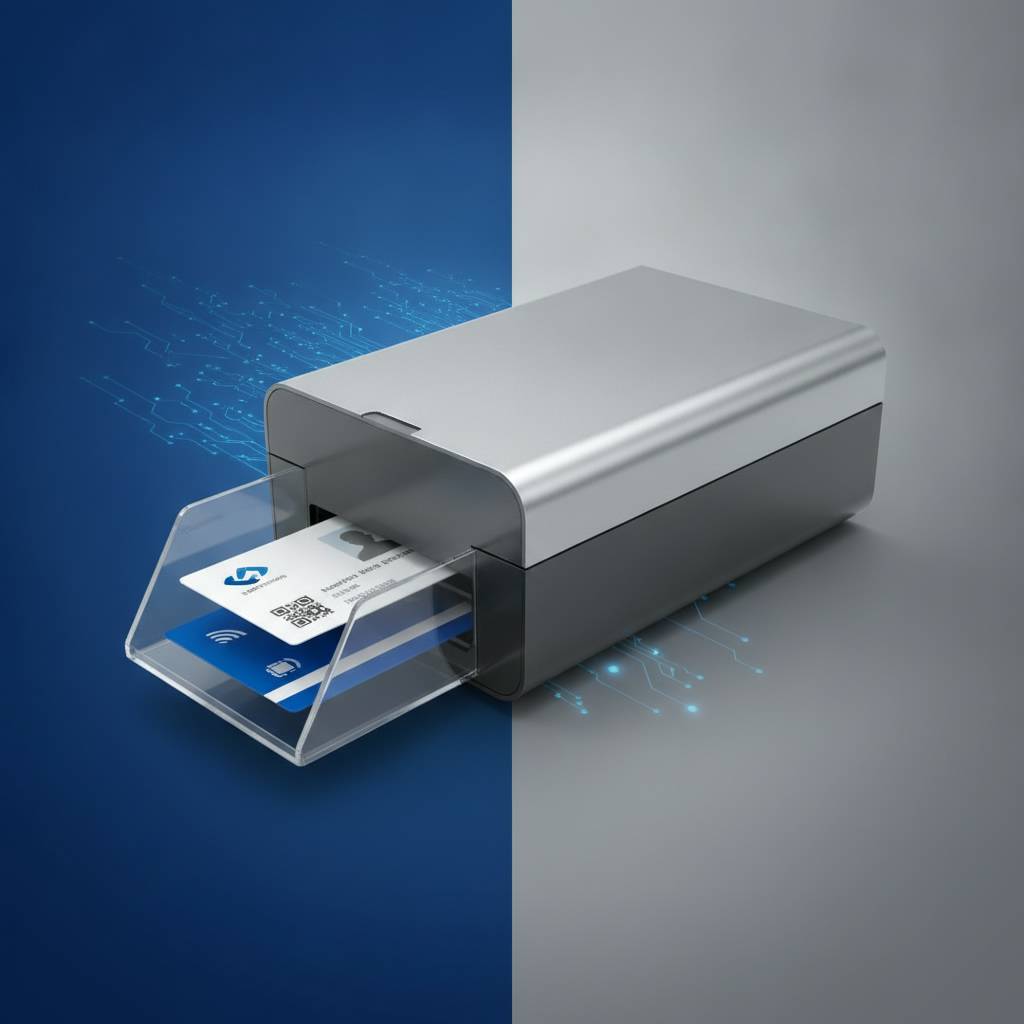 Purchasing a dual-sided plastic card printer is not the same as buying an office inkjet. These are specialized machines with specific ribbon requirements, maintenance schedules, encoding options, and software ecosystems. Approaching the purchase with a clear set of questions dramatically improves the odds of landing on the right machine the first time.
CPE has been helping buyers make these decisions for over 25 years. The questions below represent the most common decision points that separate a satisfied long-term customer from someone who ends up re-purchasing within 18 months because their original choice didn't fit the actual job.
The Five Questions Every Buyer Should Answer First
- How many cards will you print per month? This single number narrows the field dramatically. Under 500 per month points toward compact desktop models; 1,000-6,000 per month targets the mid-range; above that, look at industrial solutions.
- Do you need encoding? Magnetic stripe, smart chip, or contactless RFID encoding each require specific hardware. Know whether your use case demands encoded cards before you select a model.
- What does your back-of-card need to show? If the answer is anything beyond blank, you need a dual-sided printer. Barcodes, terms, signatures strips, magnetic stripes - all of these go on the back.
- What software will manage your card design and printing? Most printers come with bundled software, but compatibility with existing HR or access control systems matters. Confirm software compatibility before purchasing.
- What's your realistic budget for supplies ongoing? Ribbons, cleaning kits, and blank cards are recurring costs. Factor them into the total cost of ownership, not just the upfront hardware price.
Getting honest answers to these five questions before shopping makes the printer selection process straightforward. It also prevents the single most common buyer mistake: selecting a printer based on hardware price alone while ignoring the ongoing supply cost and capability gaps that surface later.
Understanding Total Cost of Ownership
The sticker price of a dual-sided plastic card printer is rarely the whole story. Ribbon costs, replacement print head pricing, cleaning supply expenses, and the cost of blank PVC cards all add up over the life of the machine. A printer priced at $400 with expensive proprietary ribbons can easily cost more over three years than a $600 printer with widely available, competitively priced consumables.
Total cost of ownership, not purchase price, is the correct metric for this decision. Plastic Card ID is transparent about ongoing supply costs for every printer it sells, helping buyers calculate the real per-card cost before committing to a platform. This kind of honest guidance is what has kept customers returning for decades.
When to Upgrade vs. When to Replace
A printer that's producing degraded output isn't necessarily at the end of its life. In many cases, a thorough cleaning, a fresh ribbon, and a print head replacement restore performance to factory specification at a fraction of replacement cost. CPE carries replacement print heads, cleaning kits, and spare parts for the brands it represents, making in-house maintenance practical for most organizations.
That said, there are genuine cases where upgrading makes more sense than repairing. If your production volume has grown beyond the machine's rated capacity, if your encoding needs have evolved, or if a newer model offers features that would meaningfully improve your card program - replacement is the right call. The decision point is whether the cost of repair exceeds the practical benefit of the remaining machine life. Plastic Card ID can help you evaluate this honestly.
Applications: Where Dual-Sided Card Printers Deliver Real Value
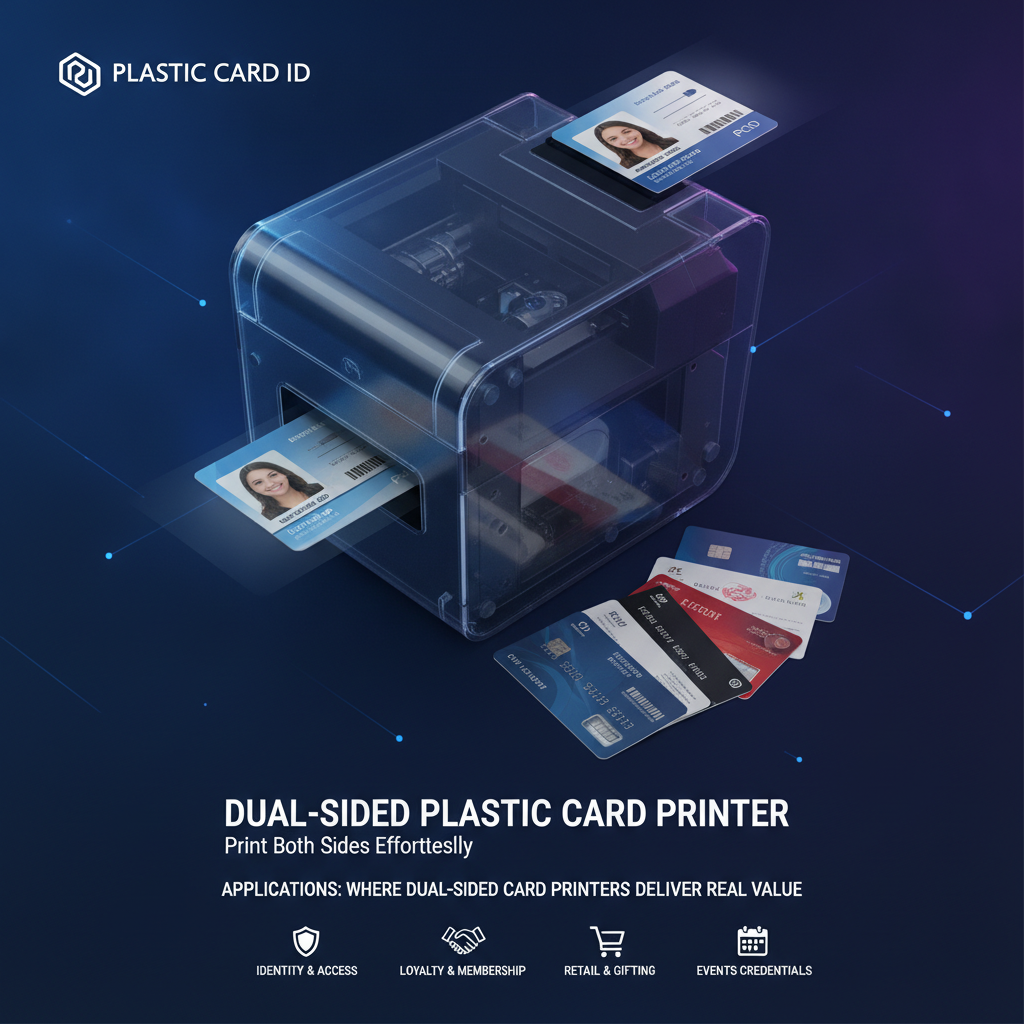 The range of applications for a dual-sided plastic card printer spans virtually every industry vertical. The common thread is the need for a credential that carries more information, enables more functions, or conveys greater professionalism than a single-sided card can deliver. What's striking is how consistent the ROI story is across industries: organizations that bring card printing in-house gain control, speed, and cost savings simultaneously.
Printing on demand eliminates the lead time associated with outsourced card production. A new employee can have a fully encoded, dual-sided ID card within minutes of their first day. A hotel guest can receive a replacement key card instantly. An event organizer can print on-site credentials as attendees arrive. In-house printing is not just cheaper - it's faster and more flexible than any outsourced alternative.
Employee ID and Access Control Programs
Corporate environments were among the earliest adopters of in-house dual-sided card printing, and for good reason. Employee IDs that combine a photo, name, and title on the front with an access-control magnetic stripe or smart chip on the back are the backbone of physical security programs. Printing these in-house means new hires are credentialed immediately, lost cards are replaced within minutes, and the organization retains complete control over who holds active credentials.
For multi-site organizations, distributed printing is a practical necessity. Rather than shipping cards from a central office, each location can print and encode credentials locally using the same printer model and software platform. Consistency across locations without centralized logistics bottlenecks is one of the most compelling arguments for deploying in-house card printing at scale.
Membership, Loyalty, and Hotel Key Cards
Gyms, retail loyalty programs, libraries, country clubs, and hotel brands all share a common need: personalized cards that carry member information on the front and encoded data on the back. The magnetic stripe on a hotel key card is what makes it functional; the branding and guest name printed on the front are what make it feel like a premium hospitality experience. A dual-sided printer delivers both in a single pass.
Loyalty programs specifically benefit from on-demand printing because membership volume fluctuates. Seasonal promotions, referral campaigns, and enrollment drives can spike card demand unpredictably. With an in-house printer, scaling up is simply a matter of loading more cards and ribbon. With an outsourced vendor, it's a minimum-order negotiation and a two-week lead time. In-house printing turns card production into an operational advantage.
Student IDs, Event Credentials, and More
Educational institutions issue hundreds or thousands of student IDs at the start of each academic year, plus replacements throughout. The back of a student ID commonly carries a library barcode, emergency contact information, or a school calendar. Dual-sided printing makes these credentials functional without requiring separate card production runs. The Evolis Primacy2 or a comparable Zebra ZC model handles a school's annual enrollment volume comfortably.
Event credentialing is a different challenge entirely - speed is paramount. When thousands of attendees need printed badges on arrival, the Matica Event Printer's high-speed throughput becomes essential. Dual-sided event credentials can carry attendee information on the front and schedule or access-tier information on the back, reducing the need for separate printed materials. A well-executed on-site badge printing program visibly elevates event professionalism.
Frequently Asked Questions About Dual-Sided Card Printers
After 25 years of helping customers select and operate card printing equipment, certain questions come up consistently. The answers below address the most common points of confusion and concern for organizations evaluating their first dual-sided printer purchase or upgrading from an existing setup.

Can I Add Dual-Sided Capability to an Existing Single-Sided Printer?
In some cases, yes. Certain printer models - including some configurations of the Evolis Zenius - support a field-installable duplex module that adds dual-sided capability without replacing the entire unit. This is a cost-effective path for organizations that already own a compatible single-sided model and want to expand its functionality.
However, not all single-sided printers support this upgrade. Whether a module is available depends entirely on the specific model and whether it was designed with the internal card-flipping mechanism that duplex printing requires. Always confirm upgrade compatibility with Plastic Card ID before purchasing a module separately. The product specialists at Plastic Card ID can verify compatibility and advise on whether an upgrade or a full replacement is the better investment for your specific situation. Contact 800.835.7919 for a quick compatibility check.
How Long Does a Dual-Sided Print Take Per Card?
Print speed for dual-sided cards varies by printer model and the complexity of the design being printed. As a general guideline, a full-color dual-sided card on a mid-range machine like the Evolis Primacy2 takes approximately 30-45 seconds per card. High-volume industrial machines can cut this time significantly, while entry-level units may take slightly longer.
For most business applications, print speed is not a limiting factor. Printing 50 cards at the start of a workday, or running a batch of 200 cards overnight, fits comfortably within the throughput of any machine in the mid-range tier. Where speed truly matters is in live event credentialing - and that's precisely the use case the Matica Event Printer is engineered to address. Knowing your timing requirements before selecting a printer prevents unpleasant production surprises.
What Blank Card Stock Do I Need for Dual-Sided Printing?
Dual-sided printing uses standard CR80 PVC card stock - the same size as a standard credit card, at 3.375 x 2.125 inches. These cards are blank white PVC blanks suitable for full-color dye-sublimation printing on both surfaces. No special card stock is required specifically for dual-sided printing; the printer's internal flipper mechanism handles the card on standard blanks.
If your cards require a magnetic stripe, you'll need blank cards with a pre-applied magnetic stripe on the back. These come in HiCo (high-coercivity) and LoCo (low-coercivity) variants depending on your encoding system's requirements. Hotel key cards typically use LoCo; most other applications use HiCo for its greater data durability. CPE carries both card types along with compatible ribbons and accessories for every printer in the lineup.
Get Started with Plastic Card ID Today
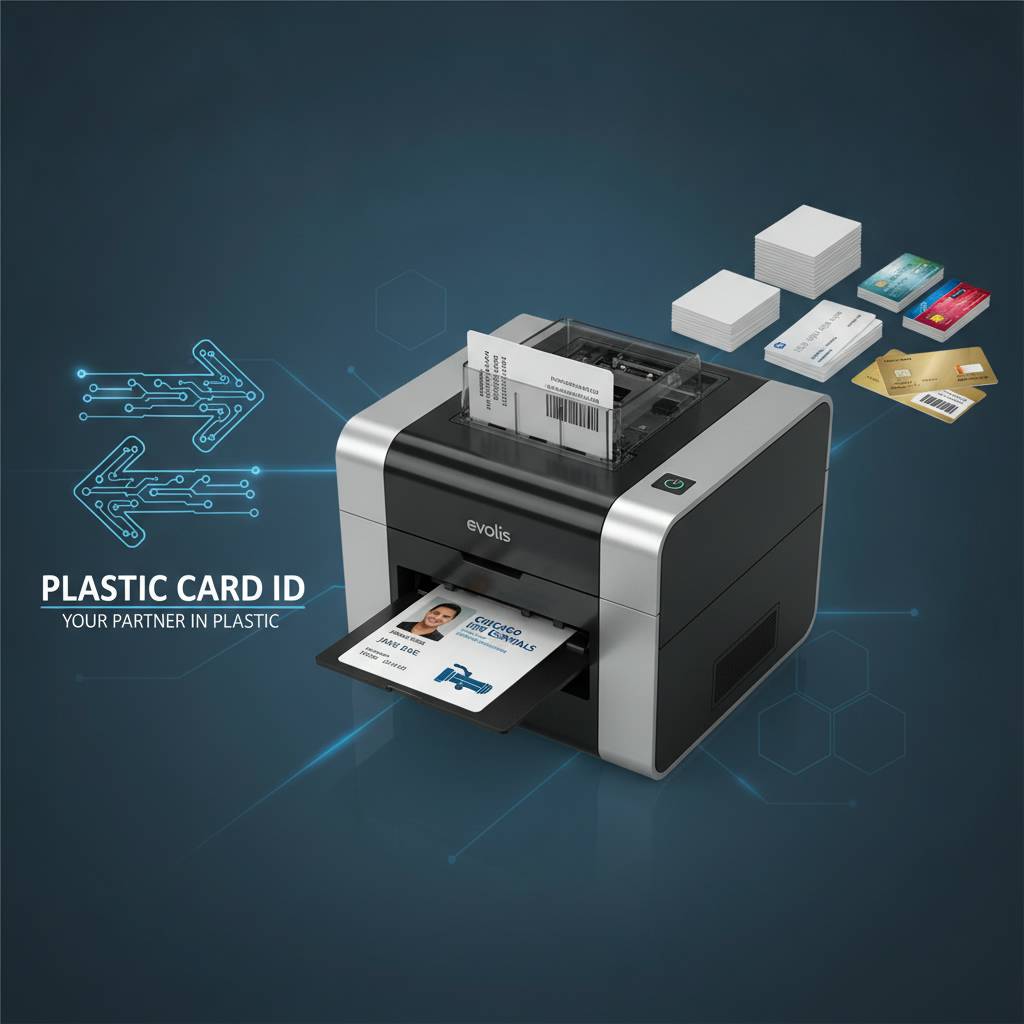 The right dual-sided plastic card printer for your organization is out there - and it's almost certainly in the Plastic Card ID lineup. Whether you're printing 200 employee badges a month or credentialing thousands of event attendees on-site, there's a machine, a ribbon configuration, and a supply chain ready to support your program from day one.
What sets Plastic Card ID apart isn't just the breadth of the lineup. It's the depth of expertise behind it. Over 25 years and 100,000 customers later, the team at CPE has encountered nearly every card printing challenge imaginable - and helped solve them. That experience translates directly into better guidance, more accurate recommendations, and fewer costly mistakes for buyers who take advantage of it.
Don't guess your way through a hardware decision that will shape your card program for years. Talk to a specialist, confirm your requirements, and get matched with the right machine the first time.
Explore the Full Lineup and Request a Quote
The Plastic Card ID product lineup covers every major brand in professional card printing - Evolis, Fargo, Zebra, and Matica - with dual-sided models at every production tier. Ribbons, cleaning kits, encoding upgrades, input hoppers, card carriers, and blank PVC card stock are all available to keep your program running smoothly after the initial hardware purchase.
Pricing on dual-sided card printers typically ranges from $500-$800 for capable entry-to-mid-range duplex models up to $2,000-$5,000 or more for high-volume industrial systems with advanced encoding. Ribbon costs vary by type and volume. Request a quote that includes your expected monthly volume and encoding requirements for the most accurate total cost picture.
Reach the Team That Knows Card Printing
There is no substitute for speaking directly with someone who has matched thousands of organizations to their card printing hardware. The Plastic Card ID team brings that experience to every conversation, whether you're a first-time buyer figuring out where to start or an experienced operator evaluating an upgrade.
Call 800.835.7919 today to speak with a product specialist. Bring your volume numbers, your encoding requirements, and your questions. You'll leave the conversation with a clear picture of which dual-sided plastic card printer belongs in your operation - and exactly what it will take to keep it running at its best for years to come. Plastic Card ID is ready to help you print smarter, faster, and better than ever before.