Best Plastic Card Printer: Top-Rated Models Reviewed
Table of Contents []
- Finding the Best Plastic Card Printer for Your Organization - Plastic Card ID
- Why In-House Card Printing Changes Everything
- The Best Plastic Card Printers by Volume and Use Case
- Supplies and Accessories That Keep Your Program Running
- Card Types and Applications Across Every Industry
- Buyer's Guide - How to Choose the Best Plastic Card Printer
- Frequently Asked Questions About Plastic Card Printers
- Get Started with Plastic Card ID - Your Card Printing Partner
Finding the Best Plastic Card Printer for Your Organization - Plastic Card ID
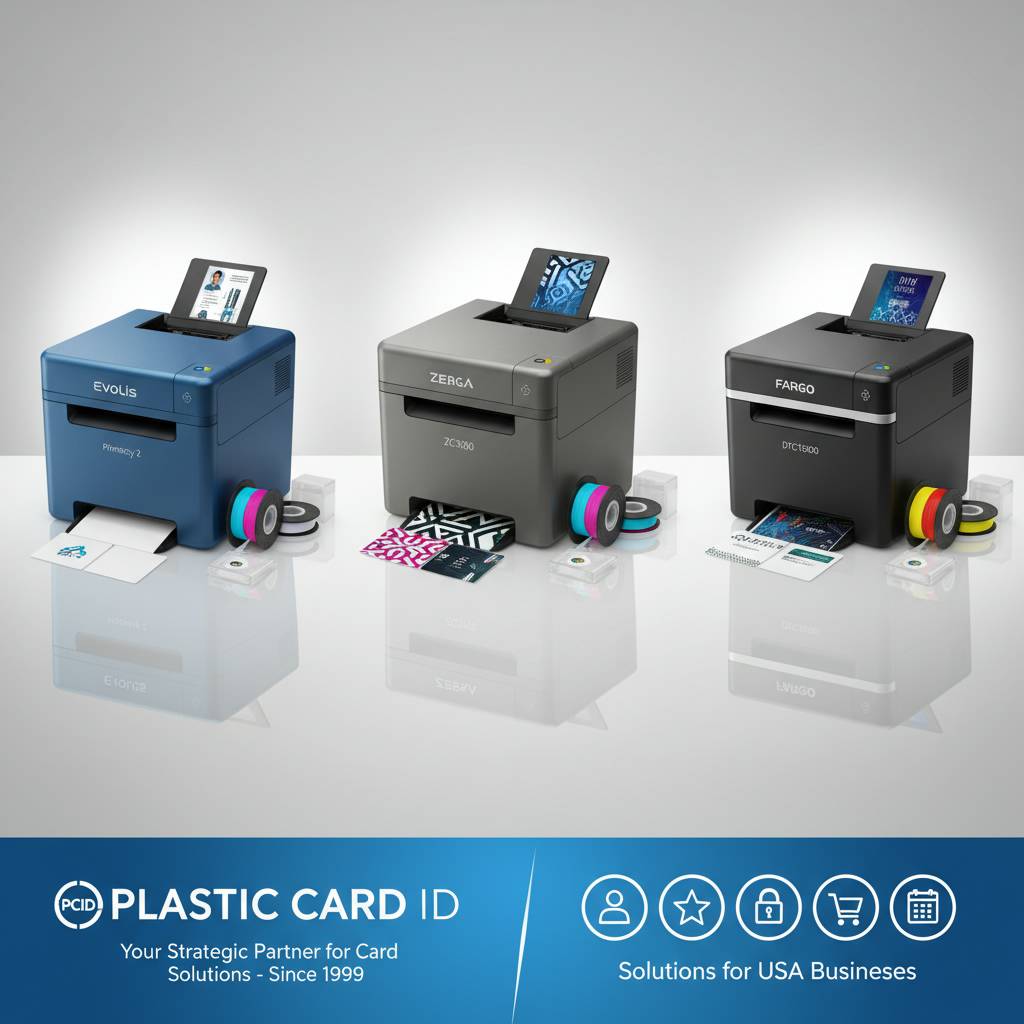 What separates a good card printing setup from a genuinely great one? It is not just the hardware - it is the right match between your production volume, card type, and long-term goals. Whether you are printing 200 employee badges a year or churning out thousands of access control cards monthly, the decision deserves careful thought. Plastic Card ID has been helping businesses across the United States navigate exactly these decisions for over 25 years, serving more than 100,000 customers along the way.
The market for plastic card printers is surprisingly nuanced. Walk in expecting a simple purchase and you will quickly find yourself weighing single-sided versus dual-sided printing, retransfer versus direct-to-card technology, lamination modules, encoding options, and ribbon types that can dramatically affect output quality. This guide cuts through the noise and delivers the clarity your organization needs to make a confident, well-informed investment.
| Printer Model | Brand | Volume Range | Best Use Case |
|---|---|---|---|
| Badgy200 | Evolis | Under 1,000 cards/year | Small offices, clubs, nonprofits |
| Zenius | Evolis | 1,000-3,000 cards/month | Mid-size businesses, schools |
| Primacy2 | Evolis | Up to 6,000 cards/month | Enterprises, large campuses |
| Agilia | Evolis | High-volume, premium output | Edge-to-edge, top-tier quality |
| Fargo Series | Fargo | Varies by model | Security ID programs |
| Zebra Series | Zebra | Varies by model | Durable, high-reliability ID |
| Event Printer | Matica | High-speed bursts | On-site event badging |
Why In-House Card Printing Changes Everything
 Taking control of your card production is one of the smartest operational decisions a growing organization can make. When you depend on an outside vendor to print your ID cards, membership cards, or access credentials, you are essentially handing over your timeline, your customization flexibility, and a surprising portion of your long-term budget. Printing in-house flips all of that.
Think about what on-demand production actually means in practice. A new employee starts Monday - their card is ready Monday morning. A loyalty program member upgrades their tier - their card reflects it that same afternoon. No minimum order quantities, no shipping delays, no re-ordering fees. The operational agility this provides is substantial, especially for organizations managing hundreds or thousands of credentials over time.
Total Control Over Personalization
Every card your printer produces can be completely unique. Photos, names, department codes, barcodes, employee numbers - each element printed and encoded precisely to your specifications. Personalized cards are not just more professional - they are more secure. Generic cards without personalization are far easier to misuse or duplicate.
With direct-to-card and retransfer technologies available across Plastic Card ID's lineup, the image quality on modern plastic card printers rivals professional print shops. Full-color YMCKO ribbon output delivers vivid, durable results that hold up to daily handling without fading or cracking over typical card lifespans.
Encoding Magnetic Stripes and Smart Chips
Many organizations require more than just a printed surface. Magnetic stripe encoding allows cards to store data readable by card readers - essential for access control systems, loyalty programs, time and attendance tracking, and hotel key cards. Smart chip encoding goes further, embedding more complex data directly into the card's integrated circuit.
Plastic Card ID supplies encoding upgrade modules compatible with many printers in the lineup, meaning your printer can handle both the visual printing and the data encoding in a single pass. A single-pass encoding workflow eliminates the need for separate card personalization systems and dramatically streamlines high-volume card production operations.
Eliminating Vendor Lead Times
Outsourcing card printing introduces an invisible cost that organizations rarely quantify until it creates a real problem: lead time. Rush orders cost more. Standard turnarounds can take days or weeks. When your organization scales up hiring, launches a membership drive, or hosts a large event, that lag becomes genuinely disruptive.
In-house printing erases the wait. Your card program runs at your pace, on your schedule - not a vendor's production queue. For event credential printing specifically, the Matica Event Printer is purpose-built to produce badges at high speed right on site, eliminating pre-event logistics entirely.
The Best Plastic Card Printers by Volume and Use Case
Choosing the best plastic card printer is not about picking the most expensive model on the shelf - it is about matching the machine to your real-world production needs. CPE carries a curated selection of professional-grade printers from the most trusted brands in the industry, and each one occupies a specific, well-defined role in the marketplace.
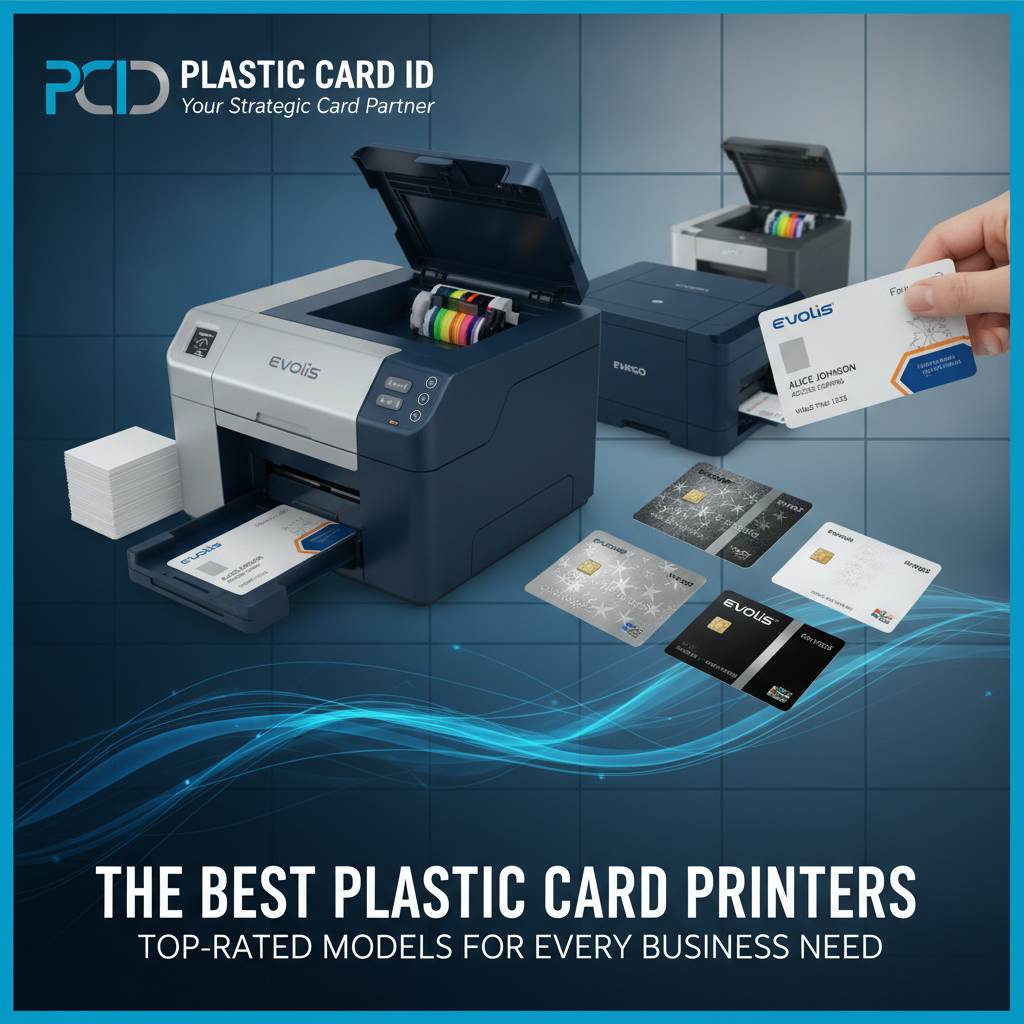
Understanding volume requirements before you shop will save you from both over-investing in capacity you will never use and under-buying for a workload that will quickly overwhelm a light-duty machine. The following sections break down the lineup clearly so you can locate your organization within it immediately.
Entry-Level Printers for Low-Volume Needs
The Evolis Badgy200 is the ideal starting point for organizations printing fewer than 1,000 cards per year. Small businesses, community clubs, nonprofit organizations, and boutique fitness studios fall comfortably into this category. It is compact, easy to operate, and delivers genuinely professional color output without a steep learning curve.
Do not let the entry-level classification mislead you - the Badgy200 still produces full-color cards with sharp edge definition and reliable consistency. For organizations at this volume level, it represents an exceptionally sensible investment that avoids paying for features and throughput capacity that simply will not be used.
Mid-Range Workhorses for Growing Programs
The Evolis Zenius and Primacy2 target a significantly broader audience - businesses and institutions printing anywhere from 1,000 to 6,000 cards per month. Schools, hospitals, mid-size corporations, retail chains, and government offices at the local and regional level often find these models deliver exactly the right blend of speed, quality, and feature depth.
Both models support dual-sided printing and magnetic stripe encoding, making them versatile enough for complex card programs that require photo IDs on one side and functional encoding data on the other. The Primacy2 in particular handles high-speed production without sacrificing image quality, which is why it consistently earns strong marks among organizations managing large employee or membership rosters.
Premium Output with the Evolis Agilia
When only the best will do, the Evolis Agilia stands apart from the rest of the lineup. Edge-to-edge color coverage, precision imaging, and support for demanding production environments make this the right choice when card quality carries significant organizational weight - think premium membership programs, executive ID credentials, or high-visibility access cards for secure facilities.
The Agilia does not just print cards well - it prints them exceptionally. For organizations where the card itself serves as a brand touchpoint and a first impression, settling for adequate output quality is not an option. The Agilia ensures that every card leaving the printer reflects the professionalism and attention to detail your organization stands behind.
Security-First Options from Fargo and Zebra
Fargo and Zebra have each built reputations on producing card printers that meet the specific demands of security-conscious ID programs. Whether the application is government-issued credentials, corporate access control, or law enforcement identification, these brands bring engineering depth and reliability that security-focused buyers require.
CPE carries Fargo and Zebra models that cover a range of production scales, and both brands offer feature sets - including lamination and holographic overlay options - designed to make cards significantly more resistant to tampering, counterfeiting, and unauthorized duplication. For any program where card integrity is a genuine security concern, these are the printers that belong on your shortlist.
Supplies and Accessories That Keep Your Program Running
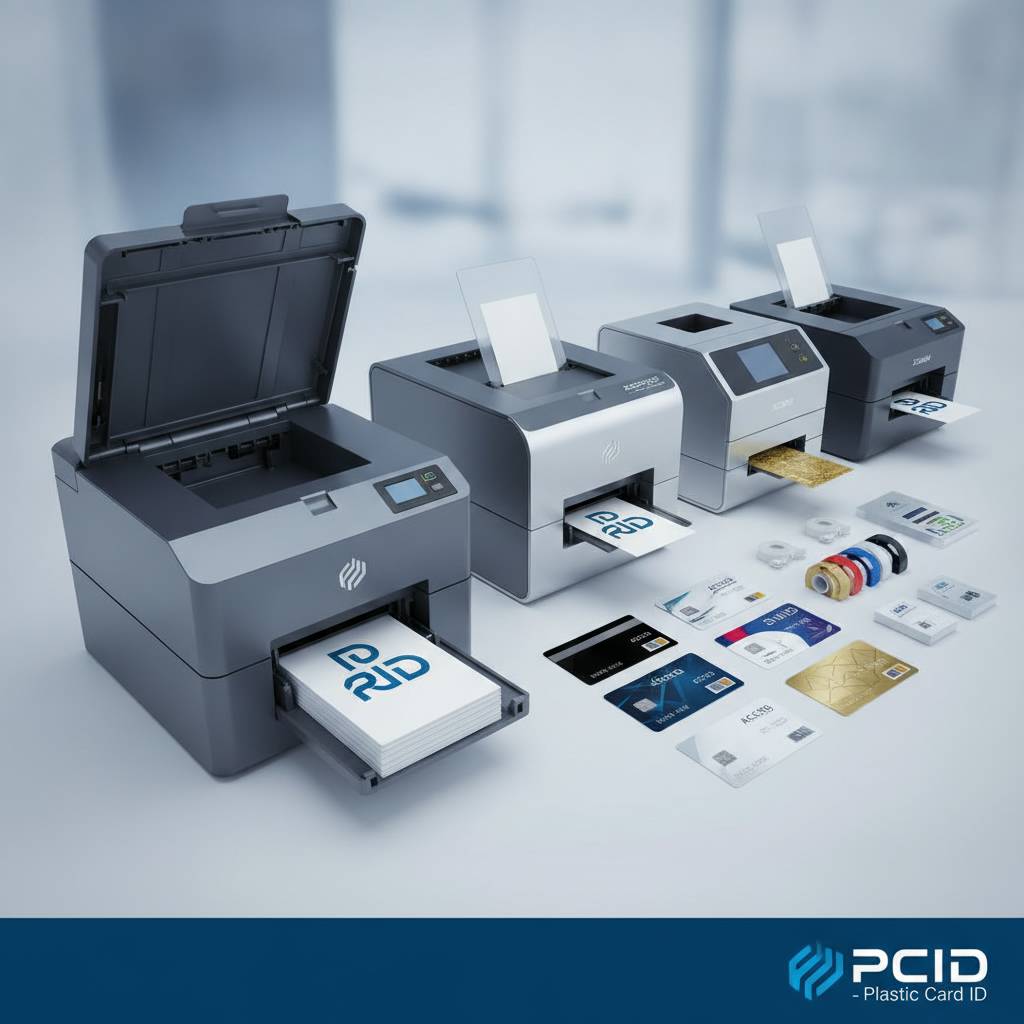
 A printer is only as effective as the supplies behind it. Neglecting ribbon quality, skipping cleaning maintenance, or running out of lamination film at the wrong moment can halt your entire card production operation. Plastic Card ID supplies a complete range of consumables and accessories specifically matched to the printers in the lineup.
Building a reliable supply inventory is part of smart card program management. Knowing your ribbon yield per roll, understanding your cleaning cycle requirements, and stocking the right card blanks ahead of need - these habits separate organizations that run smoothly from those constantly scrambling to solve preventable problems.
Printer Ribbons for Every Application
Ribbon selection depends on what your cards need to communicate. YMCKO ribbons deliver full-color output with a clear overlay layer that adds both visual polish and surface protection. Monochrome ribbons - available in black, blue, red, gold, silver, and other colors - are ideal for text-heavy, single-color applications where color printing is unnecessary and cost efficiency matters more.
Specialty ribbons add capabilities like fluorescent UV-reactive elements visible only under ultraviolet light, providing an additional layer of authentication on credentials that require it. Using the correct ribbon for your specific printer model is essential - mismatched ribbons can damage print heads and void warranties, which is why sourcing from a knowledgeable supplier like CPE matters more than it might initially seem.
Cleaning Kits and Lamination Modules
Regular cleaning is not optional - it is the single maintenance habit most responsible for extending the operational life of your printer and maintaining consistent print quality. Dust, residue, and debris accumulate inside the printer during normal operation and gradually degrade output unless cleared through regular cleaning card cycles.
Lamination modules add a durable protective layer over printed cards, significantly extending card lifespan and adding a premium tactile feel. For cards that see heavy daily use - employee badges worn on lanyards, frequent-use access cards, student IDs handled constantly - lamination is not a luxury. It is a practical investment that reduces card replacement frequency and keeps your program running at lower long-term cost.
Input Hoppers, Card Carriers, and Sleeves
High-volume printing benefits enormously from input hopper upgrades that allow bulk card loading rather than manual single-card feeds. For production runs of hundreds or thousands of cards, this operational detail alone can save significant staff time and reduce the risk of printing interruptions during long runs.
Card carriers and sleeves protect finished credentials during distribution, mailing, and storage. Presenting a freshly printed ID card in a protective sleeve signals professionalism and protects the surface from scratching before it ever reaches the cardholder. These small details in your card program's supply chain reflect directly on how recipients perceive the organization behind the card.
Ready to build your card printing supply inventory? Call Plastic Card ID at 800.835.7919 and a product specialist will help you identify exactly what your program needs.
Card Types and Applications Across Every Industry
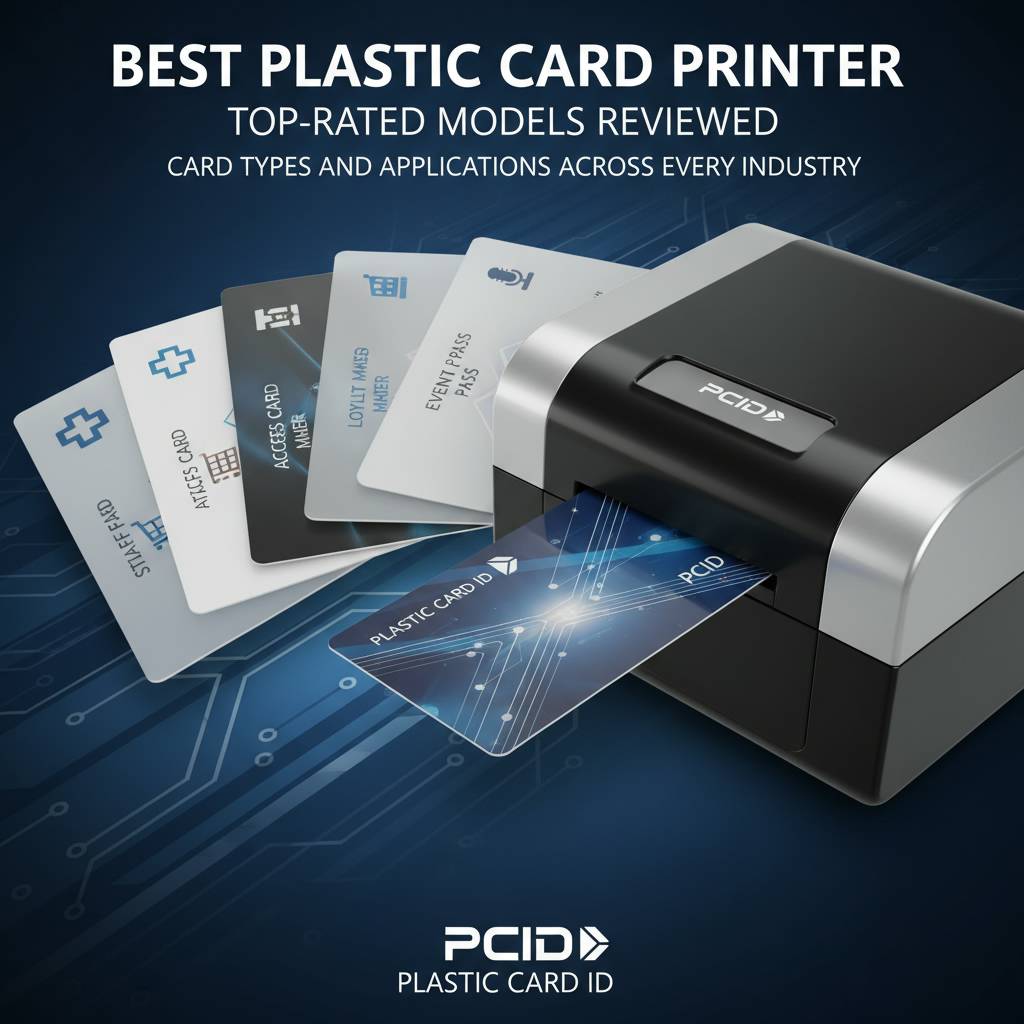 One of the most compelling things about owning an in-house card printer is the range of card programs a single machine can support. Organizations rarely think about this upfront - they buy a printer for employee IDs and then realize months later it can also handle their membership cards, event credentials, and visitor passes without any additional hardware investment.
Plastic Card ID supports customers running a remarkable variety of card programs, and understanding the breadth of what is possible often inspires organizations to consolidate multiple card-related functions onto a single capable system, reducing overall program costs.
Employee ID Cards and Access Control
Employee identification is the most common application in the commercial card printing market, and for good reason. A professionally printed, encoded employee ID card does multiple jobs simultaneously - it identifies the bearer, controls physical access to facilities, tracks attendance, and communicates organizational professionalism to visitors, clients, and auditors.
Access control card programs that rely on magnetic stripe or smart chip encoding depend on precise, consistent encoding quality that cheap printing alternatives simply cannot guarantee. Printers from Fargo, Zebra, and the Evolis mid-to-high tier lineup deliver the encoding accuracy and reliability these programs require on a daily basis.
Membership, Loyalty, and Student ID Cards
Fitness centers, libraries, grocery loyalty programs, universities, and professional associations all share a common need: cards that communicate belonging and carry functional data. Loyalty and membership cards drive measurable customer retention when they are personalized, well-designed, and physically durable enough to survive everyday wallet use.
Student ID programs at schools and universities often combine photo identification with meal plan access, library privileges, and facility entry - all encoded on a single card. A mid-range printer like the Evolis Primacy2 handles these multi-function card requirements with ease, supporting batch production during back-to-school periods when hundreds of cards may be needed in a short window.
Event Credentials and Hotel Key Cards
Events present a unique card printing challenge: high volume, fast turnaround, and unpredictable last-minute registration changes. The Matica Event Printer is specifically engineered for this scenario - printing badges and credentials at high speed right at the registration desk, eliminating the logistical complexity of pre-printing and distributing credentials before the event begins.
Hotel key cards combine precise magnetic stripe encoding with branded print design on a single card - a daily production reality for hotel operations of any scale. On-site printing for hotel key cards gives property managers the flexibility to reissue cards instantly, adjust magnetic stripe programming for different room access tiers, and maintain card stock without depending on outside supply chains.
Buyer's Guide - How to Choose the Best Plastic Card Printer
With this many quality options available, the decision process benefits from a structured approach. Jumping straight to a spec sheet without first answering a few key questions about your program's requirements is the fastest way to end up with a printer that does not truly fit your workflow. The following framework helps organizations of any size make a confident selection.
Key Questions to Ask Before You Buy
- How many cards do you expect to print per month or per year?
- Do your cards need single-sided or dual-sided printing?
- Will cards need magnetic stripe encoding, smart chip encoding, or both?
- Is edge-to-edge print coverage required for your card design?
- Do cards need lamination for extended durability?
- Will the printer be used by one person or shared across a department?
- What is your realistic budget for both the printer and ongoing supplies?
- Do you need to print in high-speed batches or mostly on demand?
Answering these questions honestly before reaching out to a supplier saves time for everyone involved and leads to a significantly better match between hardware and real-world need. Volume is the single most important factor in printer selection - getting that number right anchors every other decision that follows.
Understanding Total Cost of Ownership
The upfront price of a card printer tells only part of the financial story. Ribbon costs, cleaning kit expenses, card blank pricing, and potential lamination consumables all accumulate over time and must factor into a realistic cost-per-card calculation. A less expensive entry-level printer may carry higher per-card ribbon costs than a mid-range model that uses higher-yield ribbon formats.
Calculating true cost per card - hardware amortized over expected lifespan, plus consumables per card - gives a far more accurate picture of what your card program will actually cost. Organizations printing at higher volumes almost always find that investing in a more capable mid-range or professional printer delivers lower total program costs compared to stretching an entry-level machine beyond its design parameters.
When to Upgrade Your Existing Printer
Many organizations arrive at CPE not as first-time buyers but as owners of aging equipment that no longer meets their current needs. Print head wear, outdated driver compatibility, inability to support newer encoding standards, and simply outgrowing a machine's volume capacity are all common upgrade triggers.
If your current printer requires frequent cleaning cycles just to maintain acceptable output quality, produces inconsistent color, or slows down your team during production runs, those are clear signals. Upgrading before a complete printer failure avoids costly program disruptions and allows time for proper staff training on the new system rather than a rushed replacement under pressure.
Frequently Asked Questions About Plastic Card Printers
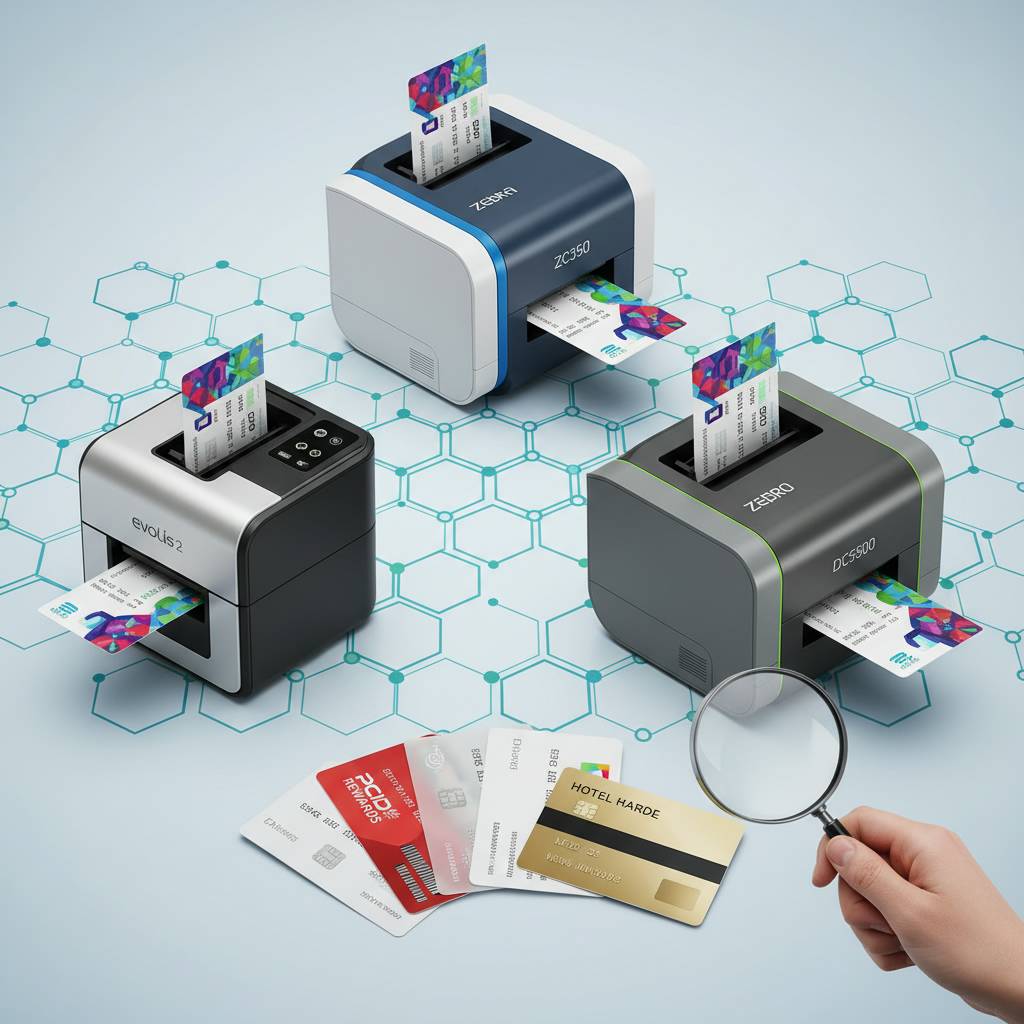 Over decades of working with businesses, schools, associations, and institutions of every description, Plastic Card ID has fielded thousands of questions about card printing. The ones below come up repeatedly - and they are worth answering clearly for anyone navigating this market for the first time or returning to upgrade an existing setup.
What Is the Difference Between Direct-to-Card and Retransfer Printing?
Direct-to-card printing applies the ribbon dye directly onto the card surface, which is the most common method and delivers excellent results on standard PVC cards. Retransfer printing first prints onto a clear film that is then thermally bonded to the card surface, producing edge-to-edge coverage and a higher-quality result - especially visible on textured or non-standard card surfaces.
Retransfer technology is the preferred method for high-security ID programs and applications where print quality standards are at the premium end of the spectrum. The Evolis Agilia represents the retransfer approach within Plastic Card ID's lineup, while direct-to-card models like the Zenius and Primacy2 serve the majority of commercial applications with excellent results.
How Often Do Card Printers Need Cleaning?
Most professional card printers are designed to prompt cleaning cycles automatically - typically every time a new ribbon is loaded or after a specified number of cards printed. Following these recommended cleaning intervals is the single most important maintenance habit for preserving print head condition and maintaining consistent output quality over the printer's lifespan.
Skipping cleaning cycles allows debris and residue to accumulate around the print head and transport rollers, eventually causing print defects, card feed errors, and accelerated hardware wear. Cleaning kits from CPE are model-specific and designed to clean effectively without risking damage to sensitive internal components - always use manufacturer-recommended cleaning supplies.
Can I Call for Help Choosing the Right Printer?
Absolutely - and it is genuinely one of the most useful conversations a buyer can have before committing to a purchase. The team at Plastic Card ID has decades of hands-on experience matching organizations to the right card printing solutions, and a brief phone conversation can clarify more than hours of independent research.
To speak with a product specialist who understands the full lineup and can ask the right questions about your specific program requirements, call 800.835.7919 today. Whether you are buying your first card printer or replacing a system that has reached the end of its service life, expert guidance makes the process faster, simpler, and far more likely to produce the right result the first time.
Get Started with Plastic Card ID - Your Card Printing Partner
 More than 100,000 businesses across the United States have trusted Plastic Card ID to supply the card printing hardware, consumables, and expertise their programs depend on. That depth of experience translates directly into better guidance, faster answers, and a curated product lineup that has already been vetted for real-world performance across an enormous range of applications and industries.
Whether your organization is taking its first step into in-house card printing or making a strategic upgrade to a more capable system, the right printer is available - and the right guidance is one phone call away. Plastic Card ID is ready to help you identify the best plastic card printer for your specific needs, volume, and budget. Call 800.835.7919 now and let a knowledgeable product specialist walk you through the options that make the most sense for your program.
Home
Previous Page